

Steel structure projects rarely become difficult because of the frame alone. The real challenges often appear around the site: limited skilled labor, unstable weather, difficult transport, restricted equipment, or construction conditions that differ from those assumed during design.
These factors can quietly affect cost and schedule. A connection that looks simple on a drawing may require skilled welding on site. A fabrication tolerance that seems acceptable in the factory may become a problem when workers assemble members far from technical support.
When Site Conditions Shape the Design
A steel structure project needs more than structural calculations. It also needs a realistic view of how the building will be assembled.
Consider a warehouse in an area where skilled welders are difficult to find. Welding may still work technically, but it can create a dependency on a limited local workforce. Weather can add another complication. Rain, high humidity, strong coastal winds, or poor site protection may reduce the number of practical working hours.
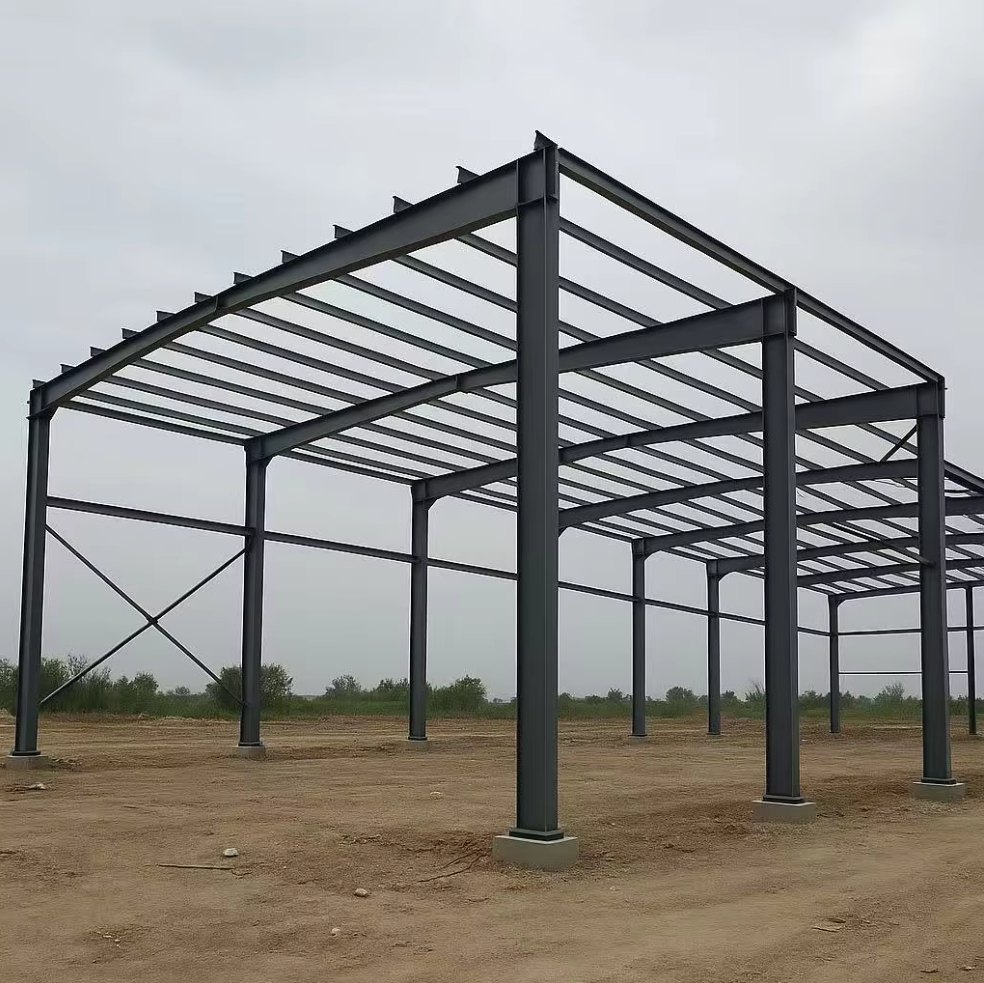
This does not mean every connection should become bolted. Rather, the design needs to consider which activities can move away from the construction site without creating new problems.
The same question applies to fabrication. When a factory produces members with inconsistent dimensions, workers may need to make adjustments during installation. Small corrections can accumulate across a large frame. On a remote project, even a minor mismatch can become expensive if replacement parts or additional equipment take weeks to arrive.
The important decision, then, is not simply how strong the structure should be. It is how much uncertainty the project can reasonably carry during installation.
Designing for a More Predictable Installation
This is where early coordination between design and fabrication becomes valuable. Connection details, member dimensions, hole positions, and fabrication tolerances all influence what happens on site.
The goal is not to eliminate every possible difficulty. It is to reduce the number of variables that workers need to solve under pressure.
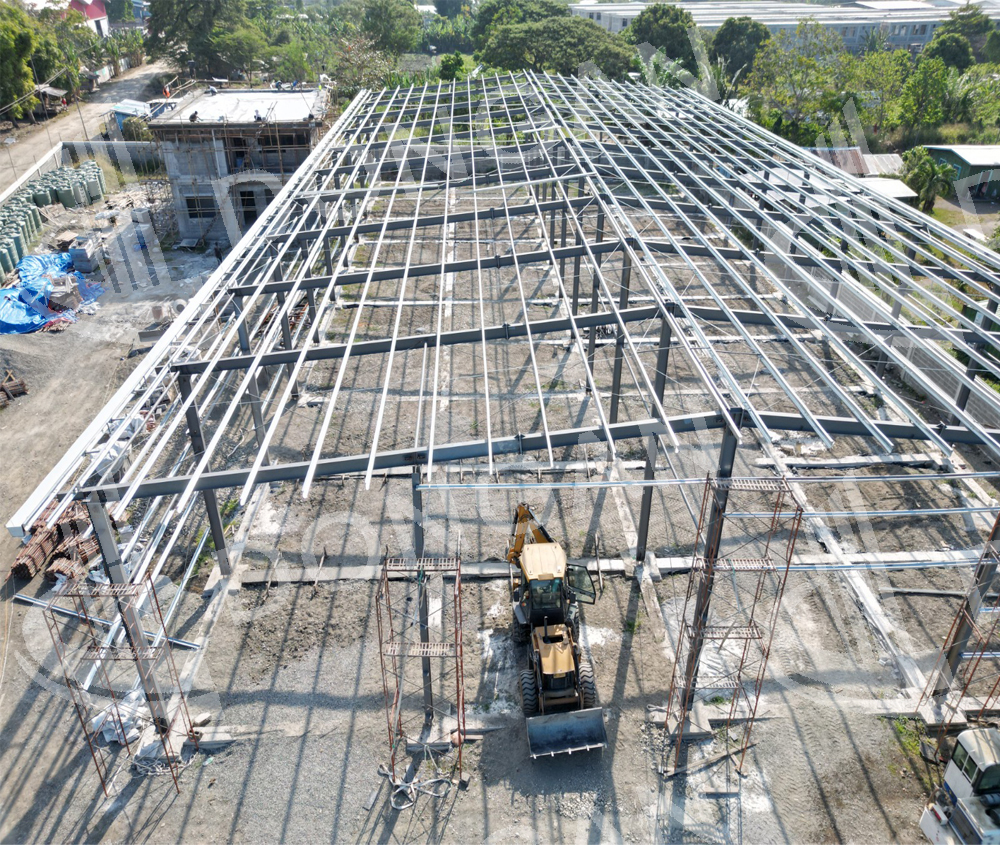
The Solomon Islands warehouse project from DongAn offers a useful example. During the design and optimization stage, the project made extensive use of bolted connections. This reduced reliance on skilled site welders and made installation less dependent on weather and local working conditions.
That decision also changed the nature of the installation work. Instead of treating welding capability as a fixed requirement, the project moved more of the connection logic into the design stage. Workers could focus more on positioning, alignment, and bolting, which helped maintain a steadier installation process.
The lesson is broader than the choice between bolts and welds. A connection detail can either transfer uncertainty to the construction site or remove part of it before the materials leave the factory.
Fabrication Accuracy Matters Too
Design decisions only help when fabrication supports them. A carefully planned connection still depends on members arriving with the required dimensions and hole positions.
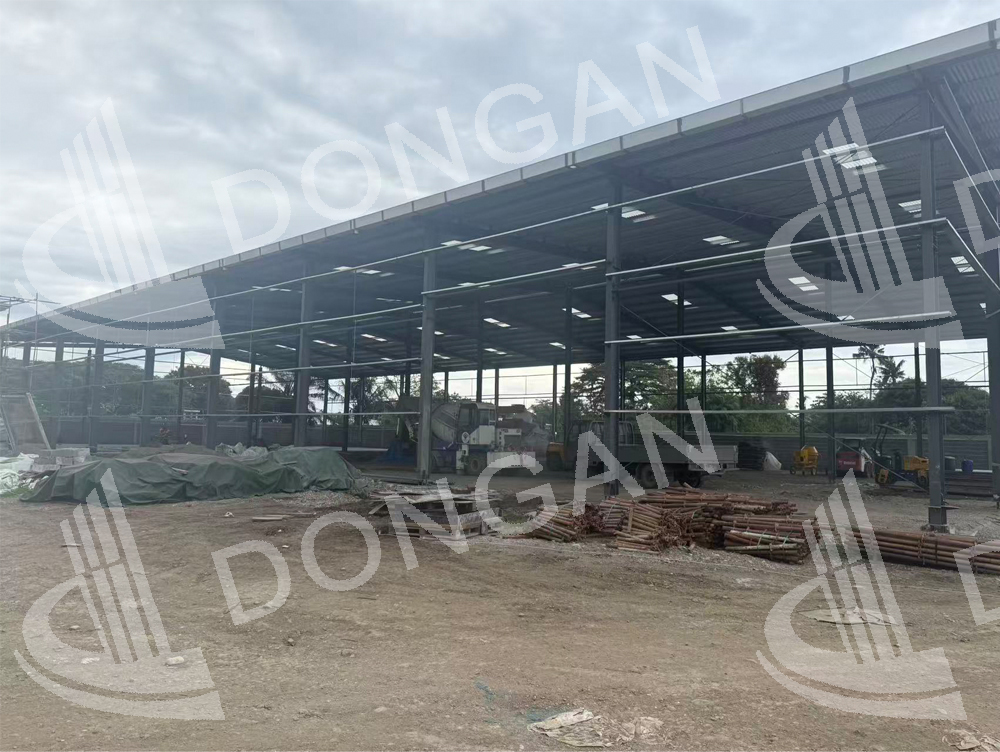
For the Solomon Islands warehouse, advanced fabrication equipment helped improve processing accuracy, with dimensional errors controlled to the millimeter level. This made the relationship between design drawings and physical components more predictable.
That accuracy matters especially when a project has limited opportunities for adjustment. On a nearby urban site, workers may solve a mismatch with additional cutting, drilling, or replacement. A remote warehouse may not have the same flexibility.
Better fabrication therefore does more than improve appearance or manufacturing quality. It can reduce installation interruptions and make the construction sequence easier to maintain.
For any challenging-location project, this creates a useful chain: design considers local constraints, connections reduce unnecessary site work, and fabrication accuracy helps those decisions work as intended.
The Solomon Islands case shows why these choices are worth making before construction begins. The strongest project strategy is not always the one with the most sophisticated details. Often, it is the one that anticipates ordinary site problems early enough to keep them from becoming construction problems later.
Post time: Aug-26-2026