

A sandwich panel can look like a straightforward building material, especially when a project starts with a simple request for wall and roof quantities. But once the building moves from drawings to construction, the difference between buying panels and buying a complete building envelope becomes clear.
Panels provide the main insulated surface, but they do not exist in isolation. Joints, corners, flashings, fasteners, openings, doors, roof details, and interfaces with the steel frame all influence how the finished enclosure performs.
That distinction is easy to miss when procurement focuses mainly on price per square meter.
When a Panel Becomes Part of a System
A building envelope has a job beyond covering the structure. It needs to manage heat transfer, moisture, wind, rain, movement, and everyday use. These requirements depend not only on the panel core but also on how individual components connect.

Take a sandwich wall panel as an example. Its insulation value may look attractive on a specification sheet, but the final result also depends on the joints between panels and the way they meet the roof, floor, corners, doors, and other openings.
The same applies to roofing. Roof panels face different conditions from wall panels. Overlaps, fasteners, drainage, penetrations, and edge details all need to work together. A small gap at a connection may matter more than a small difference in the nominal insulation value.
Material selection also changes with the building’s use. A rock wool sandwich panel may make sense where fire performance receives particular attention. A polyurethane panel may suit projects where thermal insulation and weight need to be balanced. Neither choice automatically defines the entire envelope.
This is why a panel specification alone cannot fully describe the building enclosure.
The Details Between the Panels
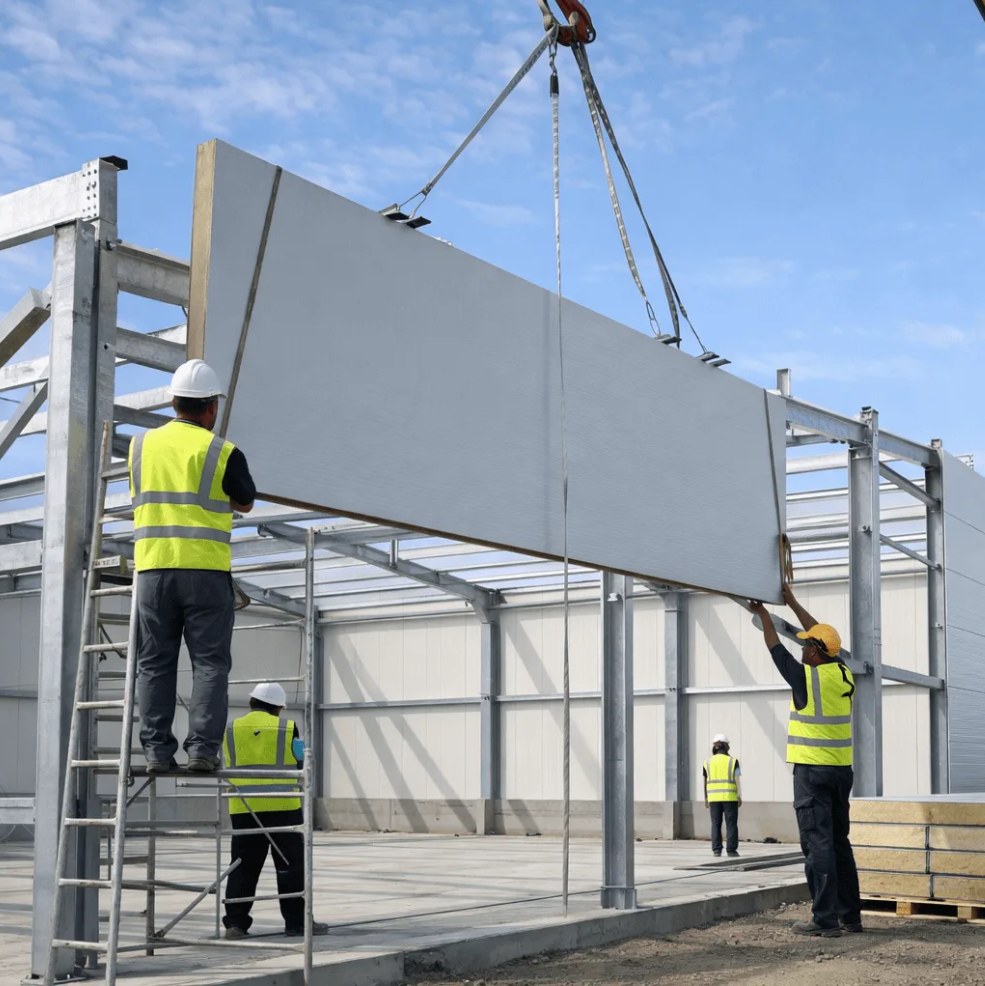
Many procurement discussions become complicated at the interfaces.
Consider a building with a steel frame, insulated walls, several doors, ventilation openings, and service penetrations. Each component may come from a different source. That can work well when the dimensions and connection details are coordinated early.
Problems tend to appear when they are not.
A door opening may not match the panel layout. A flashing profile may not fit the selected panel thickness. Fasteners may not suit the supporting structure. Roof penetrations may require additional sealing details. Even the transition between wall and roof panels can create questions about water drainage and thermal continuity.
These issues rarely dominate the original quotation. Yet they can affect installation time once materials arrive on site.
The same applies to accessories. Profiles, corner pieces, trims, sealants, fasteners, closures, and other small components often represent a modest part of the material cost. Their absence, however, can interrupt the installation sequence.
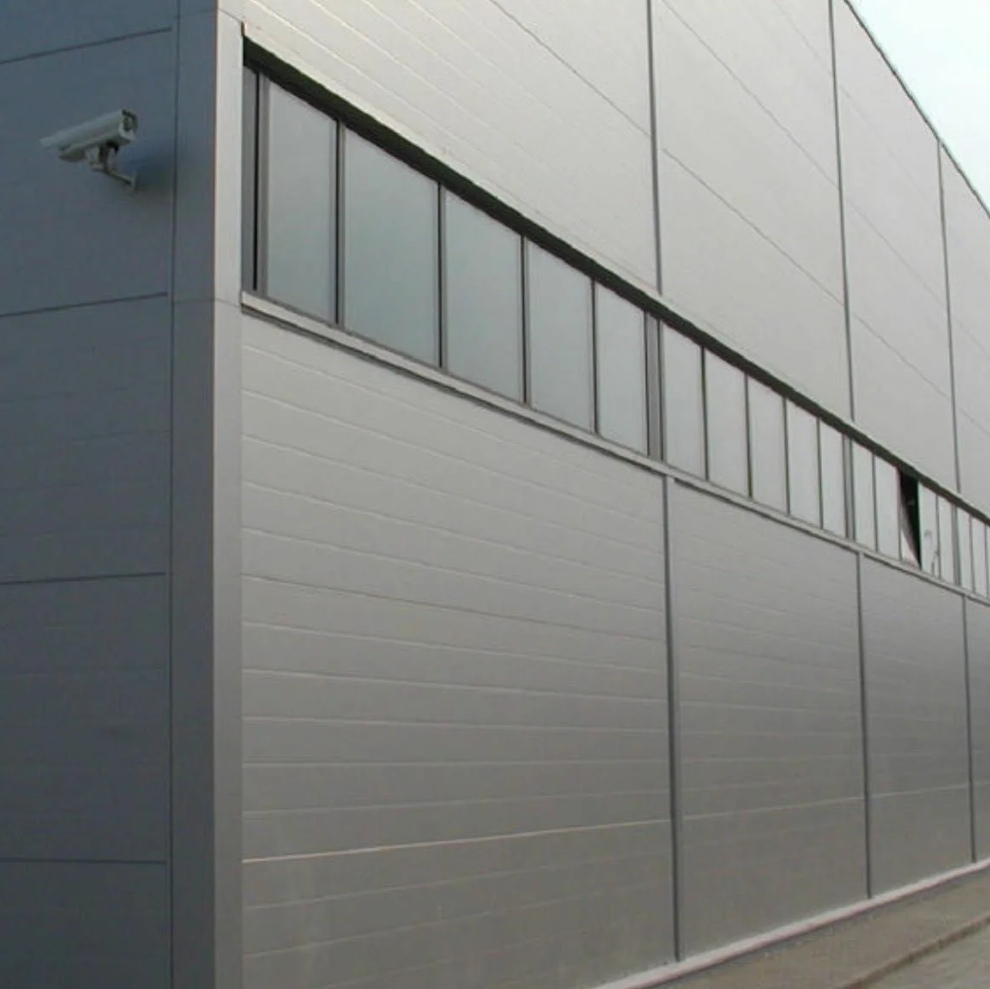
This does not mean every project needs every accessory from one supplier. It means the envelope should have a clear technical boundary. Someone needs to know which components connect to each other and who provides them.
From Material Quantity to Building Performance
The difference between buying panels and buying a building envelope becomes most visible during installation.
When the procurement process starts with quantities alone, the discussion often focuses on square meters, thickness, core material, and surface coating. These specifications are important, but they describe only part of the final system.
A more complete view considers how the panels will be installed and maintained. It asks how corners are finished, how openings are formed, how roof water is managed, and how the enclosure connects to the structural frame.
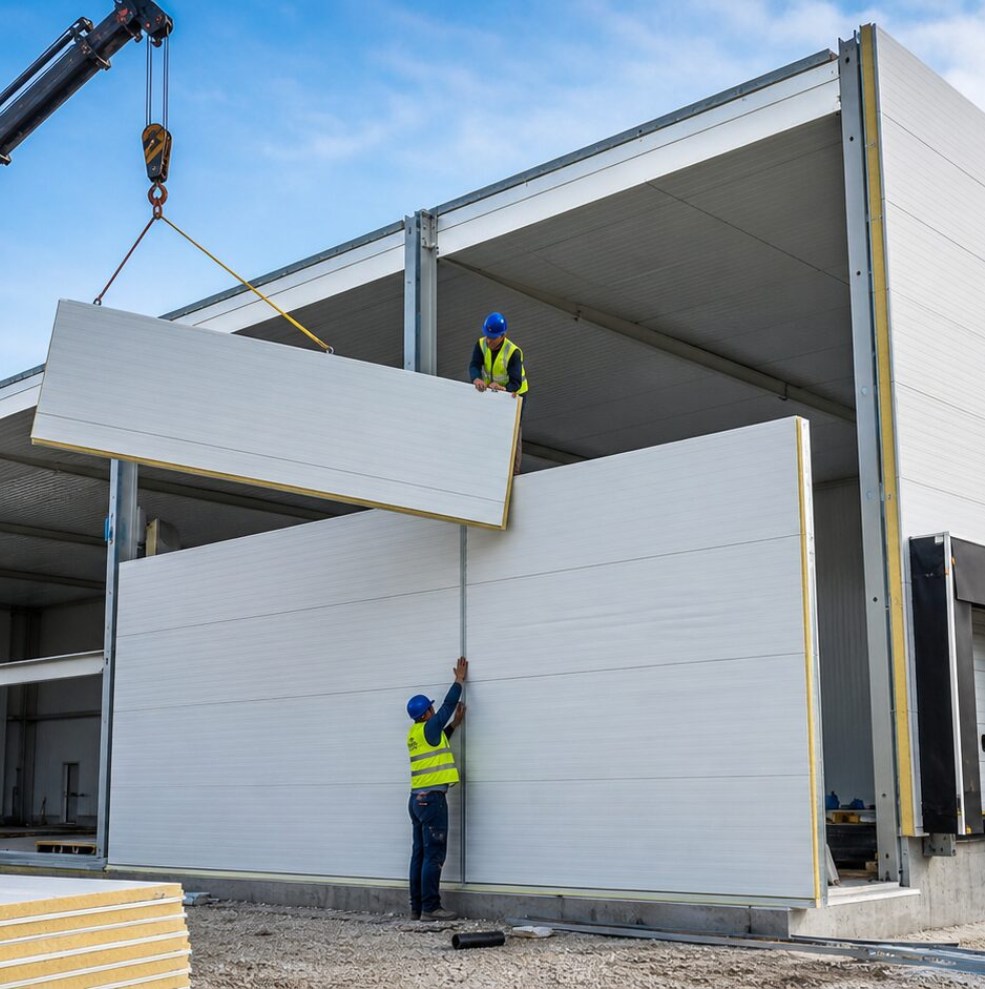
It also considers the local environment. A coastal building may face strong wind and salt exposure. A cold-region warehouse may place greater demands on thermal continuity. An industrial facility may need stronger attention to fire performance or frequent cleaning.
These conditions can influence panel selection, connection details, coatings, and accessories at the same time.
For an ongoing project, this system-level view can also make procurement discussions more practical. Instead of comparing two panel prices in isolation, the comparison can include the components and details required to turn those panels into a working envelope.
A good building envelope does not necessarily come from the most expensive panel. It comes from compatible decisions across the whole enclosure.
That is the real difference between buying a sandwich panel and buying a building envelope. The first gives you a material. The second defines how that material, the structure, and the surrounding details are expected to work together once the building is finished.
Post time: Aug-26-2026