

A rock wool sandwich panel is often selected when fire performance becomes a major part of the building envelope specification. But in higher-specification markets, the discussion rarely stops at the insulation core. Panel design, joint geometry, fixing, structural loads, production tolerances, and fire-test evidence all need to work together.
This is particularly relevant in Europe, Russia, and North America. These markets do not use one common approval route, and the same panel construction cannot simply be treated as interchangeable everywhere.
European Projects: The Panel Is a Structural Product
In Europe, EN 14509 provides an important reference for factory-made, self-supporting double-skin metal-faced insulating panels. It covers mineral wool as well as PUR, PIR, EPS, XPS, phenolic foam, and cellular glass. More importantly, the standard deals with much more than thermal insulation and reaction to fire. It also addresses mechanical resistance, durability, dimensional tolerances, conformity assessment, and design procedures.
That changes how a rock wool sandwich panel should be designed.
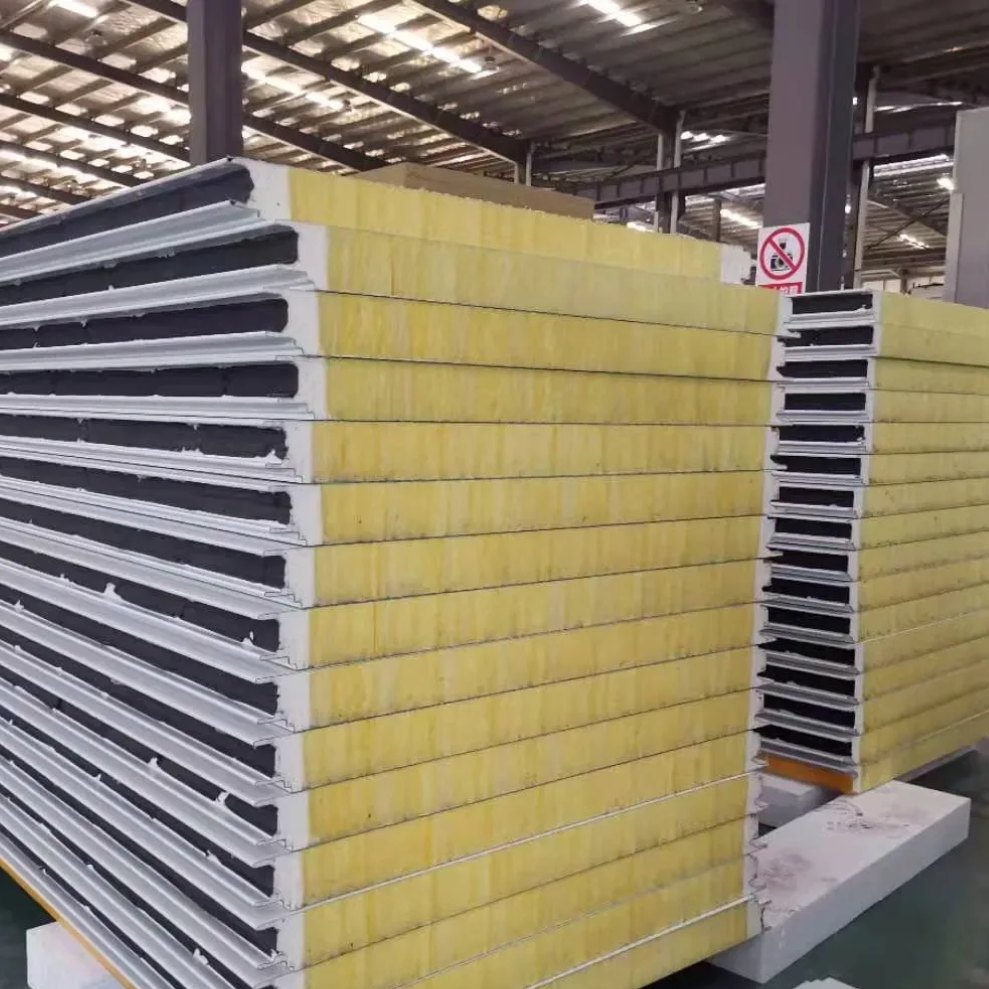
Panel thickness cannot be selected only from the required U-value. The design also needs to consider span, support spacing, wind pressure, snow loads, fastener capacity, and the mechanical properties of the core. EN 14509 includes testing for properties such as shear strength and shear modulus, which directly relate to how a panel behaves under load.
There is another detail that often gets overlooked. European engineering guidance recognizes that sandwich panels can contribute stiffness to steel members and provide resistance against lateral or torsional movement. The actual contribution depends on the panel system and its connections.
For this reason, panel layout and fixing should be coordinated with the steel structure rather than treated as a finishing operation added later.
Russia: Fire Testing Meets Local Construction Conditions
Russian projects bring a different set of technical references. GOST 30244-94 establishes methods for determining the combustibility of building materials, while GOST 30247.0-94 covers general fire-resistance test methods for building structures. These standards address different questions, so a material classification should not automatically be presented as the fire-resistance rating of a complete assembly.
This distinction becomes important around joints and connections.
Russian fire-safety provisions can require the fire resistance of structural connections and interfaces to correspond to the required performance of the connected assemblies. In other words, a fire-rated wall cannot be considered only by looking at its core material while ignoring how the panels meet the steel frame or other building elements.
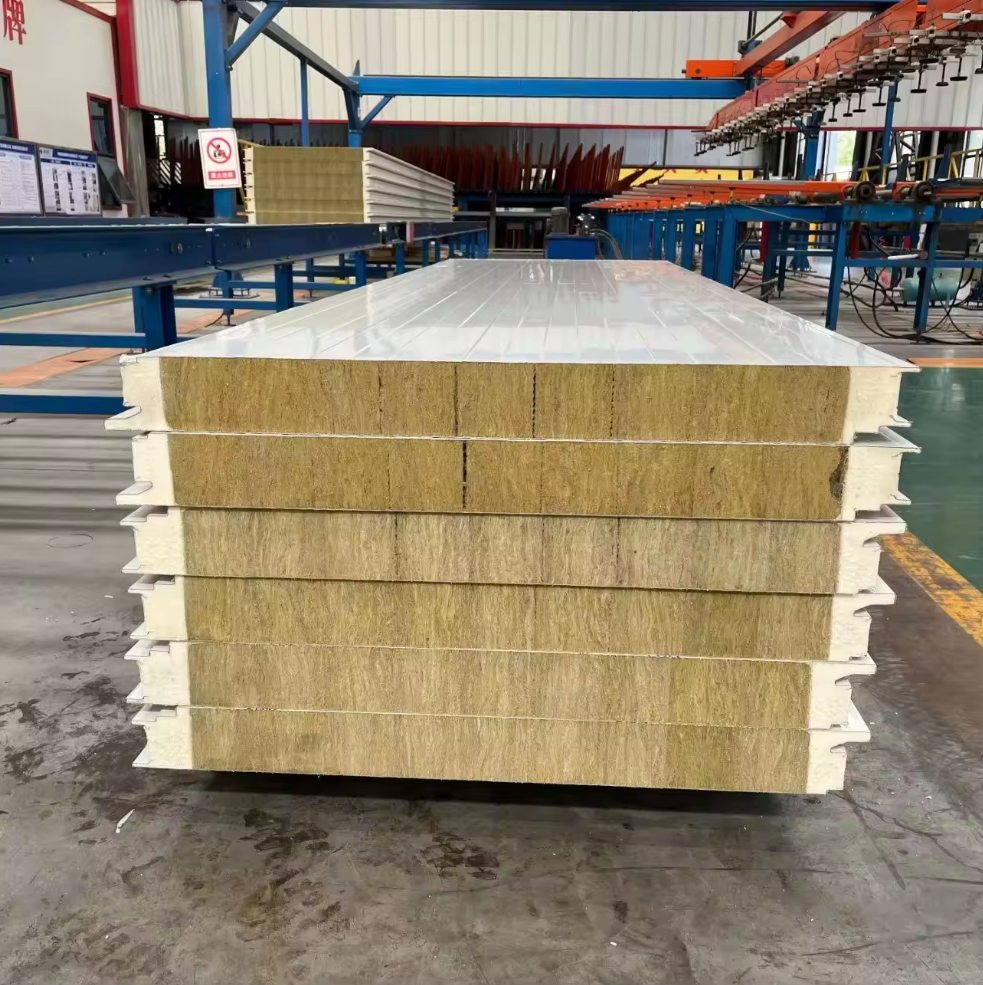
Local environmental conditions also influence panel engineering. In cold regions, panel joints need to maintain their intended geometry through significant temperature changes. Snow and wind loads affect support spacing and fastener arrangements. Low temperatures can also make installation tolerances and sealing details more significant.
A rock wool sandwich panel for a Russian industrial building therefore needs to be considered as part of the complete wall or roof construction, not simply as a mineral wool product with a fire certificate.
North America: Certification Often Extends to the System
North American projects can follow another logic. Instead of relying only on a material classification, specifications may call for a tested or approved panel assembly.
FM Approvals is a useful example. Its certification program covers building materials, wall assemblies, roofing assemblies, and other property-loss prevention products. FM also maintains specific requirements for insulated metal panels and references FM Approval 4880 for Class 1 fire-rated building panels or interior finish materials.
This creates a practical difference in procurement.
The question may not simply be whether the core is noncombustible. The project can require a particular tested construction, including the panel configuration, facing, joint treatment, fasteners, and installation method. FM’s plan-review guidance also asks for construction drawings showing wall and ceiling materials, specifications, layers, and relevant details.
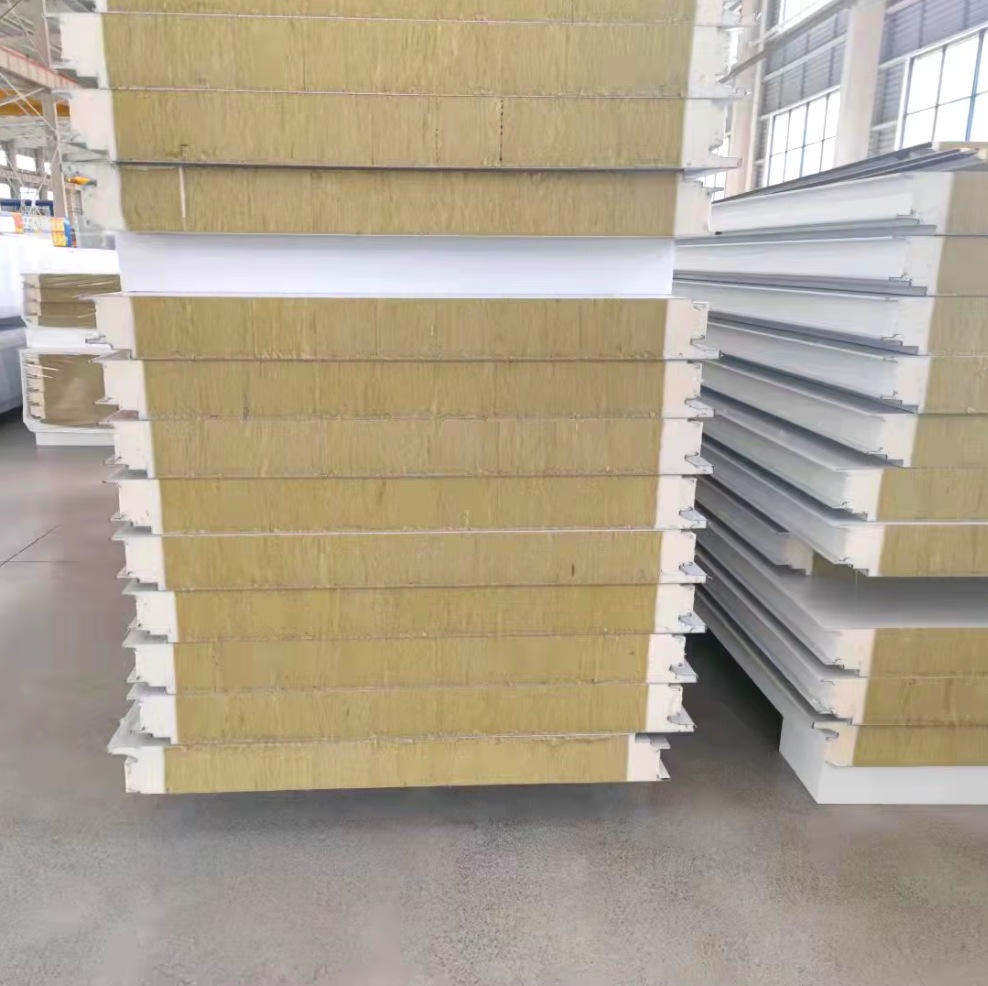
This is one reason a rock wool sandwich panel designed for one market should not automatically be described as “FM compliant” or suitable for another certification route without checking the actual listing and construction.
Production Details Become Part of the Specification
High-end panel production is therefore less about making a thick mineral wool core and more about controlling the complete panel consistently.
Core density and thickness need to remain within the declared range. The steel facings need stable dimensions and coating quality. Adhesive application needs consistent coverage and curing conditions. Panel thickness and length require dimensional control, especially when long panels meet structural openings or multiple panels form a continuous elevation.
Joint preparation deserves particular attention.
A profiled joint may need to accommodate sealants, fasteners, overlapping steel skins, and local insulation treatment. Small dimensional deviations can accumulate across a long wall. Poorly controlled edges can also create gaps that complicate fire stopping, air tightness, or weather protection.
The same principle applies to cutting and openings. Door openings, windows, penetrations, corners, and transitions to roofs should follow the approved or engineered detail rather than being improvised on site.
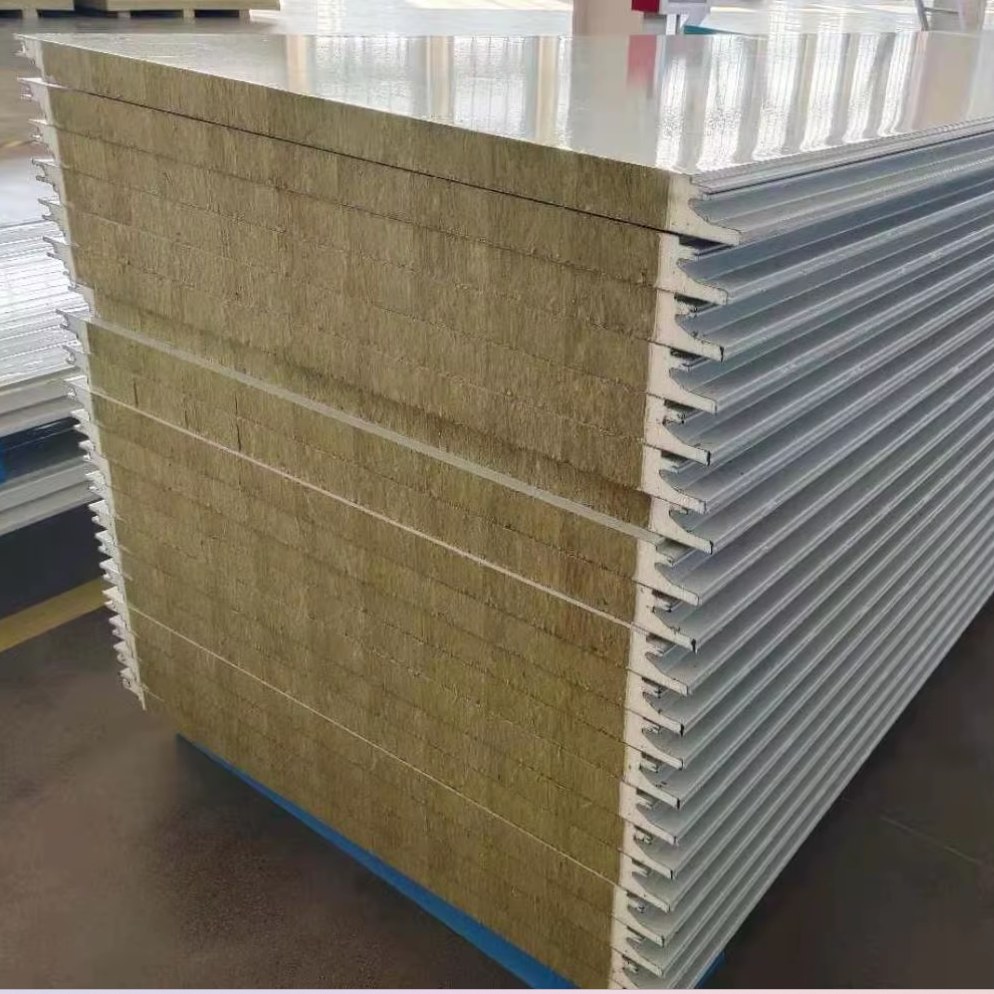
This is where factory production control has a direct relationship with installation quality. A panel that meets a laboratory specification but arrives with inconsistent dimensions can still create problems during construction.
Installation Habits Reveal the Real Specification
On demanding projects, installation drawings usually carry more information than panel length and thickness.
They can define screw type and spacing, support locations, joint direction, sealant positions, corner details, flashings, openings, and interfaces with other building elements. This approach is especially useful when local installation teams work from factory-produced components.
The installation sequence also matters. Panels need suitable temporary protection during handling, correct alignment at the first panel, controlled fastening, and careful treatment of cut edges. Excessive tightening can deform the facing around fasteners. Insufficient tightening can compromise the connection or weather seal.
For fire-sensitive buildings, the same discipline should continue around penetrations and interfaces. The performance of the finished wall depends on what happens at these details, not only on the mineral wool core between two steel sheets.
One Product, Different Technical Routes
The EU, Russia, and North America do not ask exactly the same questions. Europe places strong emphasis on harmonized product requirements and structural design within the Eurocode framework. Russia combines its own GOST-based testing and construction requirements. North American projects may rely heavily on listed or tested assemblies, including FM requirements where specified.
The common lesson is straightforward.
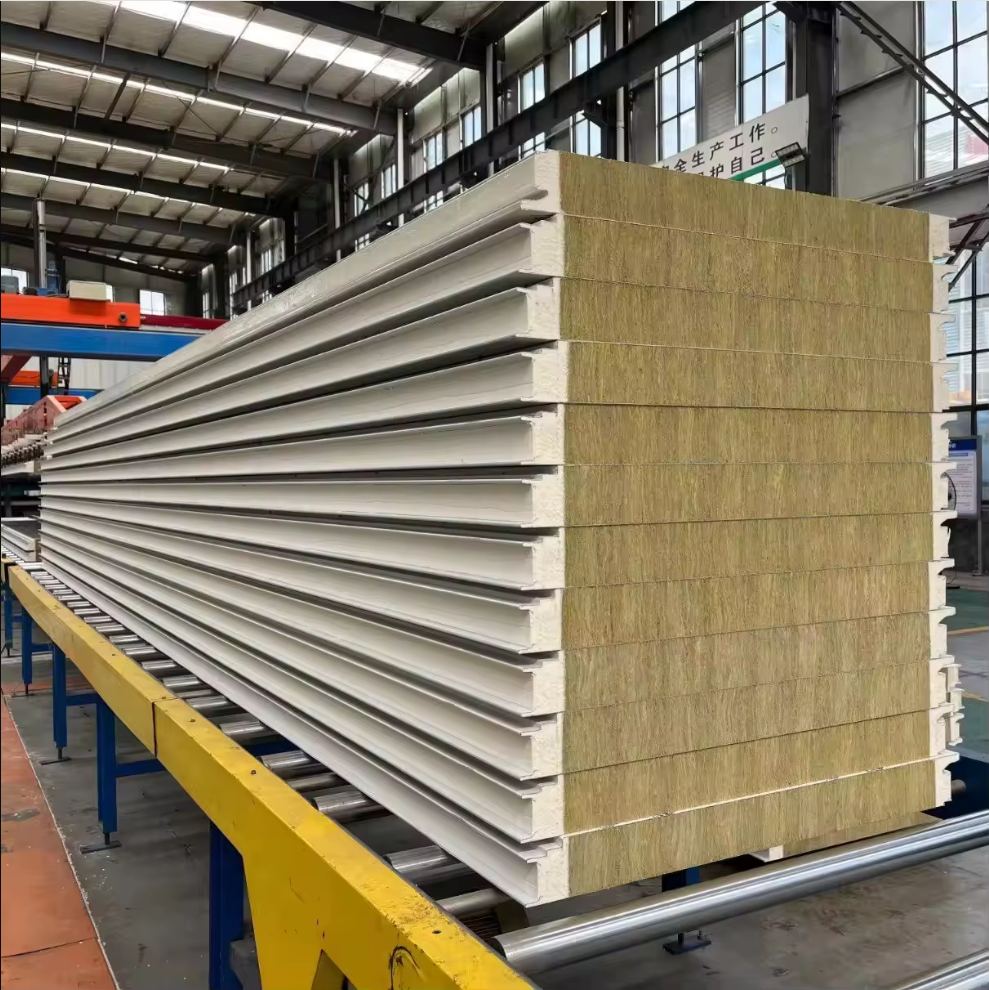
A high-performance rock wool sandwich panel is not defined by mineral wool alone. Its real performance comes from the relationship between the core, steel facings, joint construction, structural design, production control, certification evidence, and installation details.
That is also why technical discussions about building cladding become more useful when they begin with the required building performance and local approval route, rather than starting with a generic panel thickness or insulation material.
Post time: Sep-16-2026