

Industrial sandwich panels play a critical role in modern factories, warehouses, cold storage facilities, and industrial buildings. However, many investors and contractors focus on panel specifications while overlooking an equally important issue: packaging and transportation protection. During international shipping — especially ocean freight — industrial sandwich panels face several risks that directly affect project quality, installation efficiency, and long-term performance.
Why Transportation Protection Matters for Large Projects
Large construction projects often involve hundreds or even thousands of square metres of panels. Even minor transportation damage can therefore create delays and unexpected costs that ripple through the entire project schedule.
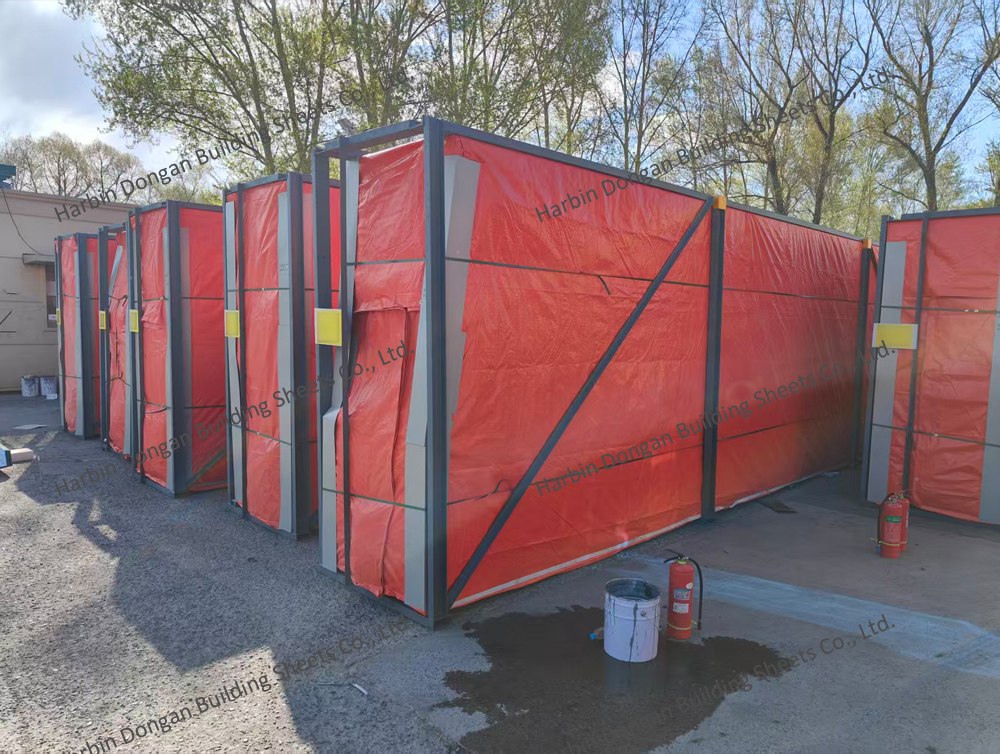
Moisture remains one of the most serious threats during sea transport. Containers experience significant temperature swings between day and night, and condensation regularly forms on interior surfaces and cargo. For rock wool panels, prolonged moisture exposure doesn’t just affect insulation performance — it can cause permanent degradation of the mineral wool core and increase panel weight, making on-site handling and installation considerably more difficult.
High temperatures present a separate challenge. Containers crossing tropical regions can reach extreme internal temperatures. Without appropriate packaging materials and ventilation consideration, protective surface films deteriorate faster — leaving panel coatings exposed to scratching, oxidation, and surface stress for the remainder of the voyage.
Edge protection is equally critical. Rock wool sandwich panels are particularly vulnerable to corner impacts during loading, unloading, and inland haulage. Even minor edge damage affects joint sealing performance and creates remediation work on site that was never budgeted for.
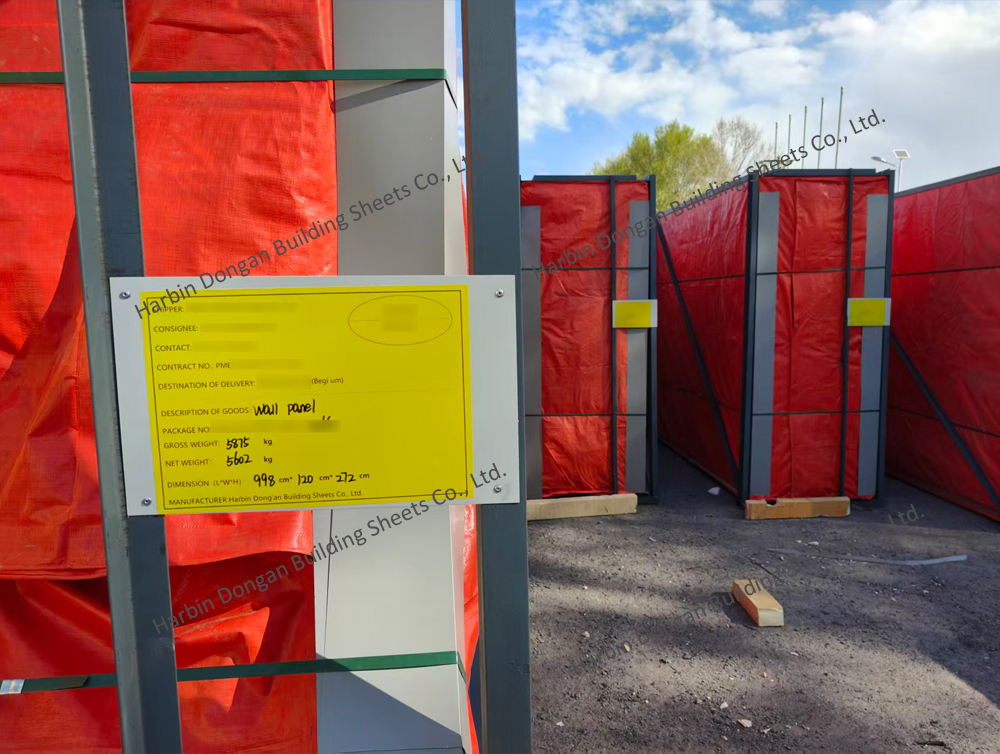
Stacking pressure deserves careful attention as well. Improper loading methods can deform panels or damage protective coatings before they arrive at the project location — damage that is often invisible until installation begins.
For investors, these issues translate directly into schedule risk. For contractors, they increase labour costs and installation complexity. Transportation protection deserves the same attention as the panel specification itself.
Effective Packaging Methods for Industrial Sandwich Panels
A reliable packaging system needs to address the real conditions encountered during international logistics — not just the ideal ones.
Moisture-resistant packaging materials reduce the impact of condensation during long voyages. Effective systems typically combine waterproof wrapping at the panel level with fully sealed bundle packaging, creating two layers of protection against humidity ingress.
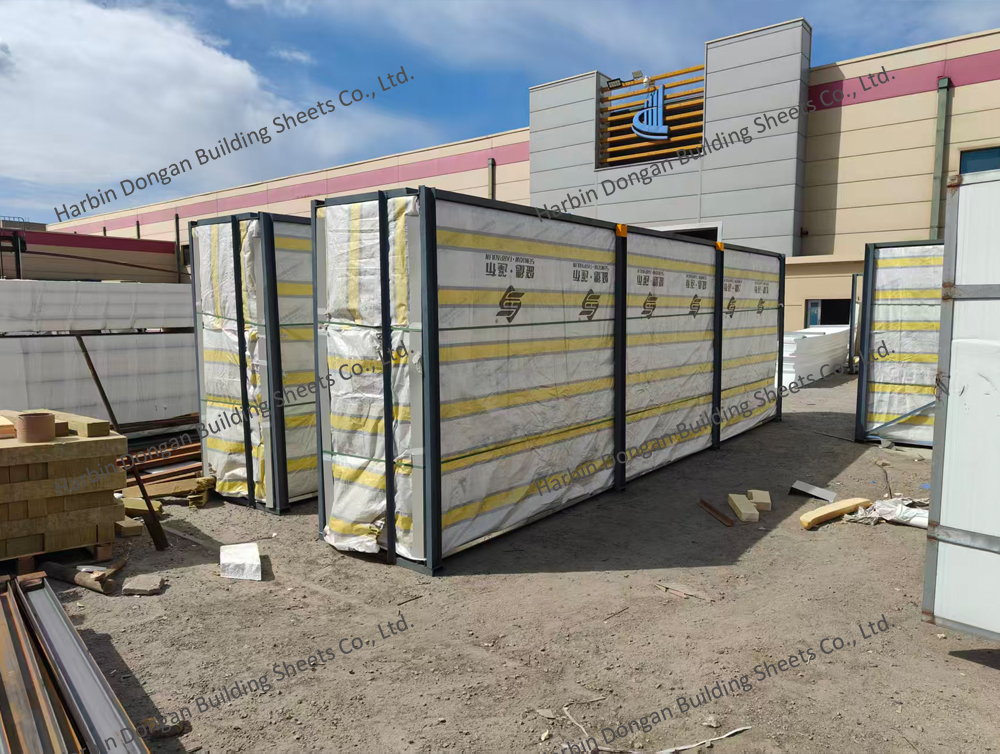
Reinforced edge guards protect against impact damage during loading and transit. This is particularly important for rock wool core panels, where edge integrity directly determines joint sealing quality on site.
Stable pallet structures and secure strapping systems keep panel bundles fixed throughout the shipping process, minimising the vibration and lateral movement that gradually loosen protective wrapping and stress panel surfaces over a multi-week voyage.
Separating panel layers with protective interleaving materials reduces surface friction and preserves the appearance of coated steel facings — a detail that matters when panels will be visible in the finished installation.
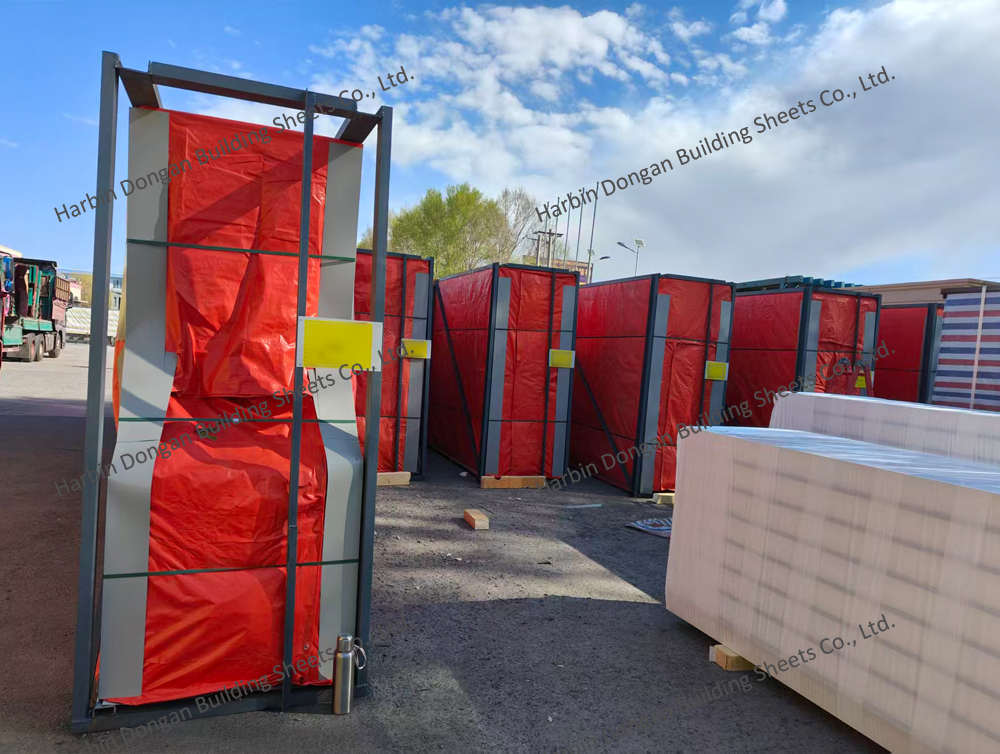
Most importantly, packaging design should reflect the specific destination and routing of each shipment. A consignment travelling through humid equatorial sea lanes faces fundamentally different risks than one destined for a dry inland port. Transportation planning should therefore begin well before production is completed — not after the fabrication schedule is already locked.
Industrial sandwich panels represent a long-term investment in building performance. A supplier that understands international logistics as well as manufacturing gives you a meaningful advantage before construction even begins.
If you are planning a cold storage, warehouse, factory, or industrial building project at medium or large scale, raise packaging and transportation details alongside technical specifications from the start. The conversations that happen before production begins are the ones that prevent costly surprises after the cargo reaches site.
Post time: Jun-01-2026