

Modern companies need flexible and efficient office space , steel structure office building offers it with strong performance and fast construction. Many projects use steel frames in buildings from 500 m² to 20,000 m².
Steel Frame Structure?
Steel frames support large open space. Many offices need spans of 10 m to 20 m without interior columns. Steel beams reach these spans with ease. A reinforced concrete beam often needs more depth for the same span. Steel allows lighter design. Many steel beams weigh 20% less than concrete beams in similar tasks.
Steel frames speed up construction. Workers assemble steel parts on site with high accuracy. Many mid-size office projects finish the structure within 30 to 60 days. Concrete frames often take 60% more time because they need curing. Steel reduces on-site wet work. This also reduces dust and noise.
Steel frames resist earthquakes well. Many steel joints deform without collapse. Tests show steel structures absorb 15% to 25% more energy than concrete structures. This protects the building during strong shaking. Many office districts in seismic zones choose steel for this reason.
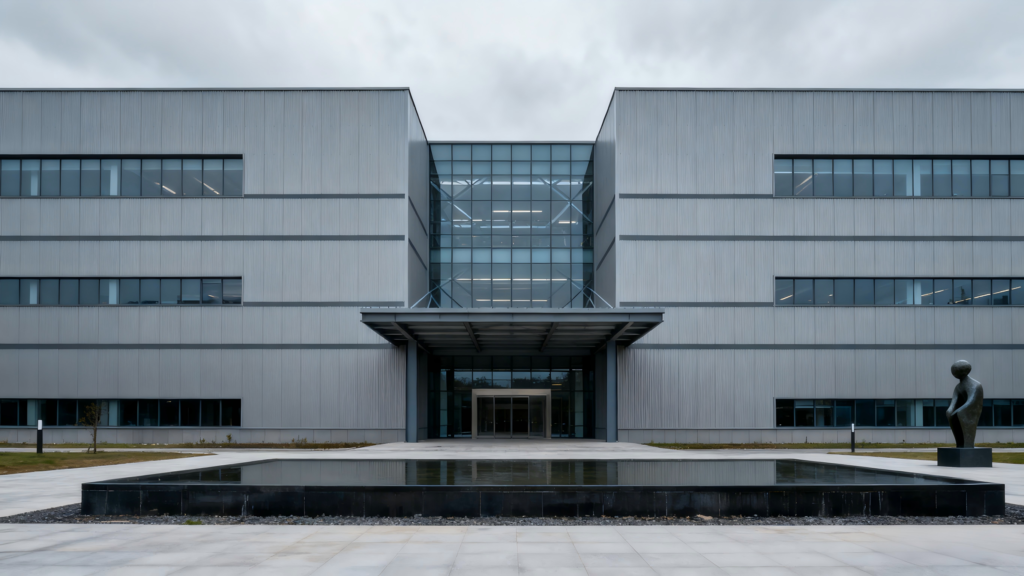
Steel supports long-term changes. Many companies change layout every three to five years. Steel columns allow easier partition movement. Floor systems accept extra cabling without major changes. This flexibility helps reduce future renovation cost by 10% to 30%.
Materials
A steel structure office building uses many materials. The main frame uses H-section steel or box steel. H-section steel often reaches strength grade Q235 or Q345. A typical column holds loads near 1500 kN. A floor beam often holds loads near 500 kN.
The floor system uses deck sheets and concrete topping. Many deck sheets use 0.8 mm to 1.2 mm galvanized steel. One square meter of deck sheet weighs around 8 kg to 12 kg. Workers pour 80 mm to 120 mm of concrete above the sheet. This creates composite action and increases strength.
Wall materials vary. Many offices use light steel studs with gypsum boards. A single layer of gypsum board usually has thickness near 12 mm. Some buildings use glass curtain walls. These systems use 6 mm to 12 mm tempered glass. The aluminum frame holds the glass panels. Sandwich panels wall system is also a good choice.
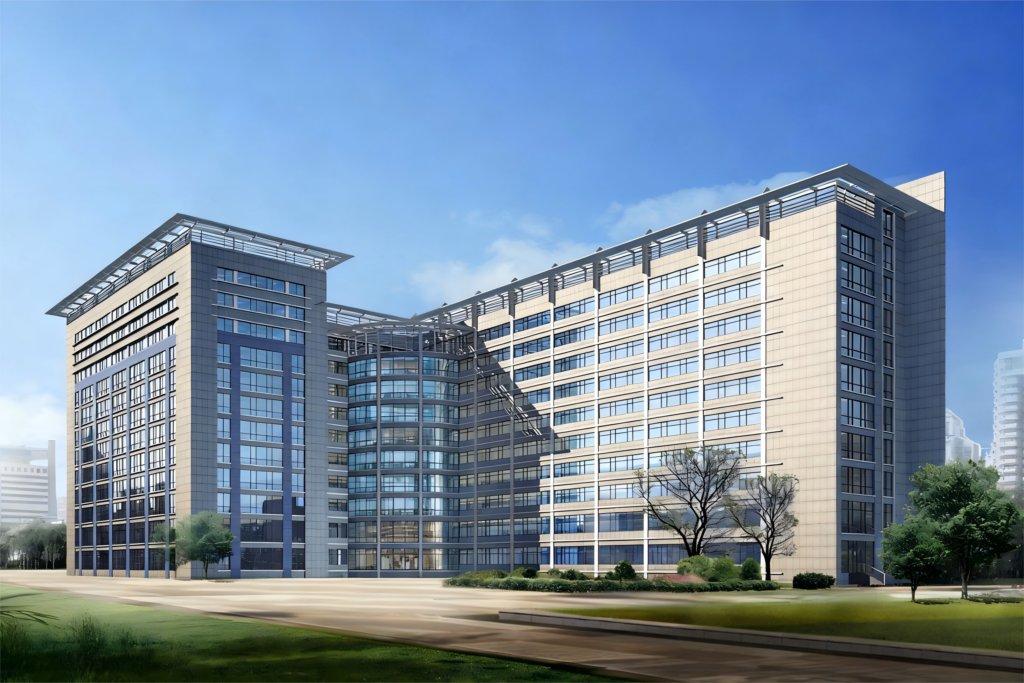
Roof systems use sandwich panels or steel sheets with insulation. A PU sandwich panel often uses 50 mm to 100 mm of foam. The foam density often reaches 38 kg/m³ to 42 kg/m³. This improves thermal control.
Exterior cladding uses aluminum panels, stone panels, or glass systems. Aluminum panels often reach 3 mm in thickness. Many stone panels reach 20 mm. These materials provide long life and good appearance.
The joint system uses high-strength bolts. M20 and M24 bolts remain common. Many bolts hold tension near 100 kN to 150 kN. Welds also support key parts. Weld depth often reaches 6 mm to 10 mm.
Advantages
Steel structure office buildings offer strong benefits. The structure stays light. A steel frame often weighs 30% to 40% less than a concrete frame. This reduces foundation cost. Many foundations use 15% to 25% less concrete.
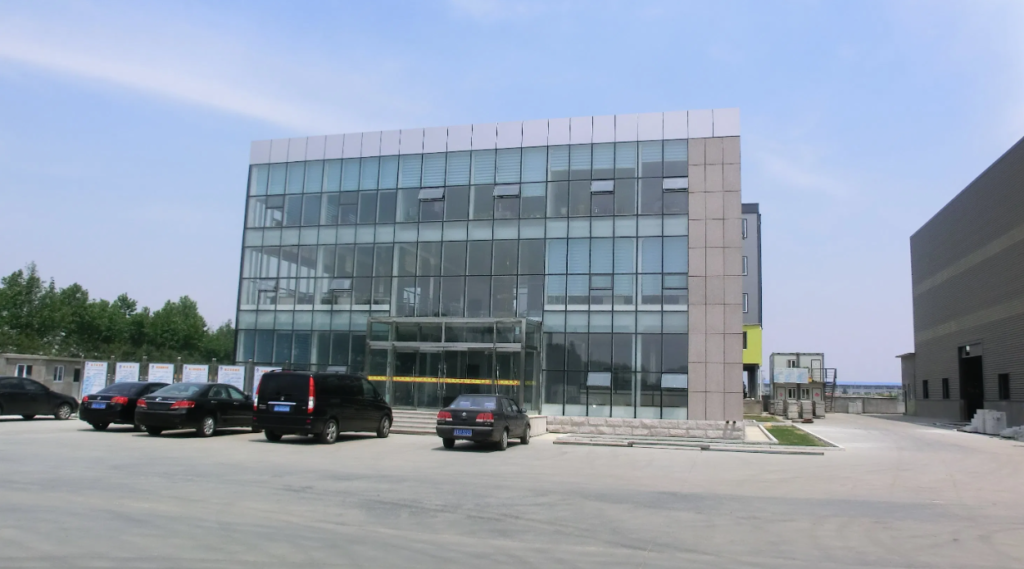
The building gains high strength. Steel columns support heavy loads with smaller size. A steel column often measures 300 mm by 400 mm. A concrete column for the same load often needs 600 mm by 600 mm. Smaller columns give more interior space. Many offices gain 5% more usable area with steel.
Steel buildings resist fire well with proper protection. Fireproof coating adds 2 mm to 5 mm to the steel surface. This allows fire resistance rating of 1.5 to 2 hours. Many office standards follow this level.
Steel improves environmental performance. Many steel parts come from recycled sources. Some factories use 30% to 60% recycled steel in production. Workers can also recycle steel when the building changes. This reduces waste.
Steel supports clean construction. Many steel parts arrive pre-fabricated. This reduces on-site waste by 50% compared to concrete. Many cities prefer this method to reduce dust.
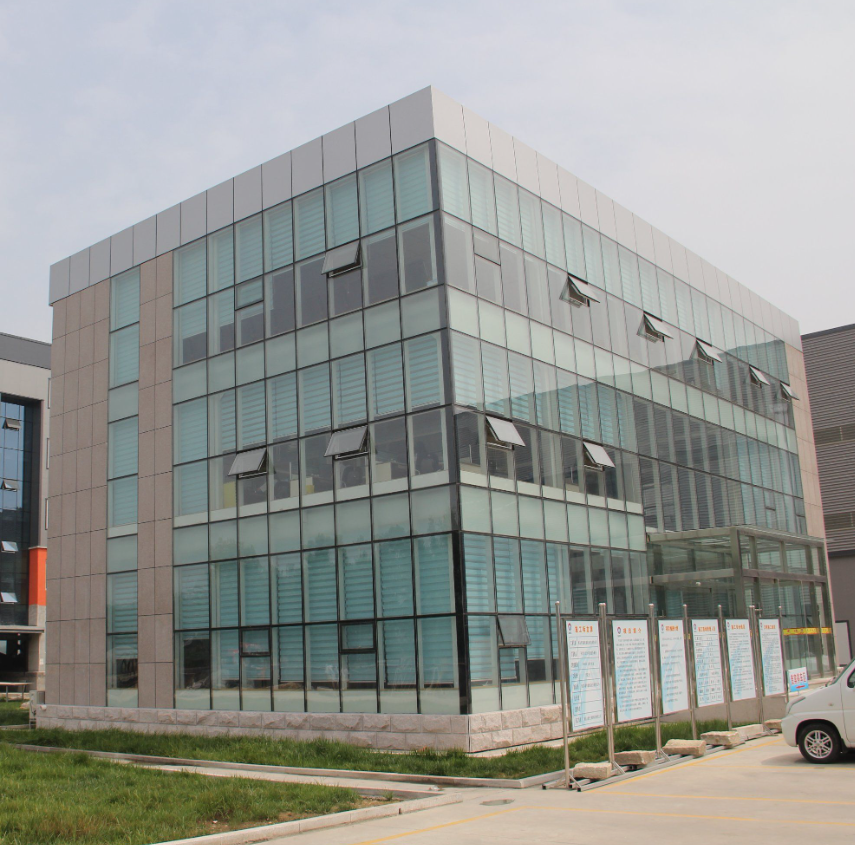
Steel allows long spans. The building can include wider meeting rooms or open work zones. Many designers use spans of 9 m to 12 m for modern office floors. This improves comfort and layout freedom.
Performance and Long-Term Behavior
Steel structure office building shows strong performance indicators. The frame keeps good stiffness. Many steel beams reach deflection limits under L/250 to L/350. This reduces vibration and improves comfort.
The building resists wind loads well. A medium office building often faces wind pressure near 0.5 kN/m² to 0.8 kN/m². Steel frames handle these loads with ease. The bracing system uses steel tubes or rods. A typical bracing rod resists 100 kN to 200 kN of tension.
Steel buildings control temperature well with good insulation. PU panels with 50 mm thickness often reach U-value near 0.30 W/m²·K. This reduces energy use by 10% to 20% in office areas.
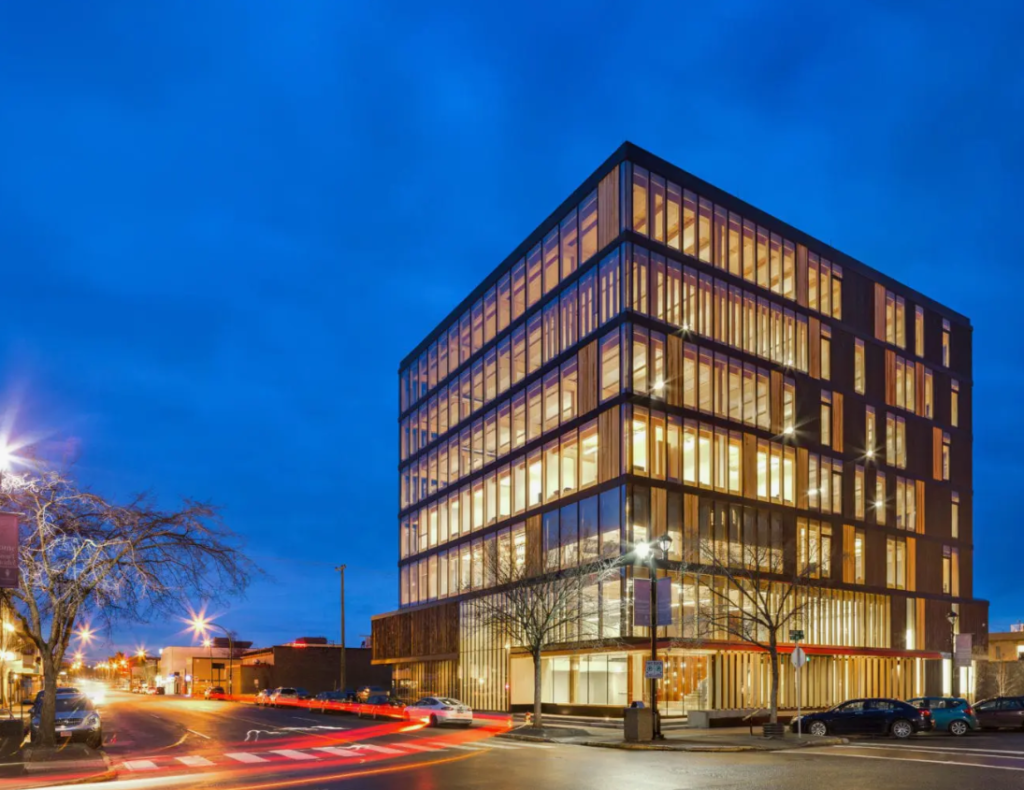
Acoustic performance improves with layered walls. Gypsum boards and insulation wool reduce sound by 40 dB to 50 dB. This supports quiet work. Many meeting rooms use double layers to reach even higher values.
Long-term maintenance cost stays low. Steel frames need inspection every three to five years. Many frames show rust growth under 0.1 mm per year with good coating. A standard zinc coating of 275 g/m² protects steel for over 25 years.
Harbin Dong`an Building Sheets Company is leading manufacturer of steel structure products in China. The company has undertaken hundreds of steel structure engineering projects around the world and has rich experience. A strong team of designers and advanced production equipment such as laser cutting machines and 3D CNC drills can ensure the reasonable design and precise processing of components. This can save you more costs and construction time.
Post time: Dec-05-2025