

Steel structure buildings are not just limited to warehouses and factories, they have become powerful visual ambassadors for modern cities. More and more architects are using steel-structured houses to convey artistic pursuit, technical confidence, and cultural ambition. When a steel structure landmark succeeds, it leaves a lasting impression on visitors and investors alike. The Harbin Polar Museum stands as a clear example.
High-difficulty City Landmark
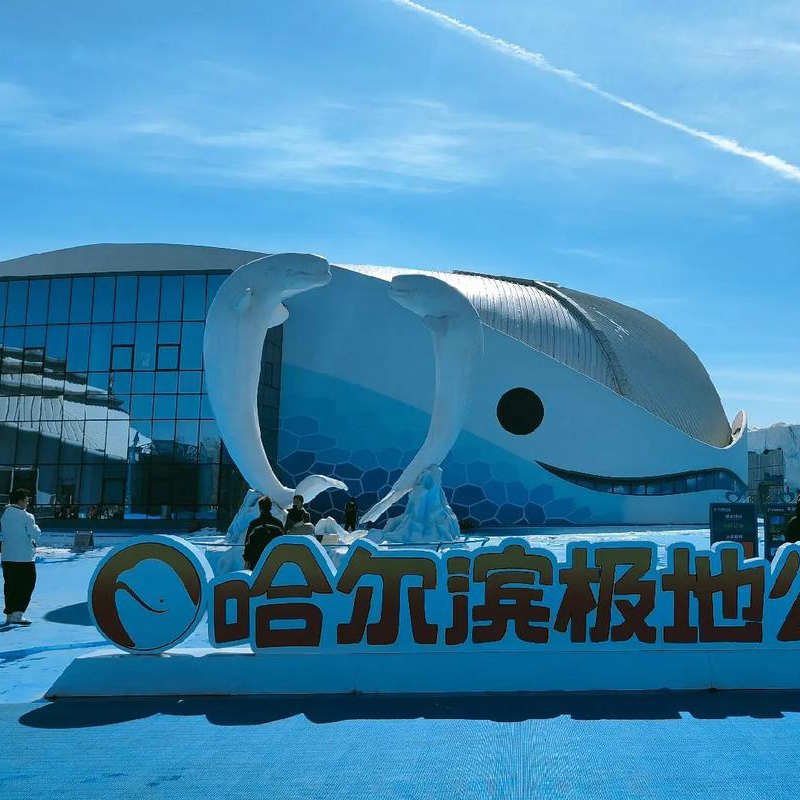
Harbin, the core city located in northeastern China, is widely recognized for its cold climate, ice festivals, and winter culture. The Polar Museum reinforces this identity by placing the beluga whale performance at the center of its visitor experience. Architects translated this core attraction directly into the building’s appearance. The museum resembles the head of a beluga whale, with smooth curves and a streamlined profile that evoke motion and vitality. This instantly recognizable form connects architecture with cultural expression, allowing the building itself to tell a story before visitors even enter.
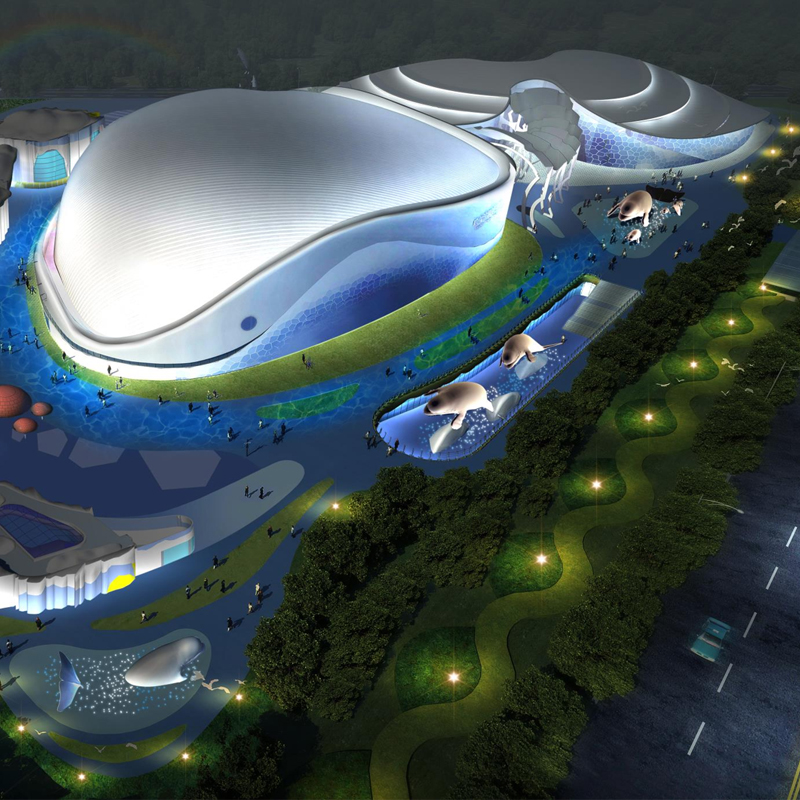
Achieving such an organic shape required a hyperboloid structural system. This geometry introduces significant technical challenges. Unlike conventional box-shaped buildings, the curved surface changes continuously in multiple directions. Structural designers had to manage complex force paths while maintaining precise geometric control. Every steel member plays a visible role in shaping the exterior envelope, which left little tolerance for dimensional error or misalignment.
The steel structure therefore demanded a high level of integration between design, manufacturing, and installation. Harbin Dongan Building Sheets Company assumed this responsibility.
Turning the Designs of Steel Structure Buildings into Reality
The company’s engineers worked closely with the venue’s design team to refine the exterior design of the venue, turning the blueprints into reality.
Teams optimized the design and arrangement of steel members to follow the curvature of the beluga-inspired form while maintaining structural efficiency. Connection nodes received special attention, as they had to accommodate changing angles without weakening the overall system.
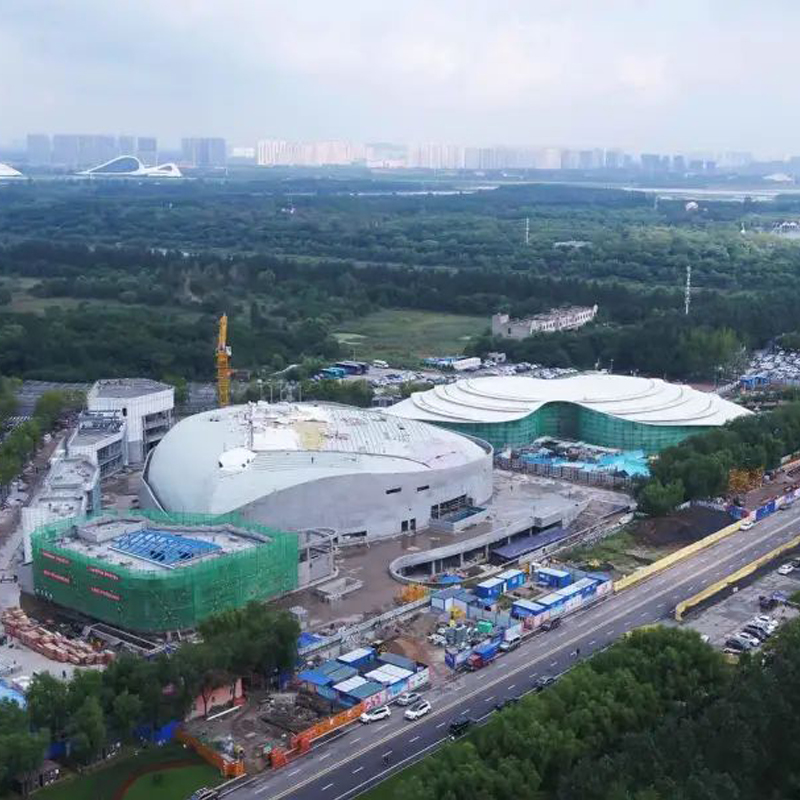
Advanced fabrication technology formed the backbone of this effort. Harbin Dongan Building Sheets Company employed modern equipment such as 3D CNC drilling machines to produce steel components with exceptional accuracy. Digital models guided every stage of production. Hole positions, cutting angles, and component lengths matched the design data precisely. This approach minimized cumulative errors that often arise in complex spatial structures.
High-precision manufacturing also simplified on-site construction. Steel components arrived with a high degree of readiness for assembly. Workers could position and connect members efficiently, even in areas with tight tolerances. Pre-assembled sections reduced the amount of adjustment required at height, which improved safety and installation speed. The refined production process transformed a highly complex structure into a manageable construction task.
Eventually, the Harbin Polar Museum, with a steel-structured roof covering an area of 7,000 square meters and using 400 tons of steel, was completed smoothly on August 30, 2020, as planned. This milestone marked the successful realization of a demanding architectural concept through disciplined engineering and manufacturing execution.
The Value of Steel Structure Buildings Is Not Only Efficiency
Beyond technical achievement, the museum now serves as a landmark that strengthens Harbin’s urban image. Its distinctive silhouette attracts visitors, photographers, and media attention. The building reinforces the city’s association with winter themes and modern cultural facilities. Currently, the Harbin Polar Museum has received over 10 million visitors. In this sense, the steel structure delivers economic and branding value alongside structural performance.
The Harbin Polar Museum demonstrates the evolving role of steel structure buildings in contemporary cities. Steel is no longer used only for efficiency and speed. It now enables expressive forms that carry cultural meaning and commercial appeal. When supported by advanced fabrication technology and precise installation, steel structures can transform ambitious ideas into enduring urban symbols. Such projects prove that a well-executed steel structure building can truly become a city’s business card.
Post time: Jan-19-2026