

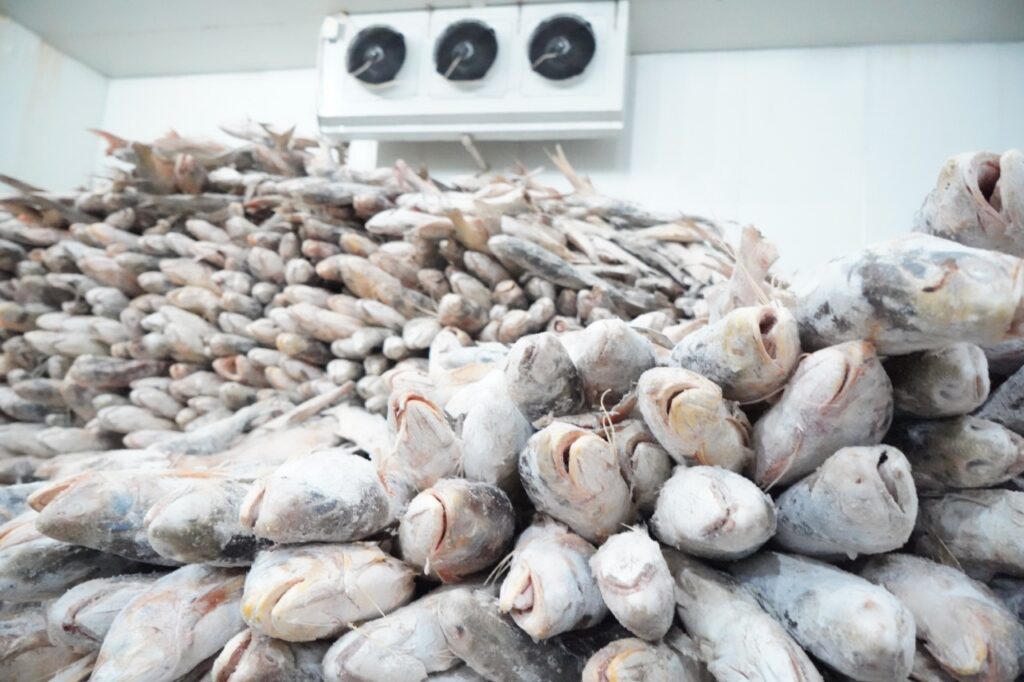
Seafood cold rooms protect fresh fish, shrimp, and shellfish from rapid spoilage. Seafood loses quality faster than meat because its protein breaks down in less than six hours at 10 °C. Many seafood plants therefore use strict temperature control between −25 °C and 0 °C. Seafood cold rooms offer stable humidity, fast cooling, and clean airflow. These features help keep product loss below 3%.
Difference
Seafood cold rooms handle higher moisture and stronger odors than fruit or meat rooms. Fresh fish releases almost 6% water during early storage. A normal cold room cannot manage this fast moisture load. A seafood cold room uses stronger airflow to move 150 m³ per minute in medium rooms. This airflow keeps surfaces dry and reduces bacterial growth.
Seafood also carries sensitive protein structures. These proteins lose quality when temperatures move more than 1 °C. Normal cold rooms often allow wider temperature swings of 3 °C. A seafood cold room uses fine sensors that track changes every 10 seconds. This system keeps the core temperature between −22 °C and −20 °C during freezing.
A seafood cold room also uses odor-control design. Fish releases strong amines when the temperature rises above 4 °C. Normal cold rooms sometimes spread these odors into nearby storage zones. A seafood cold room uses sealed doors with leakage rates below 0.2 m³ per hour. This design protects other food categories.
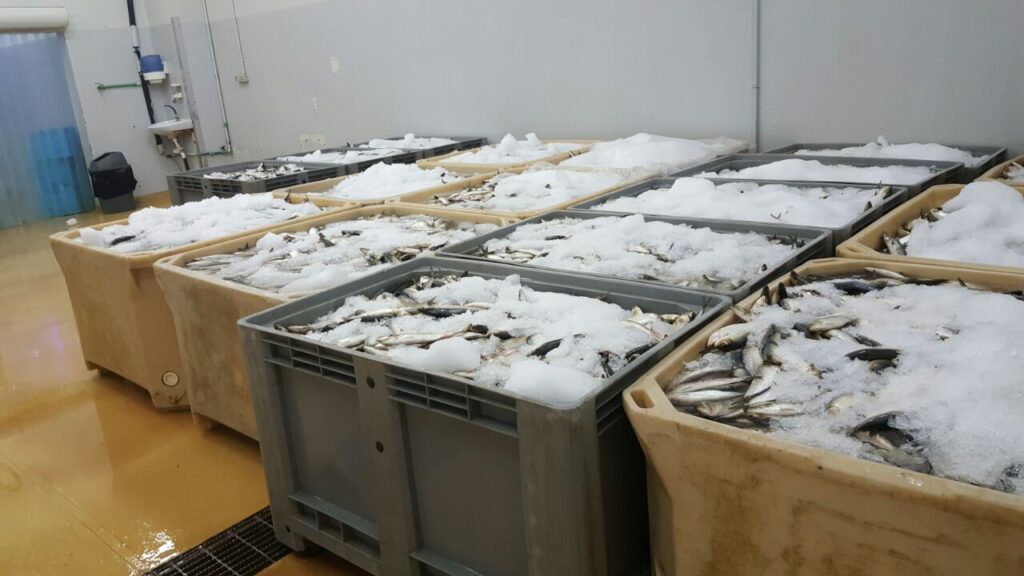
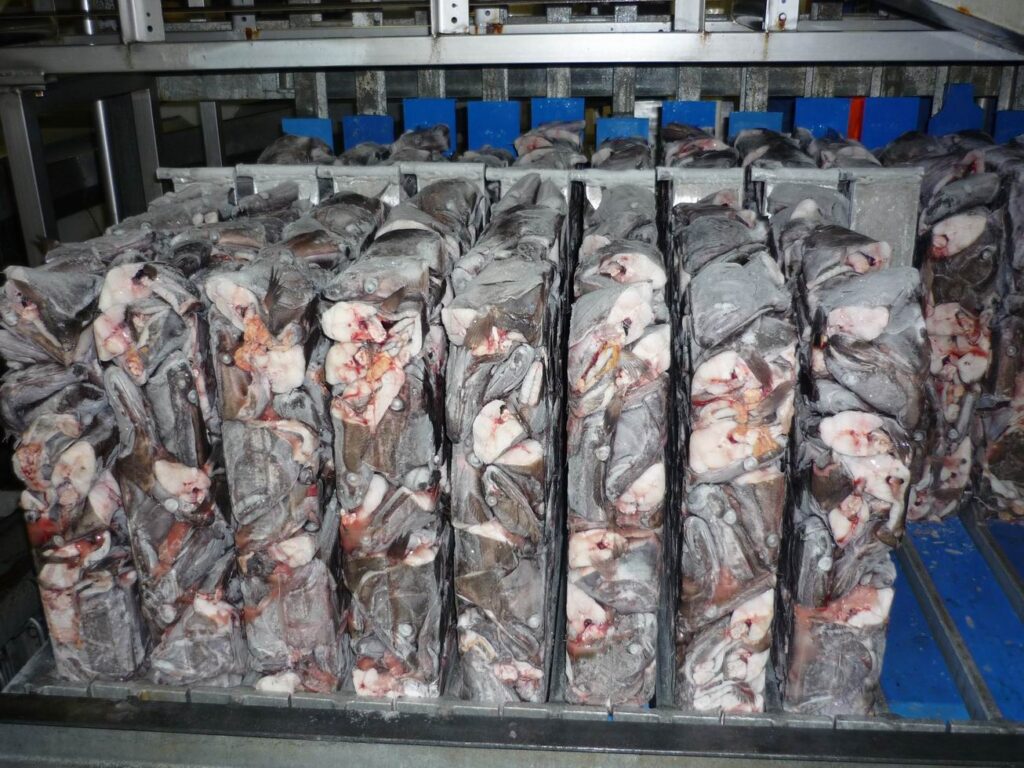
Seafood also freezes faster than red meat. Fish flesh freezes in 90 minutes when the temperature reaches −35 °C. Normal cold rooms rarely use such strong cooling. Seafood rooms often use blast sections that push air at 4 m/s across trays. This design keeps ice crystals small and protects texture.
These differences show that seafood cold rooms need stronger temperature control, faster airflow, and better odor management than standard cold rooms. These systems keep seafood fresh and market-ready.
Advantages
A seafood cold room offers strong freshness control. The system drops room temperature from 20 °C to −20 °C within 45 minutes. Fast pull-down time reduces bacterial growth by almost 70%. Fresh shrimp often stays firm for seven days under correct storage. Slow cooling in normal rooms can cut this time to four days.
The room also offers high energy efficiency. Insulated panels with 0.45 W/m²·K reduce energy loss by almost 30%. Many operators save 15% of power cost each month. The condensing unit also uses precise frequency control. This control lowers compressor power by 10% during low-load hours.
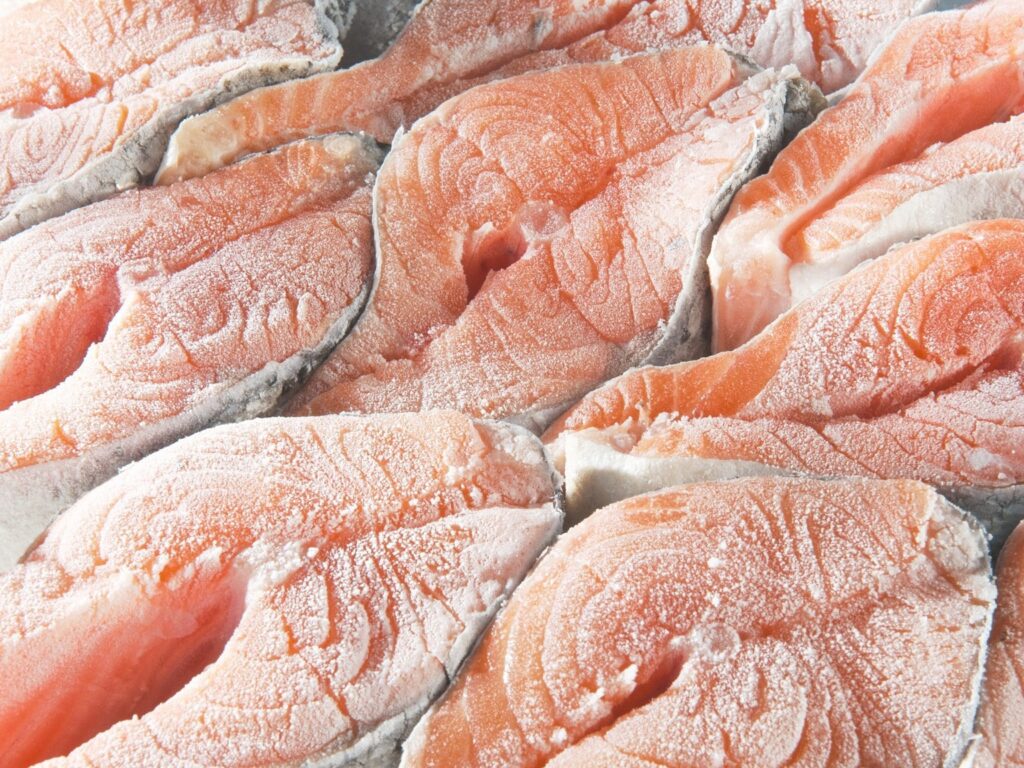
Another advantage comes from reliable humidity control. Seafood needs 85% to 95% relative humidity. Lower humidity dries the surface and reduces weight by 2%. A seafood cold room adds moisture-control equipment to hold steady humidity levels. This design protects the natural shine and color of fish.
The cold room also supports strong hygiene standards. The wall panels use food-grade coating with a surface roughness below 0.5 microns. Smooth surfaces stop bacteria from clinging. Workers can clean each wall in less than 10 minutes.
A seafood cold room also supports flexible storage layouts. Racks can hold up to 600 kg per level. Forklifts move easily in rooms wider than 6 m. Many seafood plants use modular zones to handle daily sorting.
Cold Storage Panels
Panels form the structure of the seafood cold room. Most projects use PU or PIR panels with dense foam cores. A 100 mm PU panel offers thermal conductivity near 0.022 W/m·K. This value helps hold room temperature even when outside temperature reaches 35 °C. Many coastal factories depend on this performance.
The steel surfaces often have a thickness of 0.5 mm. This thickness protects the room from dents during daily work. Strong edges support tongue-and-groove locks with compression forces near 180 N. These locks reduce air leakage by almost 40%. Good sealing improves cooling efficiency.
Seafood rooms also use anti-corrosion coating. Salt in seafood can damage normal steel in two years. Special coated steel lasts more than 12 years in heavy salt zones. Many plants clean surfaces with 500 ppm chlorine water after each shift. Coated panels resist this chemical load.
Panel thickness depends on the target temperature. A 120-150 mm panel fits storage between −25 °C and −15 °C. A 200 mm panel fits deep-freeze sections down to −35 °C. This sizing helps engineers balance cost and efficiency.
Some seafood plants also add aluminum kick plates at the base. These plates protect walls from trolley impacts. A standard kick plate handles force up to 300 N. This upgrade keeps rooms clean and smooth.
Panels remain the biggest part of the cold room investment. They also determine long-term energy cost. Strong insulation and clean surfaces support long service life.
Refrigeration System
The condensing unit powers the entire seafood cold room. The compressor handles strong load changes each hour. Many seafood rooms use semi-hermetic compressors with a capacity near 12 kW to 50 kW. These machines pull temperatures from 10 °C down to −25 °C without stress. A well-designed unit runs for 18 hours per day.
The condenser cools refrigerant from high pressure to low pressure. Many seafood plants use air-cooled condensers with airflow near 5,000 m³ per hour. Some factories near the sea use water-cooled systems to cut energy use by 10%. Both designs need stable ventilation.
The evaporator blows cold air into the room. A seafood room evaporator often delivers air at −28 °C. The fan may reach 800 to 3,000 m³ per hour depending on room size. High airflow protects seafood texture by cooling the surface quickly. Even cooling keeps temperature variation under 1 °C.
The unit also includes electronic controls. The control panel tracks temperature, humidity, compressor load, and defrost cycles. Defrost runs every 6 to 8 hours in high-moisture rooms. Each cycle melts frost within 10 minutes. Fast defrost protects airflow and cooling speed.
A good condensing unit improves product quality and energy savings. Many factories cut energy cost by 12% when they use frequency converters. These converters slow the compressor during light-load hours. Stable operation also reduces maintenance.
This system works as the heart of the cold room. Its reliability strongly affects seafood freshness.
A seafood cold room offers strong protection for fish, shrimp, and shellfish. Its tight temperature control and strong airflow maintain product quality better than normal cold rooms. Many seafood companies use these rooms to support strict market demands.
Post time: Dec-08-2025