

Rock wool sandwich panel is a type of building panel formed by laminating rock wool as the core material between two layers of metal sheets. Rock wool sandwich panel combines multiple functions such as load-bearing, insulation, fire resistance, and soundproofing, and are widely used in modern industrial plants, logistics warehouses, and public buildings.
Outstanding Performance
Compared to other sandwich panels, excellent fire resistance is the most significant advantage of rock wool sandwich panels. Rock wool is derived from natural basalt, which gives it highly stable physical properties. The rock wool core can achieve an A1 fire-resistance rating. It can effectively prevent the spread of fire in case of a blaze.
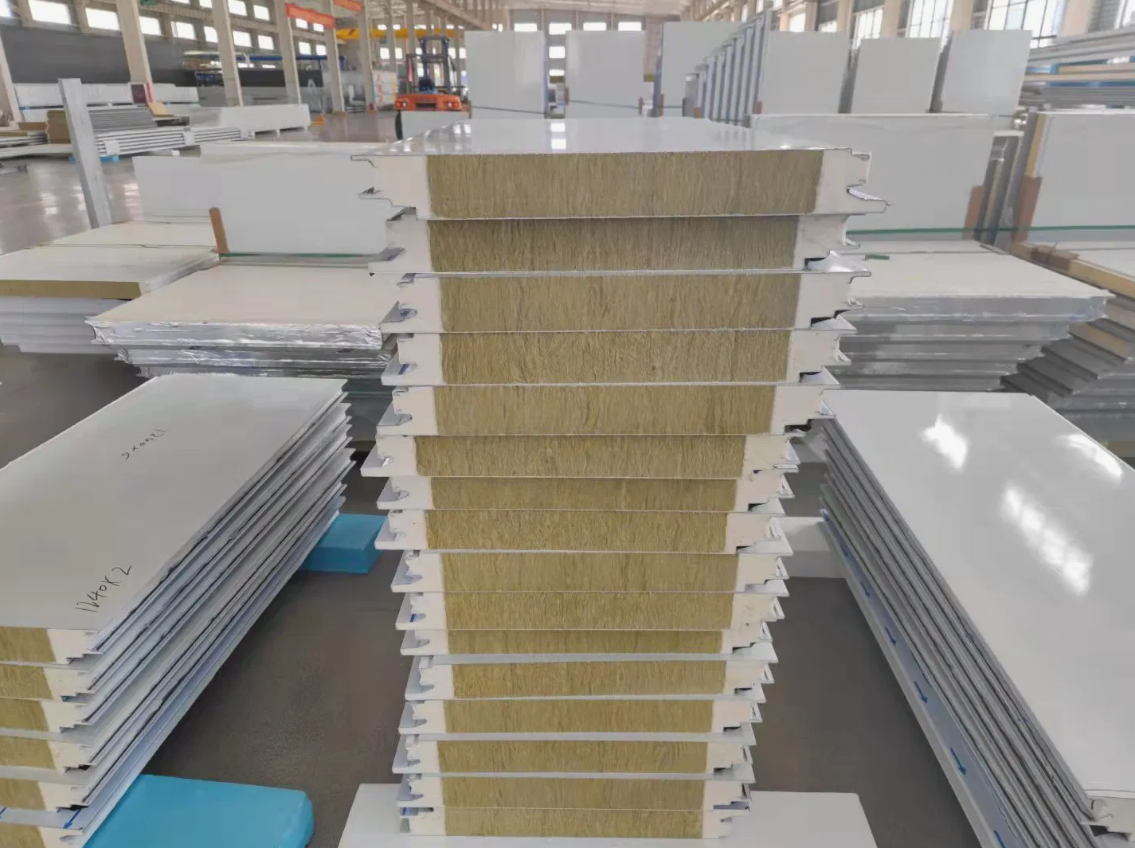
The naturally occurring gaps between fibers provide rock wool with a low thermal conductivity. The thermal conductivity of the rock wool core can be as low as 0.036-0.042 W/(m·K). This allows rock wool sandwich panels to effectively isolate indoor temperatures from outside influences, reducing building energy consumption. The porous structure of the rock wool core also efficiently absorbs noise. Instrumental tests indicate that the sound insulation capability of the rock wool core can reach 25-30 dB, helping to minimize the negative impact of industrial noise on the surrounding environment.
Additionally, the panel framework is composed of metal sheets. This provides rock wool sandwich panels with structural strength, giving the panels a certain load-bearing capacity.
Strict Production Requirements
Although rock wool sandwich panels have multiple performance advantages, they also impose higher demands on industrial production. On one hand, manufacturers must select high-quality metal sheets and rock wool cores. On the other hand, manufacturers need advanced equipment and strict quality control standards.
The core process in producing rock wool sandwich panels is bonding the metal sheets to the rock wool core. The interior of the metal sheets must be evenly coated with adhesive. After bonding with the core material, pressure must be applied from both the top and bottom to ensure full adhesion between the rock wool core and metal sheets.
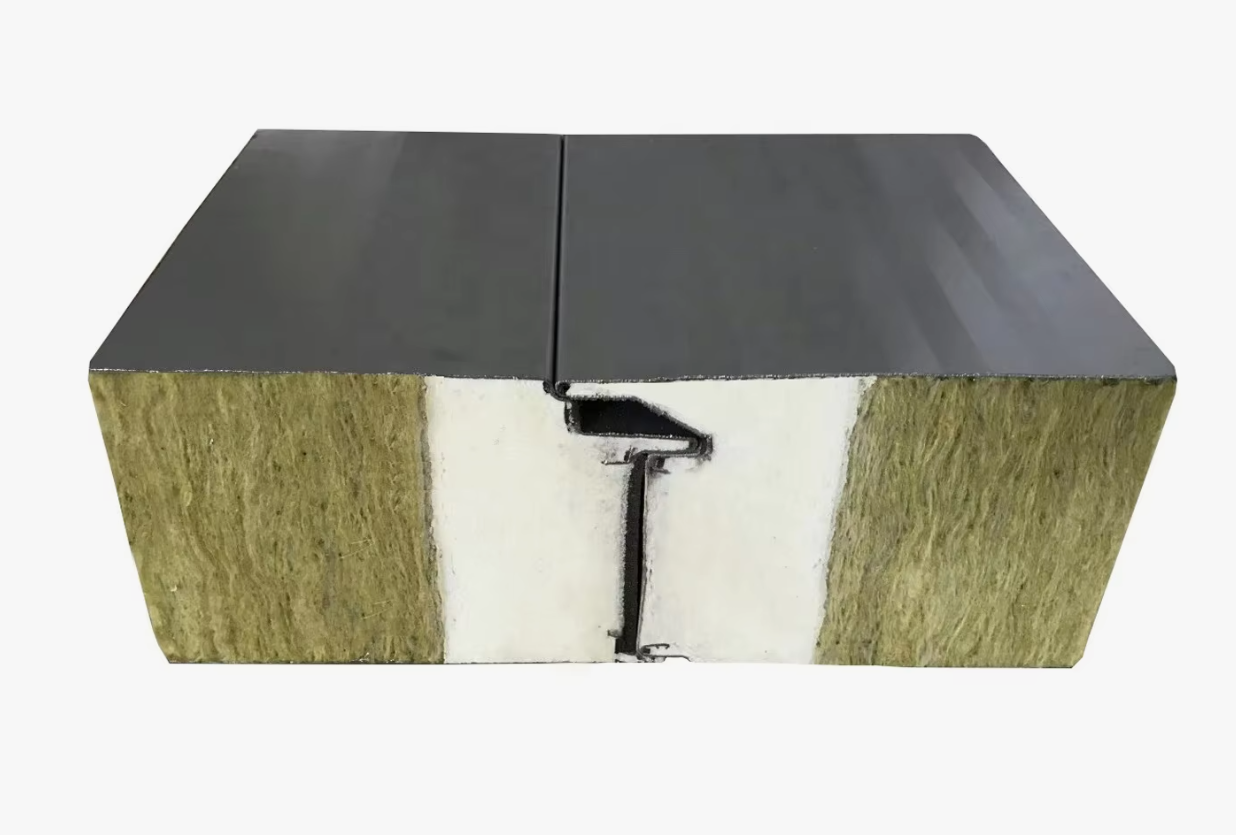
To address the problem of fiber debris forming at the edges of the rock wool core, manufacturers have developed panels with polyurethane edge strips. The polyurethane edges effectively prevent rock wool fibers from falling off. Additionally, the polyurethane foam material enhances the sandwich panel’s waterproof and moisture-resistant properties.
Post time: Oct-21-2025