

Sandwich panel solutions play a critical role in cold storage, steel structure factories, and logistics parks, where insulation performance and fire safety directly affect energy costs and long-term operation. Choosing the right material is not simple. EPC contractors and developers must balance fire compliance, thermal efficiency, and project budget. Among many options, PIR and rock wool remain the most widely used insulated panel materials in modern construction.
Each material has clear strengths and limitations. A proper selection depends on project type, fire rating requirements, and environmental conditions. Instead of asking which one is better, decision-makers should focus on which solution fits the project best.
Fire Safety Performance and Compliance Strategy
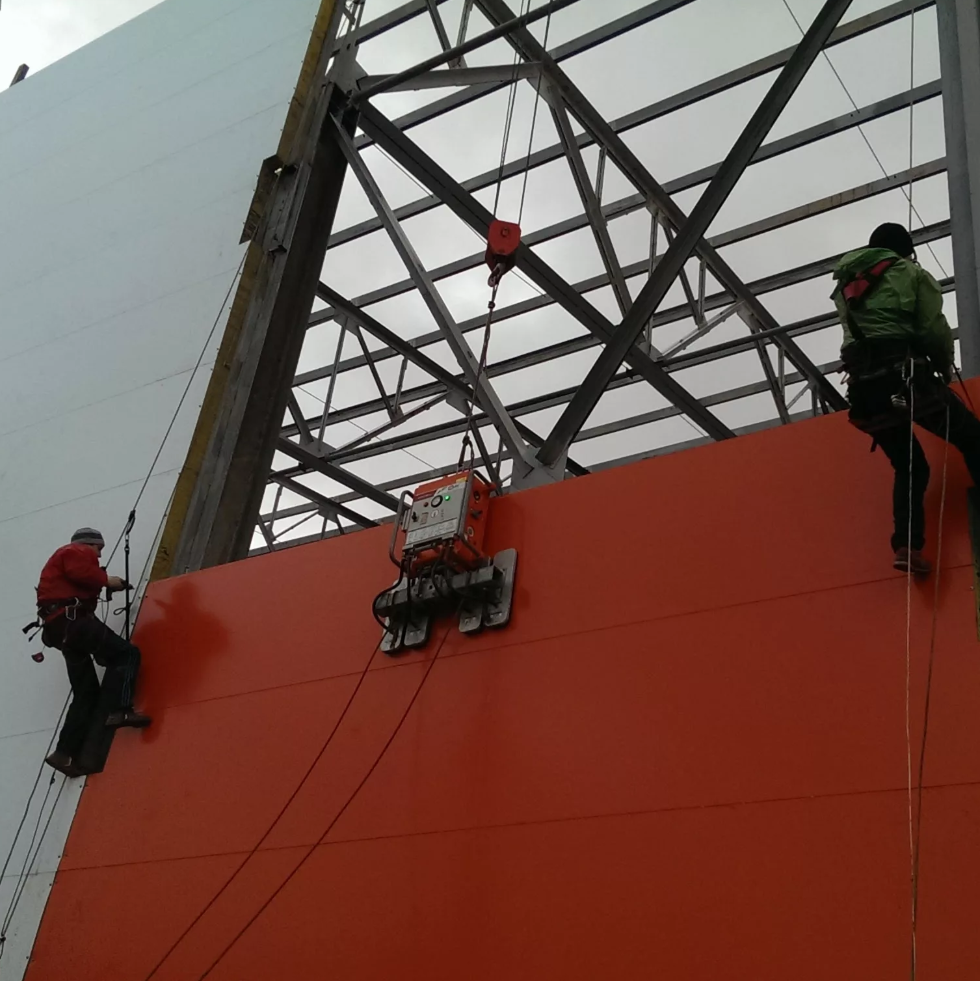
Fire safety is often the first priority in large-scale projects. Rock wool offers strong performance in this area. As an inorganic material, it achieves A1 non-combustible classification under standards such as EN 13501. It does not burn or release toxic smoke in fire conditions. This makes it suitable for high-risk facilities like cold storage warehouses, pharmaceutical buildings, and large industrial plants. In regions such as Russia and Northern Europe, the enclosing systems of warehouses or factories commonly use rock wool sandwich panels because they can provide both insulation and fire protection.
PIR, as an organic insulation material, provides limited fire resistance compared to rock wool. It usually meets B-s1, d0 or similar classifications, depending on formulation and system design. In fire conditions, it can decompose and release smoke. For this reason, PIR insulated panels often require additional fire protection measures. These include fire barriers, protective coatings, or sprinkler systems to meet project compliance.
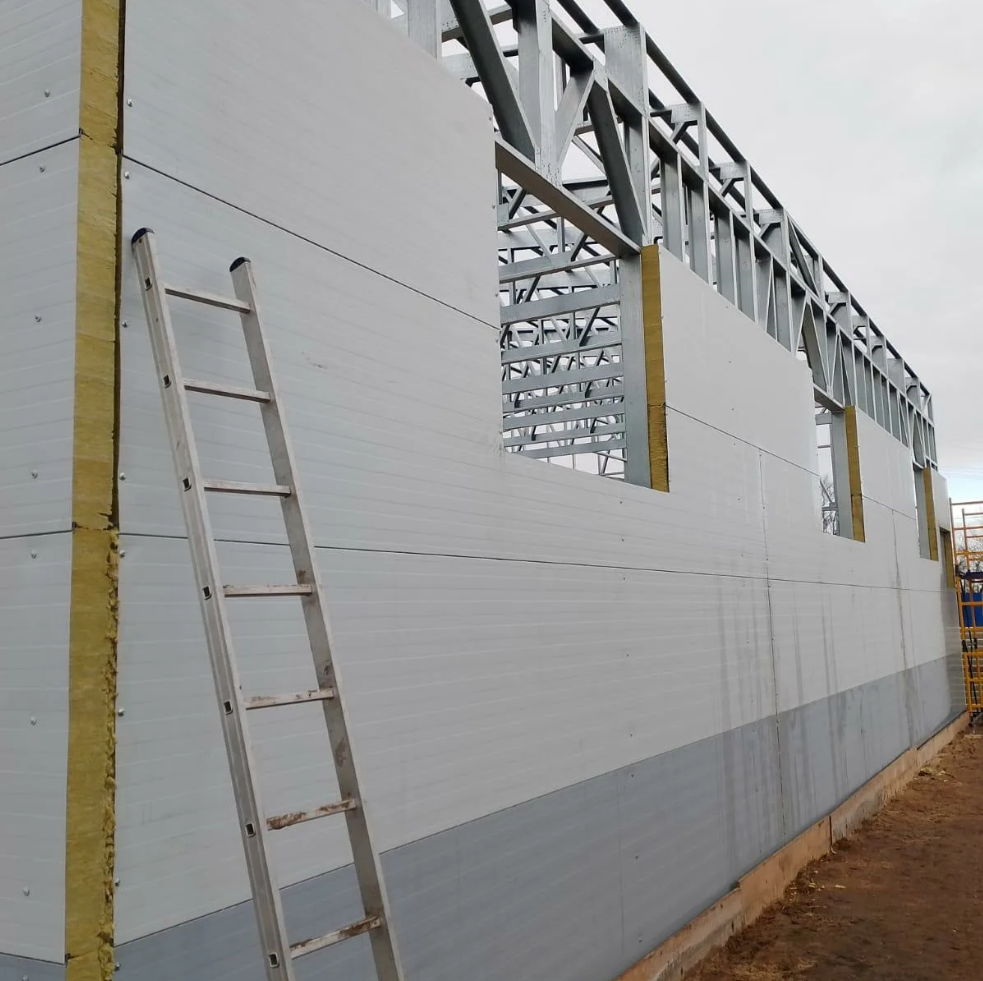
In real engineering practice, hybrid solutions are common. Contractors often combine PIR panels with rock wool fire barriers to balance insulation and fire safety. This approach improves compliance while keeping energy performance efficient. Clear fire design strategies and proper system integration are essential for approval and insurance requirements.
Thermal Efficiency and Application Scenarios
Thermal performance is another key factor in sandwich panel selection. PIR offers a low thermal conductivity, typically around 0.022–0.024 W/(m·K). This allows thinner panel thickness for the same insulation target. It helps reduce material usage and maximize internal space, which is important in cold chain facilities and temperature-controlled warehouses.
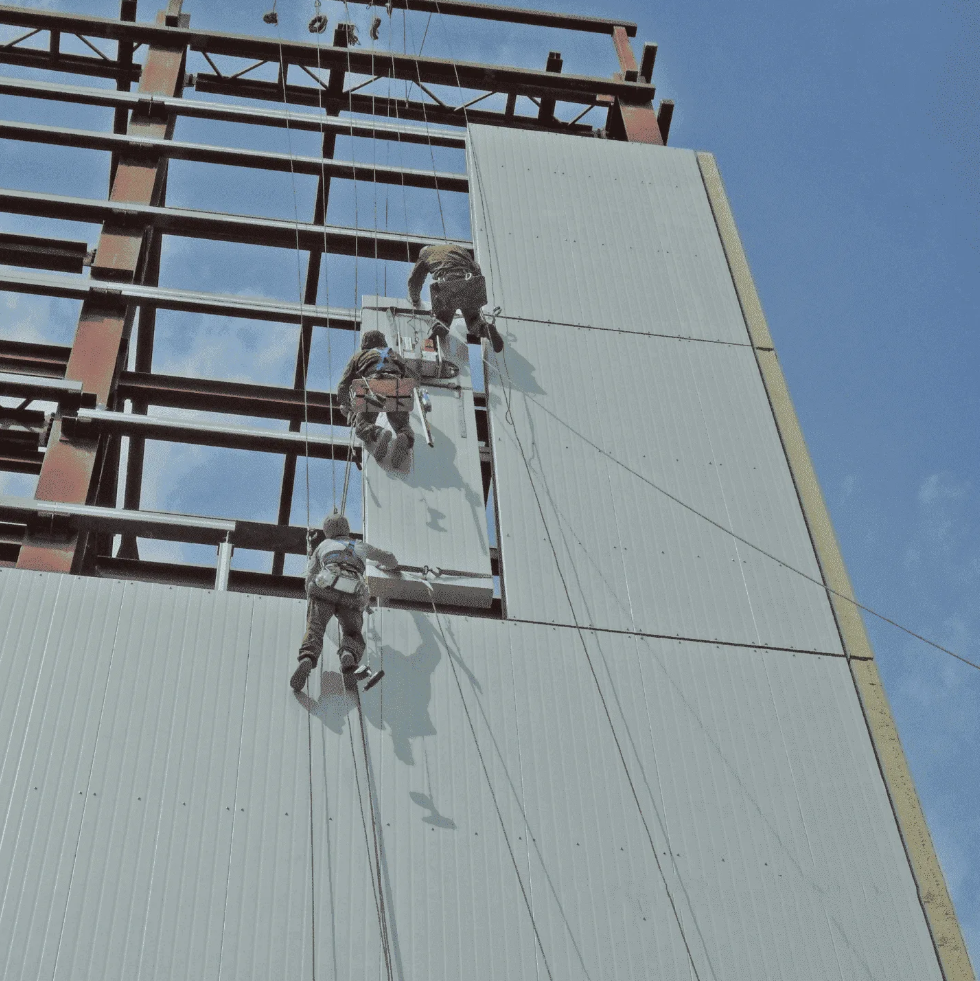
Rock wool panels show higher thermal conductivity, usually between 0.036–0.040 W/(m·K). This means thicker walls are needed to reach the same insulation level. However, rock wool performs well under high temperatures and maintains stable dimensions over time. It also provides good acoustic insulation and resistance to harsh industrial environments.
Moisture performance should also be considered. PIR has a closed-cell structure that resists moisture penetration. Rock wool requires proper sealing and vapor barriers to maintain its performance in humid conditions. Therefore, project design must include a complete building envelope system rather than focusing on materials alone.
A professional sandwich panel strategy does not rely on a single material. It combines fire safety, thermal targets, and project constraints into one solution. By using insulated panels or composite panel systems in a structured way, contractors can achieve both compliance and efficiency. This approach reduces risk, controls cost, and supports long-term project success.
Post time: Mar-27-2026