

Pharmaceutical cold rooms protect drugs and vaccines from heat. Many countries demand strict storage rules. Most vaccines need 2°C to 8°C. Some drugs need temperatures under –20°C. The cold room keeps temperature stable all day. Hospitals, factories, and labs depend on this system. Many rooms use data loggers that record every minute. The records help staff check daily conditions. Modern systems use alarms to warn staff in seconds. A pharmaceutical cold room supports stable quality for high-value medicine.
Main Characteristics of a Pharmaceutical Cold Room
Pharmaceutical cold rooms offer precise temperature control. Many rooms reach control accuracy of ±0.1°C. The system also manages humidity. Most vaccines need humidity under 65%. The cold room uses high-quality panels. PU or PIR panels with 100 mm thickness reduce heat gain. Some facilities choose 120 mm panels for hotter regions. The refrigeration unit uses stable compressors. A 10 m³ room needs around 1 kW cooling. A 100 m³ room needs 8 to 12 kW.
The cold room also protects drugs with uniform airflow. Many systems use airflow at about 0.3 m/s. This airflow keeps all racks within ±0.5°C. The room also includes strong sealing doors. Many pharmaceutical doors use 0.45 mm steel sheets. Good sealing protects drugs from moisture, insects, and dust.
The control panel shows real-time data. Staff check the screen every day. The room stores 30 to 90 days of records. The data helps facilities pass audits. These characteristics support safe drug storage in any climate.
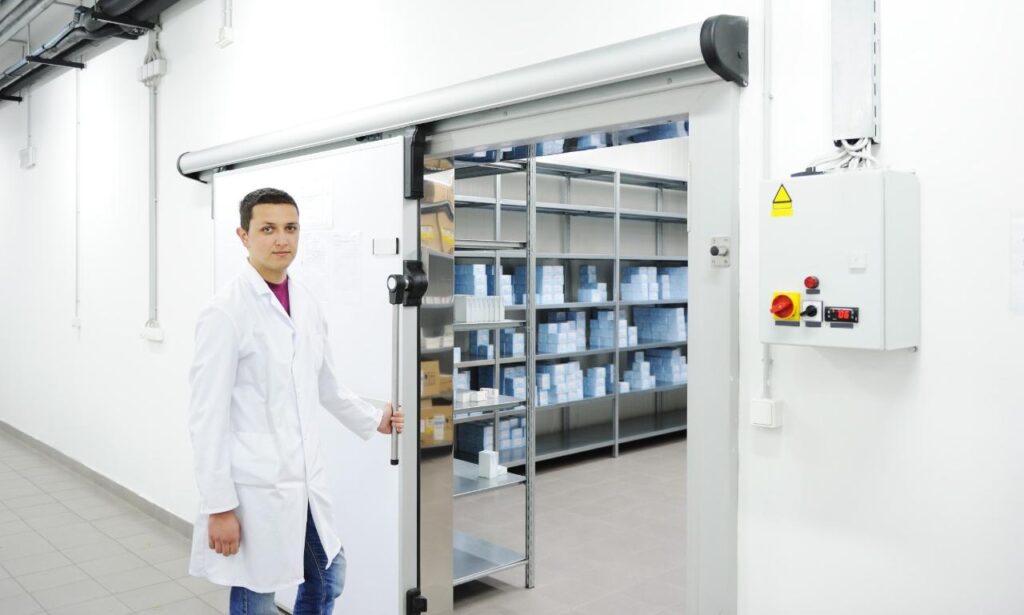
Differences Between Pharmaceutical Cold Rooms and Other Cold Rooms
Pharmaceutical cold rooms differ from common food cold rooms. Food rooms often allow wider temperature ranges. Pharmaceutical rooms need precise control within ±0.5°C. Food rooms may use basic sensors. Pharmaceutical rooms use sensors with ±0.1°C accuracy. Many pharmaceutical rooms use two or three sensors per zone.
Another difference appears in humidity control. Food storage may accept high humidity. Pharmaceutical storage requires humidity under 65% for many items. Some vaccines fail when humidity reaches 80%.
Pharmaceutical cold rooms also use advanced monitoring. Most systems take readings every 60 seconds. Many food rooms take readings every 10 minutes. Drug rooms use alarms that alert staff within 5 seconds.
Documentation also differs. Pharmaceutical rooms store 90 days of temperature records. Many food rooms store 15 to 30 days. Pharmaceutical facilities need strict record reviews. Food facilities follow simpler log rules.
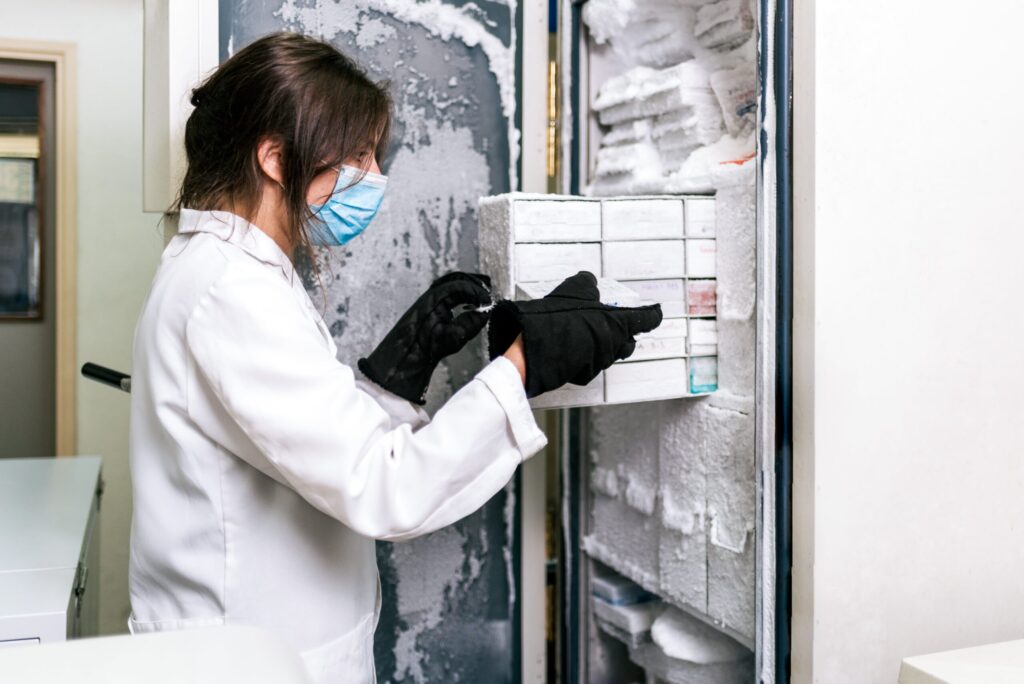
Material selection also changes. Pharmaceutical rooms often use PIR panels with strong fire ratings. Food rooms may use PU panels. Door quality also differs. Pharmaceutical doors often include heaters to prevent frost.
The design goal also differs. Food cold rooms protect taste. Pharmaceutical cold rooms protect drug potency. A small mistake may damage 1000 vials worth over $50,000. These differences show why pharmaceutical rooms need stricter systems.
According to different purification needs, special purification air conditioners will be installed in the pharmaceutical cold storage. Purifying air conditioners strictly filter bacteria and dust, and inject sterile air into the cold storage. This purification system effectively inhibits the growth of bacteria in the cold room.
Panel and Structure Features
Pharmaceutical cold rooms use strong insulated panels. Most panels use PU or PIR cores. PU panels show thermal conductivity near 0.022 W/m·K. PIR panels show better fire resistance. Many drug rooms use 100 mm panel thickness. Very hot regions may use 120 mm panels.
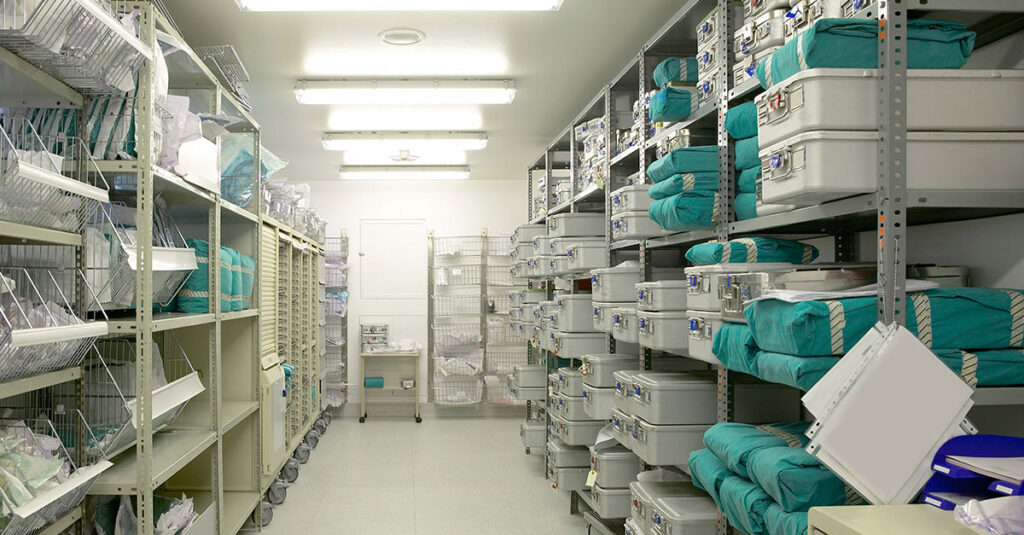
The room size usually ranges from 5 m² to 200 m². The walls and ceilings use metal skins. Many factories use 0.45 mm steel skins. The floor includes PVC or aluminum sheets. PVC floors usually measure 2 mm thick. Aluminum floors support heavy racks.
Doors use strong hinges and tight gaskets. The gasket stops vapor from entering. Many rooms include door heaters. A heater of 40 to 80 watts prevents frost.
The panel joints use cam-locks for tight connection. Workers install a 50 m² room within 3 days. Good structure reduces energy use by 10% to 20%. The insulation prevents heat transfer. The stable structure protects sensitive medicine from temperature swings.
Refrigeration System and Airflow Features
Pharmaceutical cold rooms use efficient refrigeration units. Many rooms use scroll or semi-hermetic compressors. Scroll compressors suit small rooms under 20 m³. Semi-hermetic compressors suit large rooms up to 200 m³.
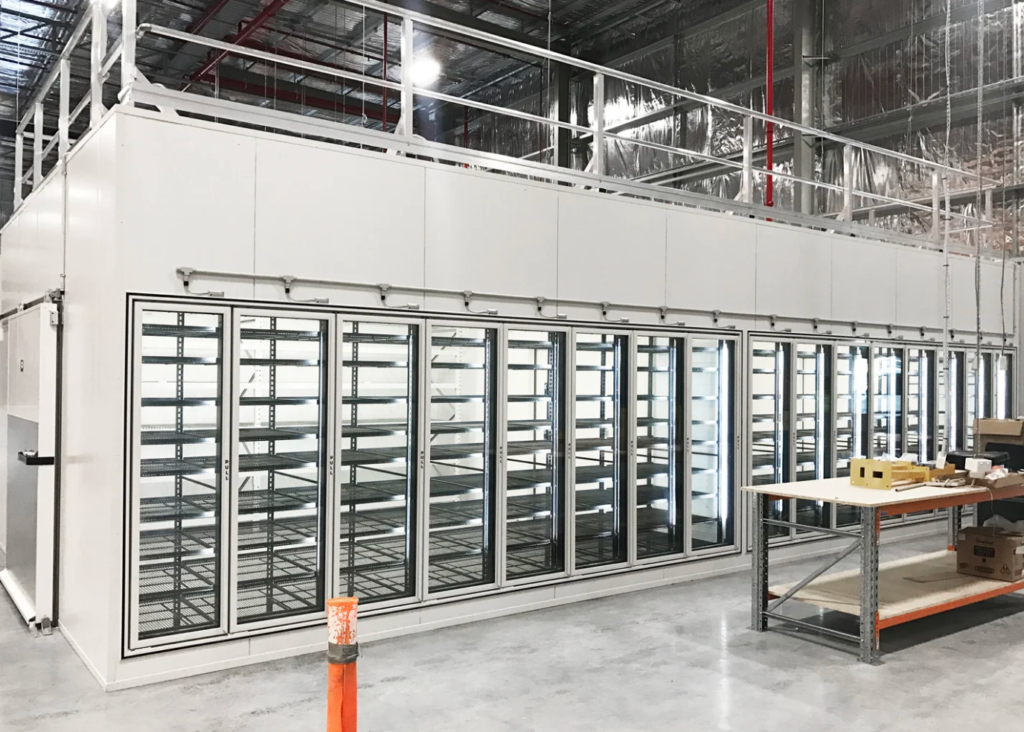
Cooling capacity varies. A 20 m³ room needs 2 to 3 kW cooling. A 100 m³ room needs 8 to 12 kW. The system uses condensers, evaporators, valves, and filters. The evaporator creates strong airflow. Even airflow reduces temperature differences. Many rooms keep airflow at 0.3 m/s.
Refrigerant choices include R448A, R449A, or R404A. Many companies shift to low-GWP gases. The system also uses backup designs. Some pharmaceutical facilities install dual compressors. One compressor supports full cooling. The second unit activates during faults.
Many systems use EC fans. EC fans save 10% energy. They also cut noise and improve stability. The control system monitors every step. Staff check all parameters every day. The refrigeration system keeps the room stable for high-value vaccines.
Monitoring, Alarms, and Compliance Requirements
Pharmaceutical cold rooms use advanced monitoring. Sensors record temperature every 60 seconds. Many systems store 90 days of data. Staff check records every day. The alarm system acts fast. The alarm activates within 5 seconds when temperature rises. Staff receive messages on mobile phones. Backup power starts in 10 seconds.
Compliance rules remain strict. GMP and WHO standards guide most systems. Many facilities test alarms every month. Staff calibrate sensors every six months. Many teams inspect the generator weekly. Auditors review data logs. Facilities must keep clean environments. Doors must seal tightly. Many doors use stainless steel handles. Documentation needs accuracy. Each shift records numbers.
The monitoring system ensures reliable operation for expensive vaccines. The compliance system protects public health.
Post time: Dec-10-2025