

A metal plant building supports many industrial operations. Many factories choose metal structures for strength. The building handles machines, storage, and logistics. Many plants use spans from 20 m to 80 m. The design supports heavy loads and long service life. Metal structures reduce construction time and maintenance costs. Many companies use steel frames for better safety. The plant building also adapts to expansion. A metal plant building offers long-term value for manufacturers.
Main Structure of a Metal Plant Building
A metal plant building uses a clear structural system. The steel frame includes columns, beams, purlins, and bracing. Most columns use H-beam steel. A common column size is H300×300×10×15. Many roofs use steel purlins with Z or C shapes. A typical Z purlin size is Z180. The building also uses wall girts for lateral support.
The frame spans long distances. A standard industrial span ranges from 20 m to 50 m. Heavy plants use spans up to 80 m. The building height varies from 6 m to 20 m. Taller buildings hold cranes and large machines.
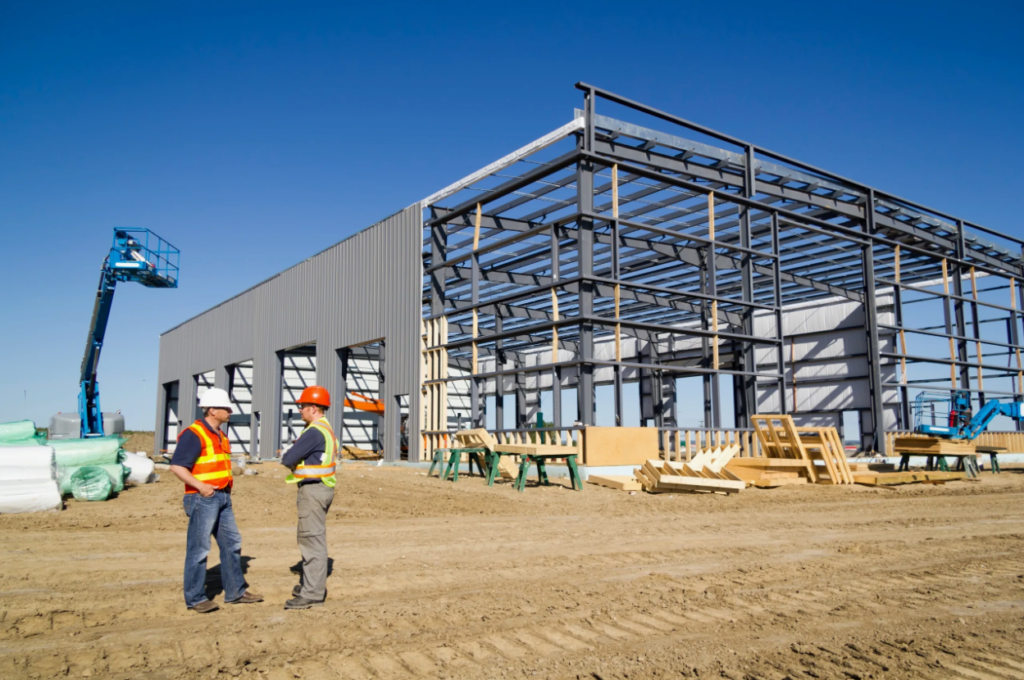
Connections use high-strength bolts. Many bolts use grade 8.8 or 10.9. The frame also includes bracing rods. These rods reduce sway during storms. A metal plant building uses anchor bolts to fix columns. Each anchor bolt often measures M20 to M30.
The structure supports heavy loads. Many roofs carry 0.3 kN/m² dead load. Live load may reach 0.57 kN/m². The strong frame protects the plant from wind and snow.
Material Features and Characteristics
A metal plant building uses steel for most parts. Structural steel offers strong tensile strength. Many steels reach yield strength of 345 MPa. Some heavy plants use Q390 or Q420 steel. These grades support heavy equipment.
The building uses metal cladding for walls and roofs. Many factories use corrugated steel sheets with 0.4 mm to 0.6 mm thickness. Some buildings use sandwich panels with PU or PIR cores. A 50 mm panel offers strong insulation. A 75 mm panel improves heat control by 20%.
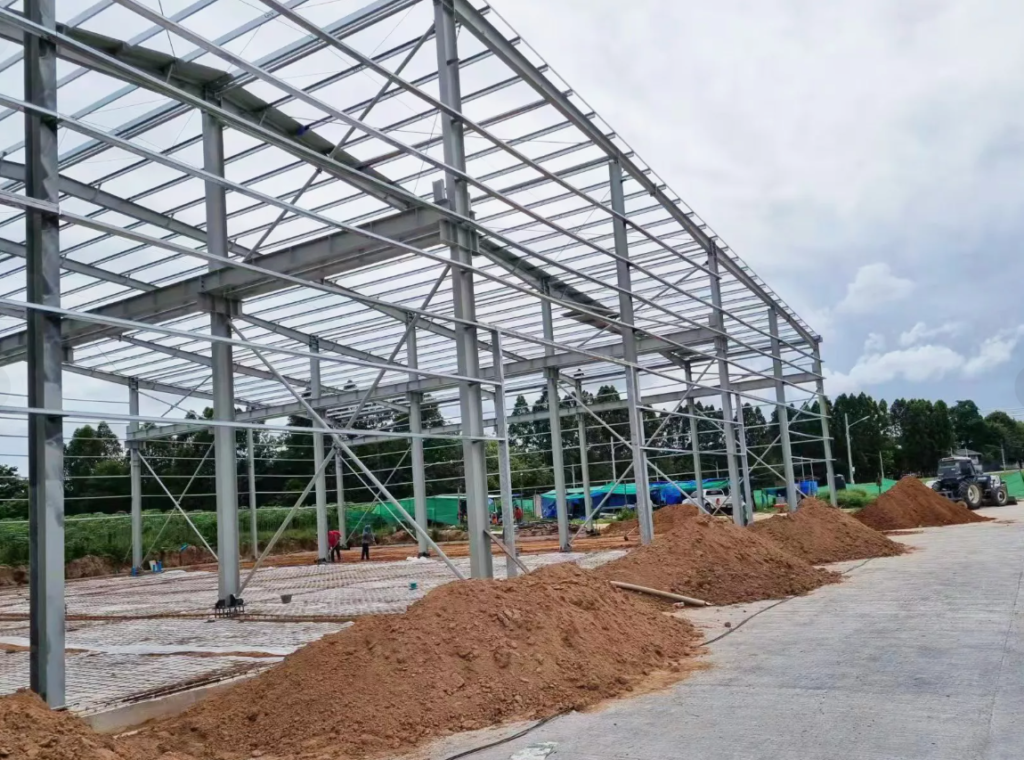
Metal components show long service life. Many steel parts last 30 to 50 years. Protective coatings increase life. Many plants use galvanized layers of 80 μm thickness. The coating delays rust in humid climates.
The building also handles fire safety. Many companies use fire-resistant paints. A paint thickness of 2 mm can delay heat for 2 hours. The roof may use non-combustible insulation.
Metal features allow flexible spaces. The interior layout stays open. Workers move machines without wall removal. Many plants redesign production every year. Metal buildings support these changes with ease.
Roof and Wall System
A metal plant building uses a strong roof system. The roof includes purlins, insulation, and sheets. Many roofs use C or Z purlins spaced at 1.2 m to 1.5 m. Corrugated sheets cover the top. Sheet thickness usually ranges from 0.45 mm to 0.6 mm.
Many buildings use insulation layers. A 50 mm PU panel reduces heat transfer by 30%. A 75 mm panel reduces it by 40%. The insulation protects workers and machines.
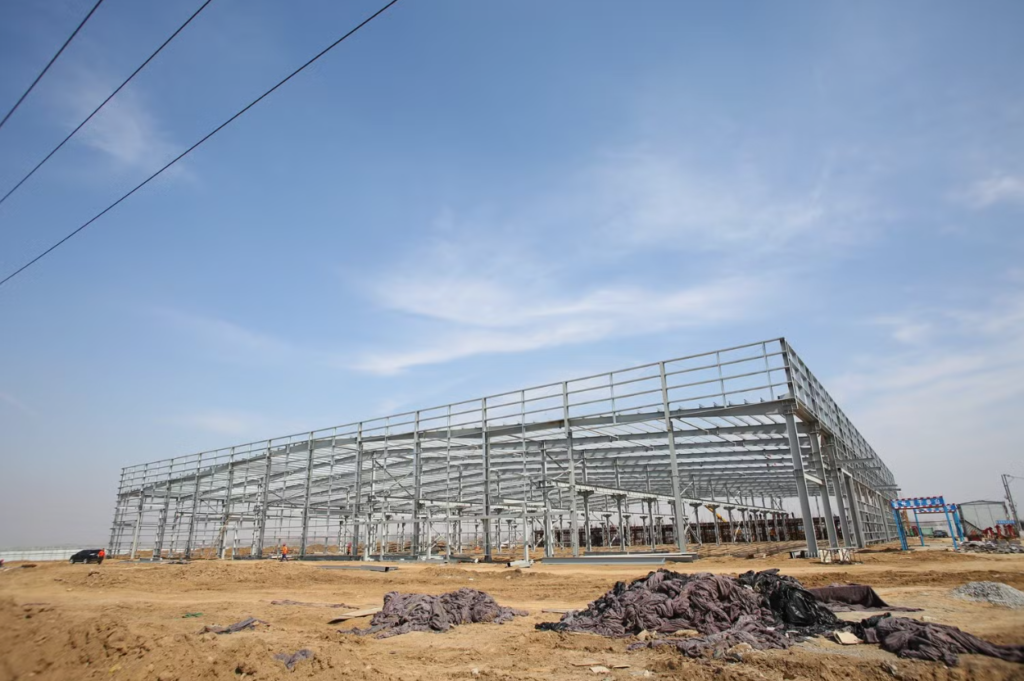
Roof slopes vary. Many plants use slopes from 5% to 15%. The slope drains rainwater fast. Gutters and downpipes support drainage. A typical gutter handles 20 to 40 liters per second.
Wall systems use metal sheets or sandwich panels. Many walls use steel sheets of 0.45 mm thickness. Insulated panels improve energy savings. PU panels reach thermal conductivity near 0.022 W/m·K. PIR panels offer better fire resistance.
The wall system also includes steel girts. A common spacing is 1.5 m to 2.0 m. Windows and louvers improve ventilation. These systems give better airflow for machines and workers.
Internal Layout and Functional Zones
A metal plant building supports many functions. The internal layout depends on production needs. Many plants include production lines, warehousing, offices, and loading zones.
The production area often takes 50% to 70% of the space. A small plant may use 2,000 m². A large facility may reach 20,000 m². The clear-span design helps machine placement. Warehousing zones use racks for storage. Rack heights range from 4 m to 10 m. Forklifts move along wide lanes. Many lanes measure 3 m to 4 m.
Office areas usually occupy 5% to 10% of the building. Offices use partition walls and raised floors. The loading zone includes docks and ramps. Many docks support trucks up to 20 tons. A typical ramp height is 1.2 m.
Metal plant buildings also support cranes. Overhead cranes handle 5 tons to 50 tons. Heavy plants may use cranes up to 100 tons. The internal layout stays flexible for expansion.
Advantages of a Metal Plant Building
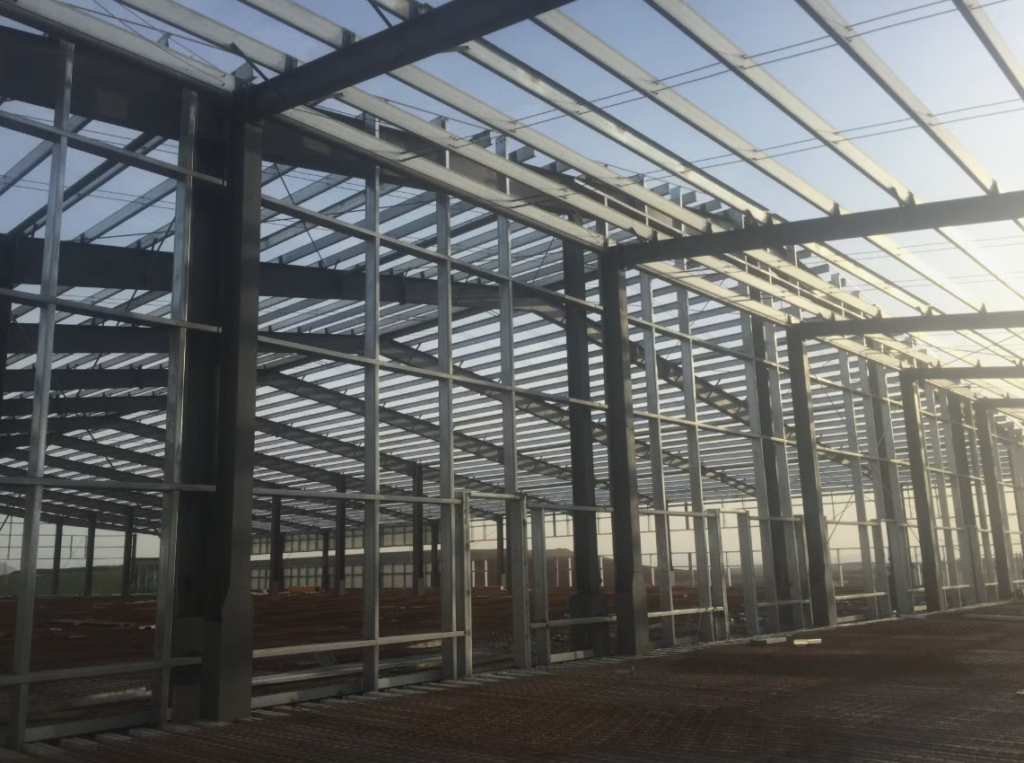
A metal plant building offers many advantages.
The first advantage is speed. Workers install frames fast. A 5,000 m² plant may finish in 45 days.
The second advantage is cost savings. Steel structures reduce foundation costs. The building also reduces maintenance costs by 20%.
The third advantage is strength. Steel frames handle heavy loads. Many buildings resist winds of 100 km/h to 150 km/h.
The fourth advantage is flexibility. Companies expand easily. Workers add bays or extend lengths. A plant may grow from 30 m to 60 m with simple steps.
The fifth advantage is energy savings. Insulated panels cut heat transfer. A 75 mm panel saves about 20% energy each year.
The sixth advantage is long service life. Many buildings operate for 40 to 50 years.
These advantages support factories, logistics centers, workshops, and heavy industries.
Post time: Dec-10-2025