

High-performance freezer rooms rely on precise sandwich panel installation and advanced sealing technology. In medium and large low-temperature cold storage projects operating at −18°C or below, construction quality directly determines insulation performance, energy efficiency, and long-term durability.
Core Installation Challenges in Large-Scale Freezer Rooms
In industrial freezer rooms, sandwich panel systems form the primary thermal barrier between the controlled interior and the external environment. These facilities operate under extreme temperature differences, often exceeding 40°C between construction conditions and operational status. Because of this contrast, even minor installation errors can trigger significant performance issues.
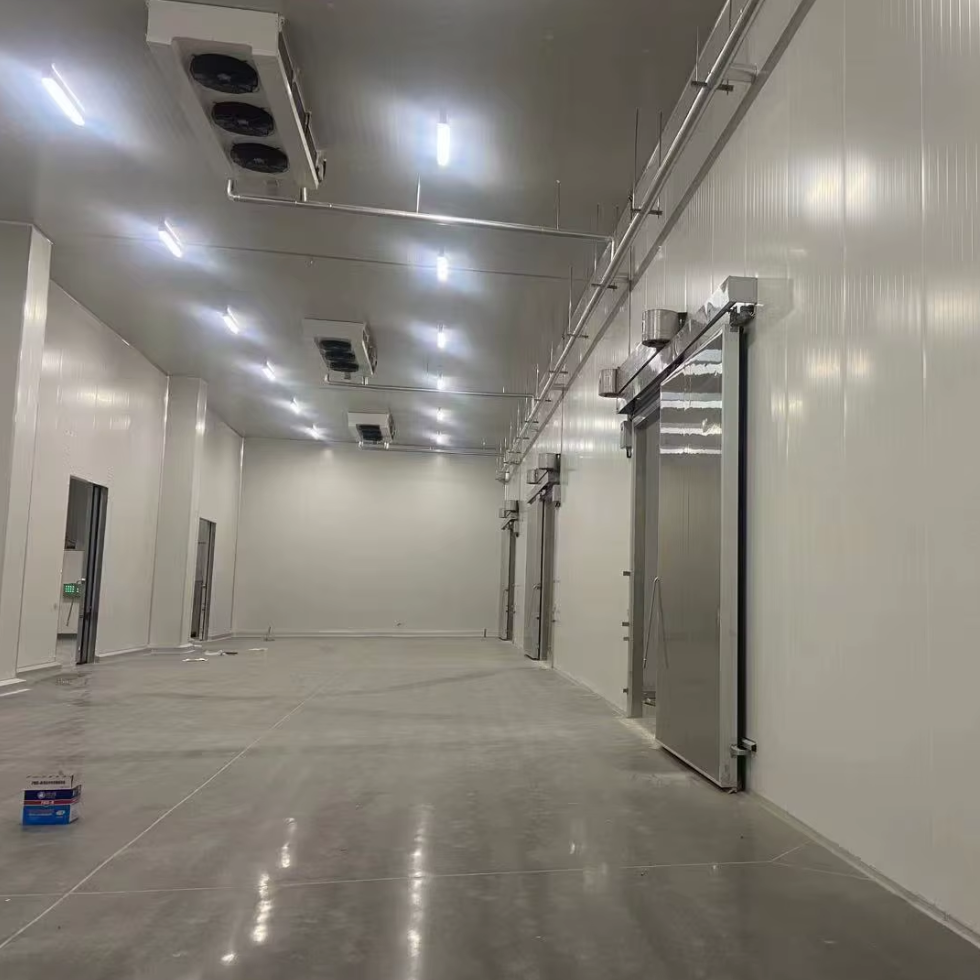
The first major challenge involves installation precision. Polyurethane sandwich panels designed for freezer rooms usually feature large dimensions and substantial weight. Large-scale projects require continuous alignment of hundreds of wall and ceiling panels. If installers fail to maintain accurate positioning, visible or hidden gaps may appear along the joints. Once joint deviation exceeds 2 mm, thermal bridges develop and reduce insulation capacity. Over time, cold leakage leads to condensation formation and frost accumulation, which increases compressor workload and power consumption.
The second challenge relates to thermal expansion and contraction. Construction normally occurs at ambient temperature, while operating conditions remain far below freezing. This temperature gap causes material shrinkage after commissioning. Without proper expansion allowances, panel deformation can affect joint tightness and structural stability. Engineers must calculate movement tolerance carefully to maintain airtight performance.
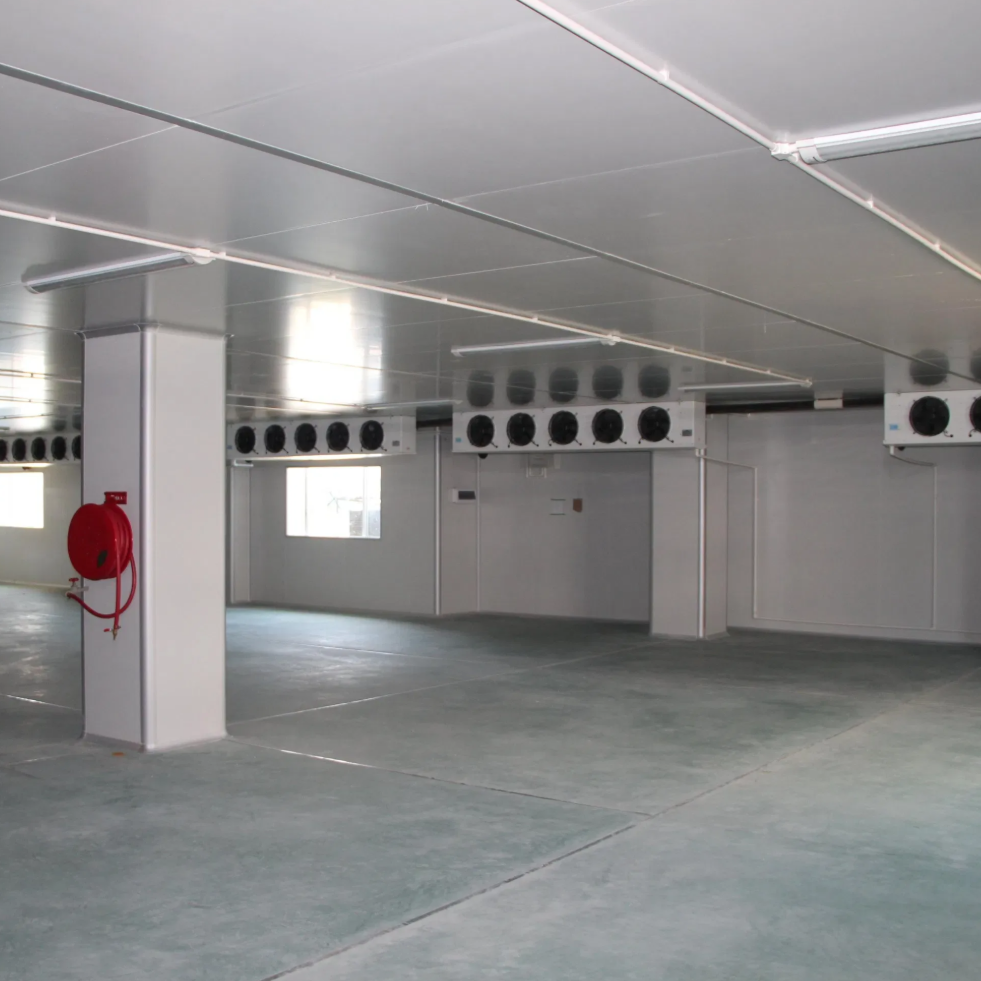
The third difficulty centers on node detailing. Corners, door frames, floor-wall intersections, and pipe penetrations represent weak sealing zones. These transition points often experience higher stress concentration and greater leakage risk. Large industrial freezer rooms demand reinforced corner components and carefully engineered joint solutions. Poor treatment in these areas frequently leads to early insulation failure and higher maintenance costs.
Project teams that recognize these challenges at the planning stage can prevent operational instability and energy waste after commissioning.
Optimized Material Selection and Sealing Technology for Durable Freezer Rooms
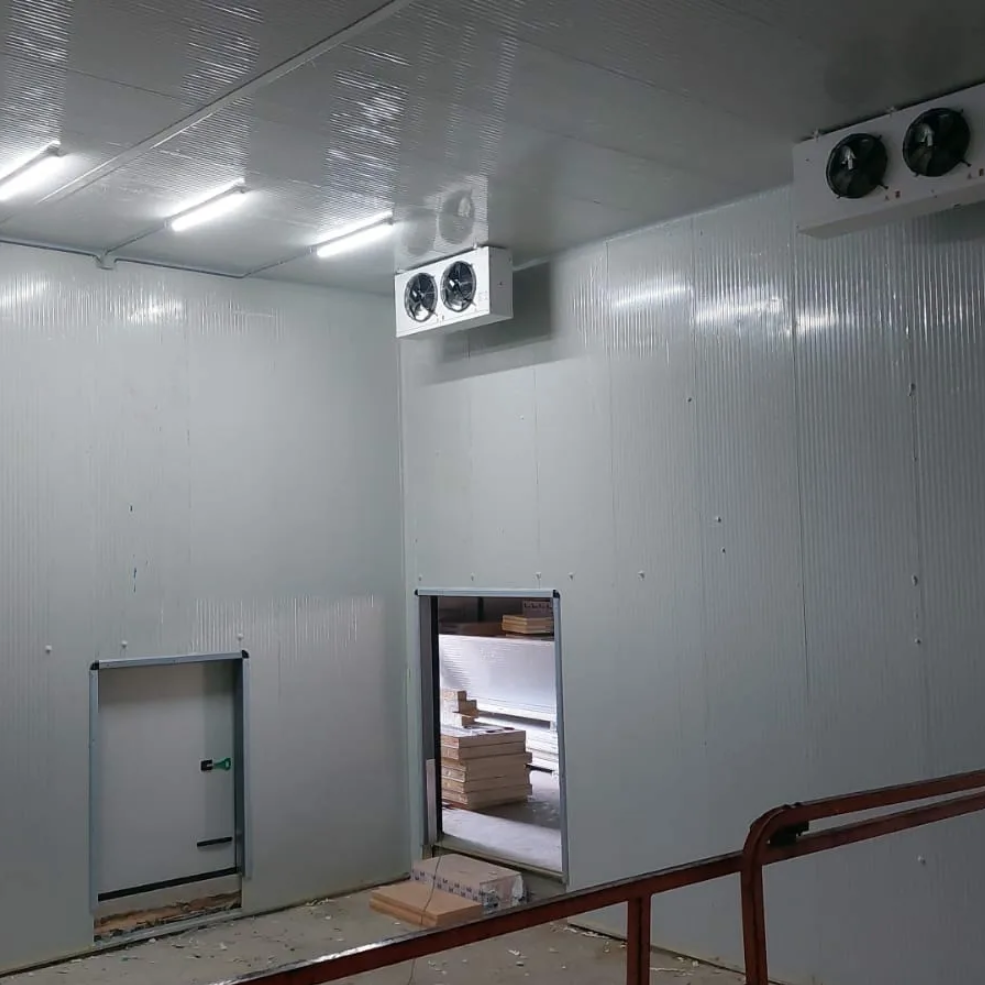
Material quality establishes the foundation for durable freezer rooms. Customized polyurethane sandwich panels with density not lower than 40 kg/m³ and thermal conductivity equal to or below 0.024 W/(m·K) provide strong insulation capacity.
Manufacturers should conduct strict dimensional inspections before delivery to ensure panel flatness and edge accuracy. Precise factory production reduces installation deviation at the job site. Contractors should level the structural base before panel placement and apply professional positioning tools during alignment. Technicians must control joint gaps within 2 mm to avoid cold air infiltration.
Specialized low-temperature sealants should replace general construction adhesives because standard materials may crack under freezing conditions. Elastic connection designs help absorb thermal movement and prevent stress concentration at joint interfaces.
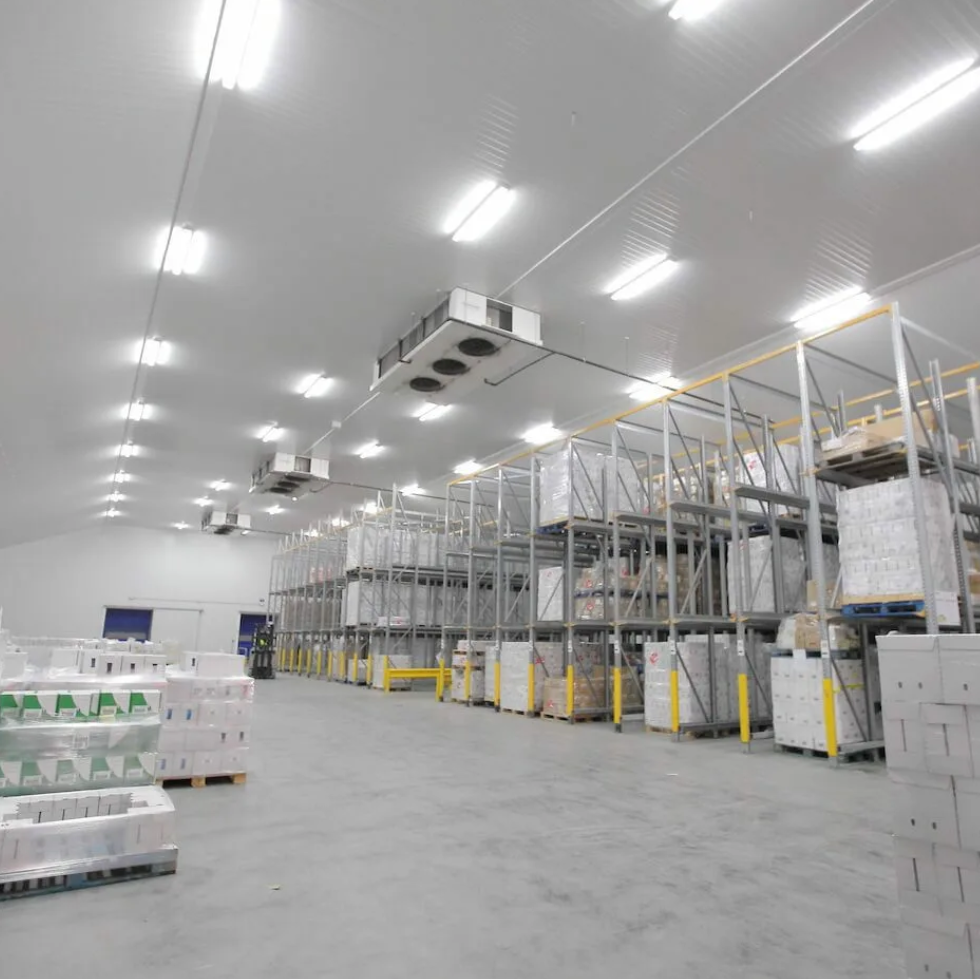
Node reinforcement requires systematic treatment. L-shaped corner accessories strengthen wall intersections and improve load transfer performance. Door openings and pipe penetrations should adopt dual sealing measures that combine compression strips with cold-resistant sealant. This layered protection strategy significantly reduces leakage probability. In addition, installers should incorporate vapor barriers and moisture-proof membranes where necessary to prevent condensation migration within insulation layers.
Continuous quality control ensures consistent performance. After completing each joint or connection, technicians should conduct air leakage testing immediately. Early detection allows quick correction before the system enters operation. Fire-resistant sandwich panels add another layer of protection by combining insulation efficiency with improved fire safety ratings. Modern industrial freezer rooms must satisfy both energy performance standards and safety regulations.
When project teams integrate high-quality materials, precise installation, and rigorous sealing control, freezer rooms achieve stable temperature retention and controlled energy consumption. Well-executed construction reduces lifecycle maintenance costs and protects stored goods under consistent low-temperature conditions.
Post time: Mar-04-2026