

A rock wool sandwich panel does more than protect a building from fire. It also helps keep a space quieter. Anyone who has stood in a metal-clad workshop during a rainstorm knows how loud a thin steel roof can be. Noise is a real concern in workshops, warehouses, cold rooms, and even office blocks near busy roads. Many project teams ask us whether insulated panels can help. The short answer is yes, to a degree. Here we look at what sits inside the panel and why that matters for sound. Then we cover how perforated inner skins help even more.
What Sits Inside the Panel
Every sandwich panel has three layers: two metal skins and a core in between. The core decides most of how the panel behaves. In a rock wool sandwich panel, the core consists of mineral fibres. Makers melt basalt rock, spin it into fine threads, and bond them into dense slabs.
Those fibres matter for sound. They form a tangled, open network full of tiny air pockets. When a sound wave enters this network, it pushes air back and forth between the fibres. That movement creates friction, and friction turns a small part of the sound energy into heat. The wave leaves weaker than it arrived.
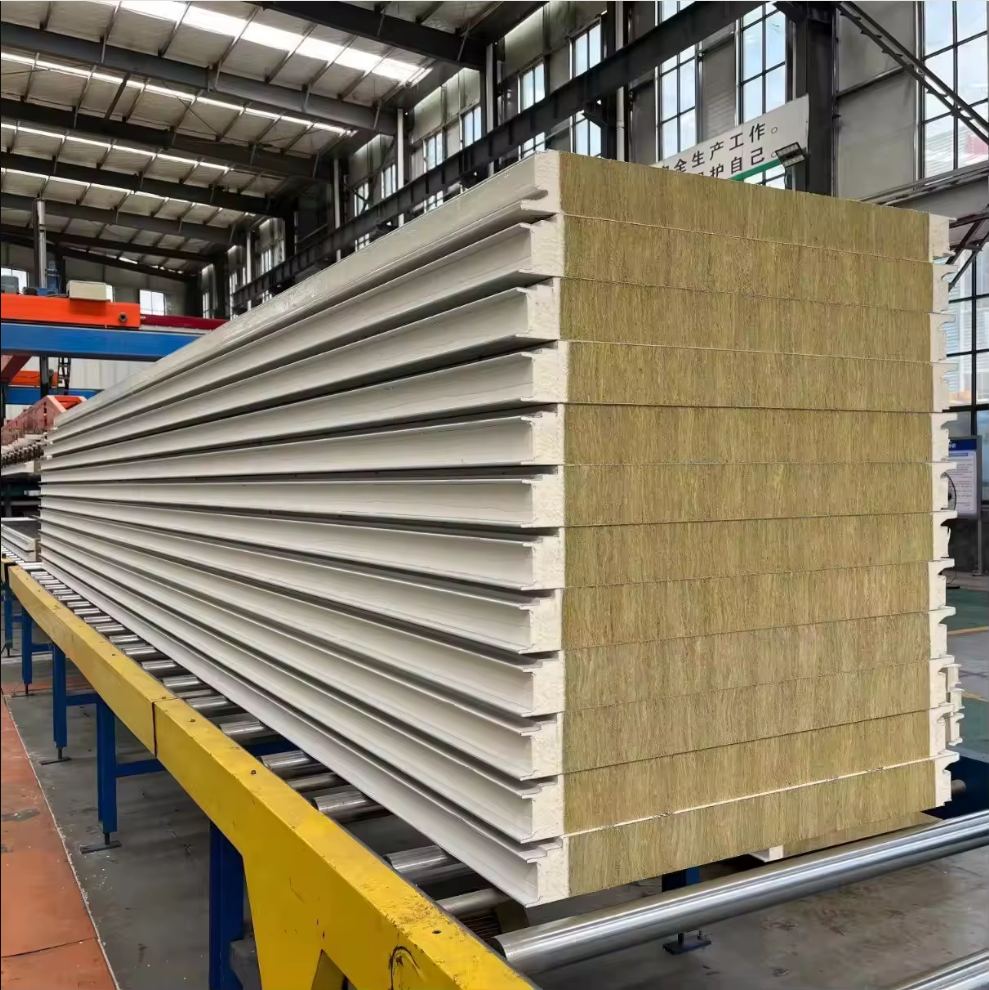
Rock wool is also fairly heavy for an insulation material. Typical densities run from about 100 to 150 kg/m³. Mass blocks sound too, because heavier layers are harder for a wave to shake. So the core works in two ways. It absorbs some sound, and it resists the rest.
Where Solid Panels Help, and Where They Stop
A solid-skin panel helps in two main ways. First, it blocks airborne noise passing through a wall or roof. Second, it dampens the drumming of rain and hail on the outer sheet. Compared with a PU sandwich panel of the same thickness, a rock wool sandwich panel usually gives better sound insulation. PU foam is light and has closed cells, so it reflects more sound than it absorbs. Rock wool’s open fibres and higher mass give it the edge.
Still, the limits deserve an honest mention. A smooth metal inner skin reflects sound back into the room. Voices, machines, and forklifts keep bouncing between hard surfaces. The panel stops noise from leaving, but it does little to calm the space itself. Joints, doors, and openings also let sound leak. Installation quality matters as much as the panel.
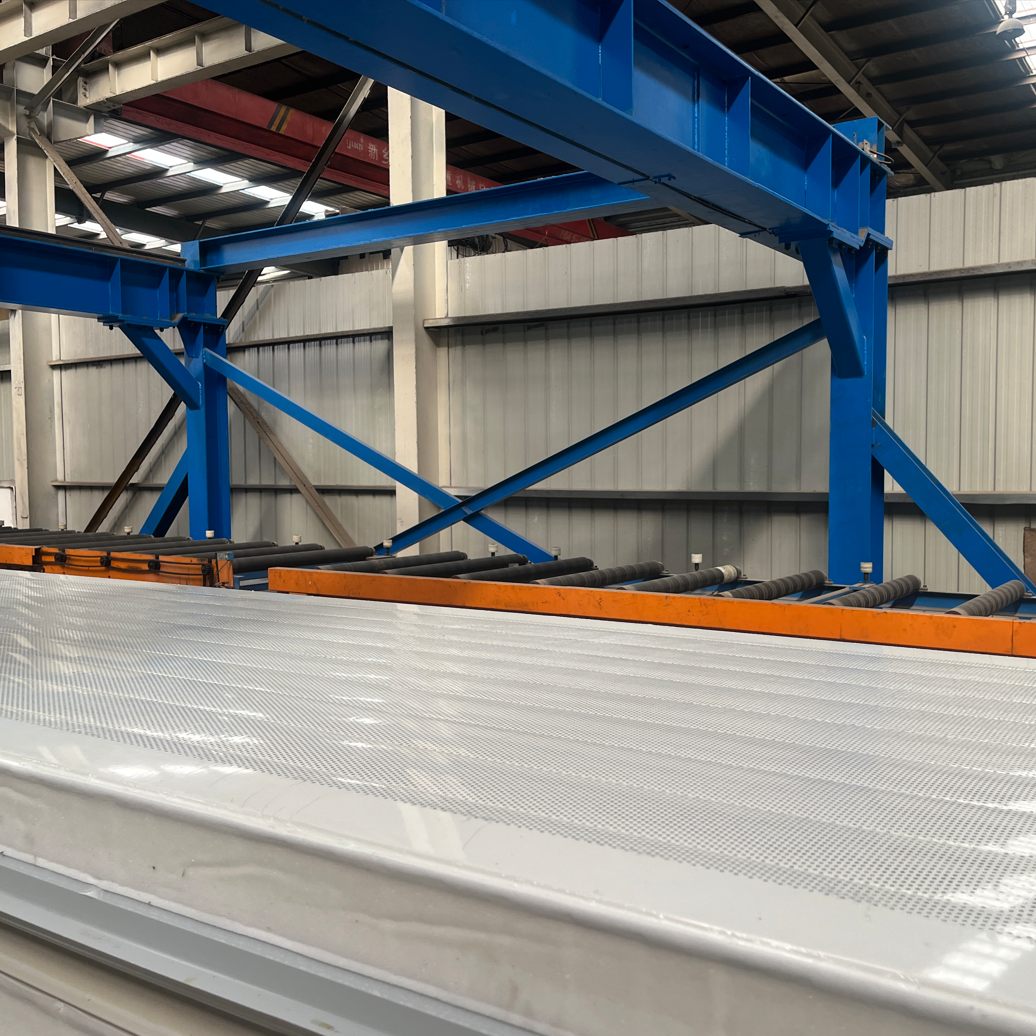
Think of a solid panel as a good start rather than a full answer. For many projects, that is enough. For loud plants or echo-prone halls, it is worth going one step further.
Perforated Inner Skins Add Absorption
Some panels use a perforated metal sheet on the inner face. Small holes, often 1.5 to 3 mm wide, run across the sheet in a regular pattern. The same rock wool core sits behind it. Some designs add a thin acoustic fleece between the two.
The holes change how sound meets the panel. On a smooth sheet, a sound wave hits the surface and bounces back. With perforations, part of the wave slips through the holes and reaches the fibres. The contact area between the sound wave and the absorbing material grows a lot. More contact means more friction, and more friction means stronger attenuation as the wave travels.
The result is less echo and a lower noise level inside the room. Reverberation time drops, so speech sounds clearer and machines feel less harsh. Perforated panels suit plant rooms, sports halls, workshops, and production lines.
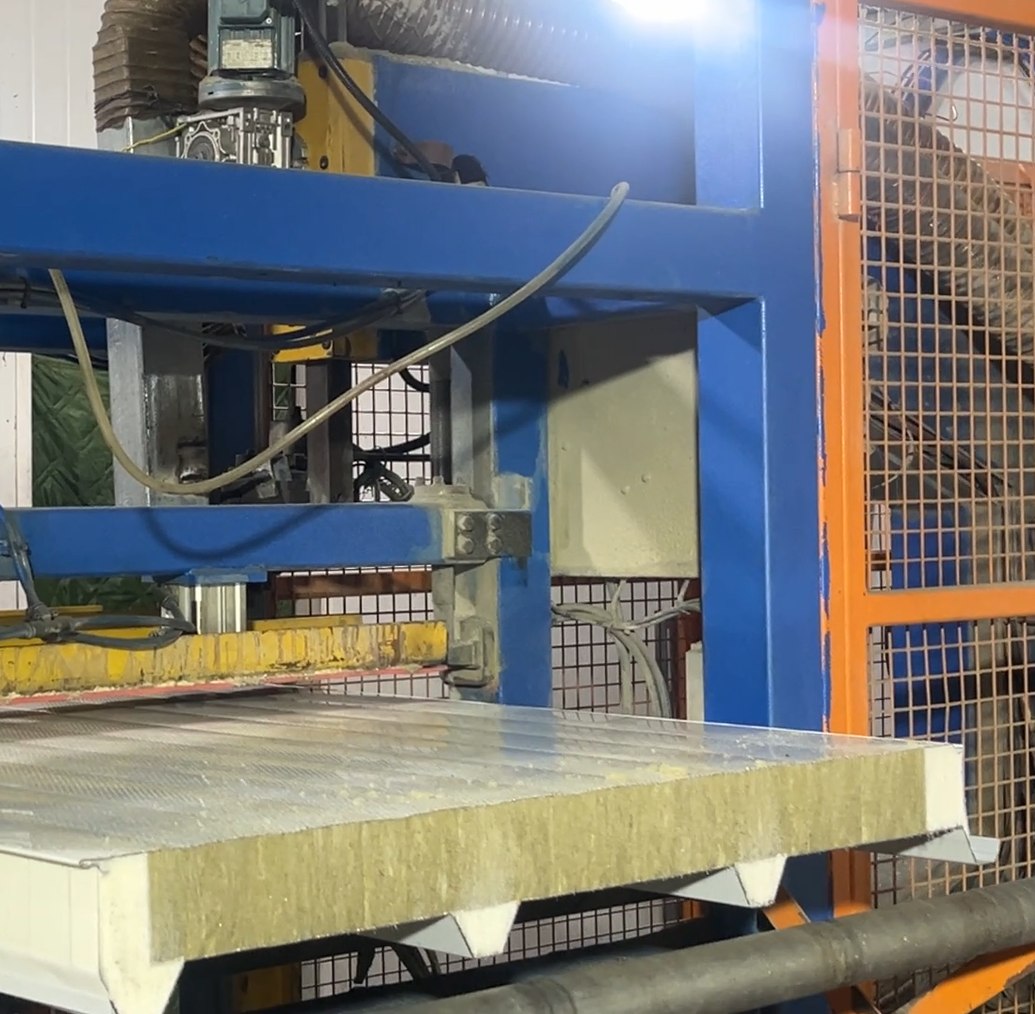
The perforation rate matters here. An open area of roughly 10 to 25 percent is common, and the right figure depends on the frequencies you want to tame. An acoustic consultant can help fine-tune it. Because the core stays mineral-based, the holes do not change its fire behaviour. Still, ask for test data on the exact build-up.
Final Thoughts
Noise control rarely comes from one product alone, but the choice of sandwich panel helps. Solid rock wool panels cut the noise passing through, and they beat PU options in this area. Perforated inner skins go further by absorbing sound inside the room as well. If you are weighing options for a project that is moving ahead, tell us about the space, the noise sources, and your target levels. We can share data sheets, test reports, and suggestions that fit your plan. Feel free to send us a message anytime.
Post time: Oct-15-2026