

A cold chain warehouse holds a lot of value, and fruit is one of the fussiest things to keep inside it. Fruit keeps breathing after harvest, and temperature controls how fast it ages. Set the dial a degree or two off, and the damage shows up days later. Apples keep for months at one setting, while bananas turn grey at the same one. So what number should you pick? There is no single answer, but there are clear ranges for each fruit family. Here we walk through them, then look at humidity, airflow, and the building itself.
Match the Temperature to the Fruit
Fruit falls into two broad groups. Temperate fruit likes the cold. Tropical fruit does not.
For temperate fruit, aim close to freezing. Apples do well between 0 and 4°C, depending on the variety. Pears, grapes, and cherries prefer about -1 to 0°C, and strawberries like 0°C. At these settings, respiration slows and the fruit stays firm for weeks or months.
Tropical fruit needs a gentler setting. Bananas store best around 13 to 14°C. Mangoes sit between 10 and 13°C. Pineapples and avocados vary with ripeness, but most fall between 7 and 13°C. Go colder than that, and chilling injury starts. The skin darkens, the flesh turns watery, and the fruit never ripens properly.
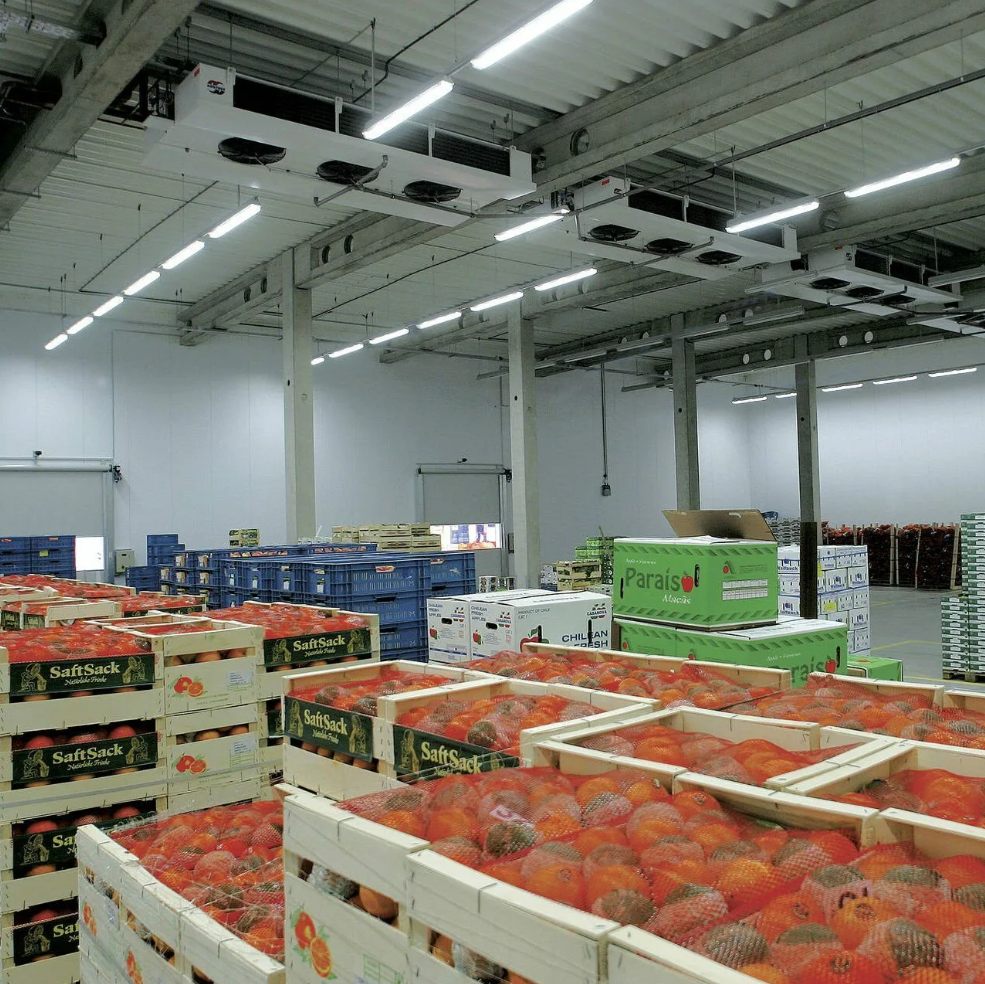
Citrus lands in the middle. Oranges cope with 3 to 8°C, while lemons and limes prefer 9 to 13°C.
Ranges shift with variety, harvest time, and storage length, so check with your grower before you lock in a number. Also sort incoming stock by fruit type. Mixing bananas and apples in one room forces a compromise that hurts both.
Humidity, Airflow, and Stability
Temperature is only half the story. Most fruit needs relative humidity between 85 and 95 percent. Drier air pulls moisture out of the skin, and the fruit shrivels and loses weight. If the air is too wet, mould gets a foothold.
Airflow matters just as much. Fans should move air evenly around the pallets without blasting it straight at the fruit. Leave gaps between stacks and keep them off the walls. Dead corners create warm pockets, and warm pockets spoil first.
Stability counts too. A swing of 2 or 3°C may look small on a display. Inside a cold room, it causes condensation on the fruit and speeds up rot. Try to hold the setpoint within about 0.5 to 1°C.
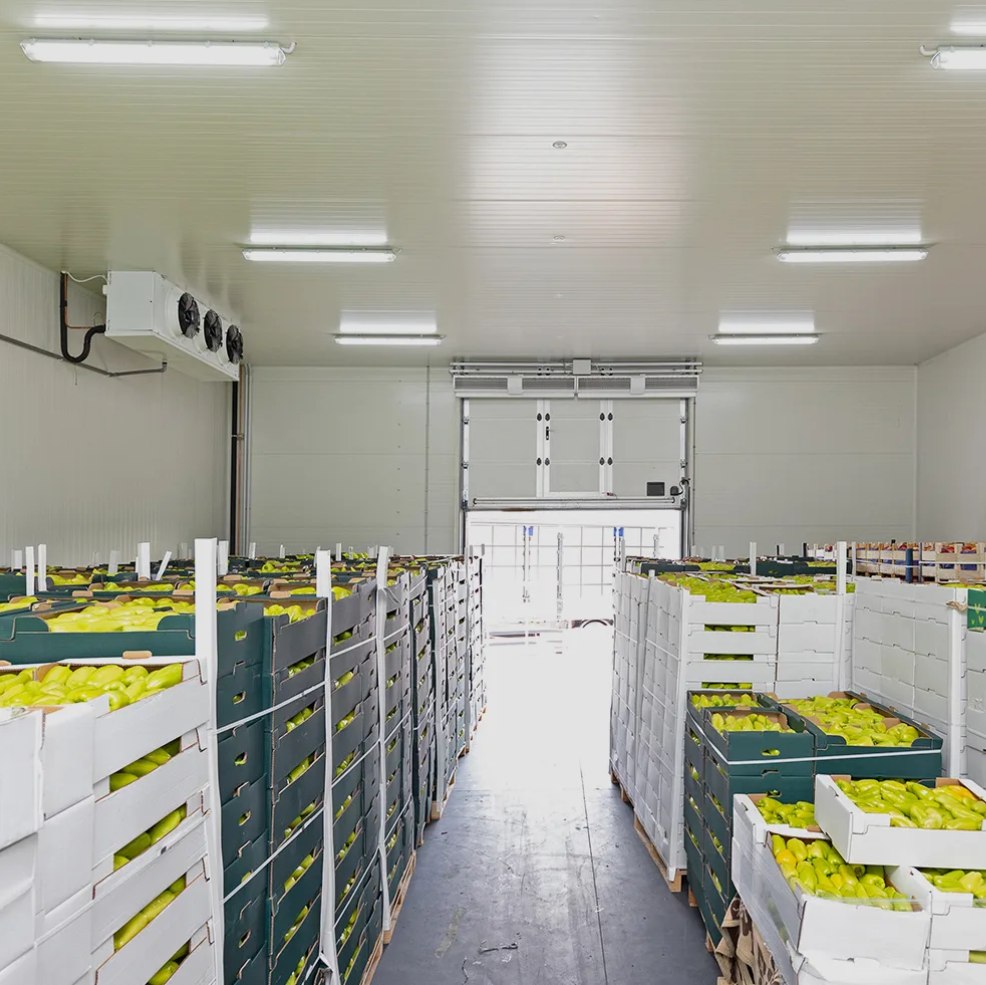
Don’t forget ethylene. Apples, pears, and bananas release this gas, and it pushes nearby fruit to ripen faster. Kiwis and grapes react badly to it. Where you can, keep those fruits in separate chambers from the heavy producers. A cold chain warehouse with several rooms gives you that flexibility.
How the Building Holds the Number
A setpoint on the controller means little if the building cannot keep it. Insulation does most of the work. A cold storage panel with a PU or PIR core keeps heat out and cold in. For fruit rooms, 100 to 150 mm is a common thickness. Lower temperatures and hotter climates call for thicker panels.
Joints deserve attention. Gaps let warm, moist air creep in, and the compressors then work harder to catch up. Tight panel joints and good door gaskets cut that load. Fast-closing doors or strip curtains help during busy loading hours.
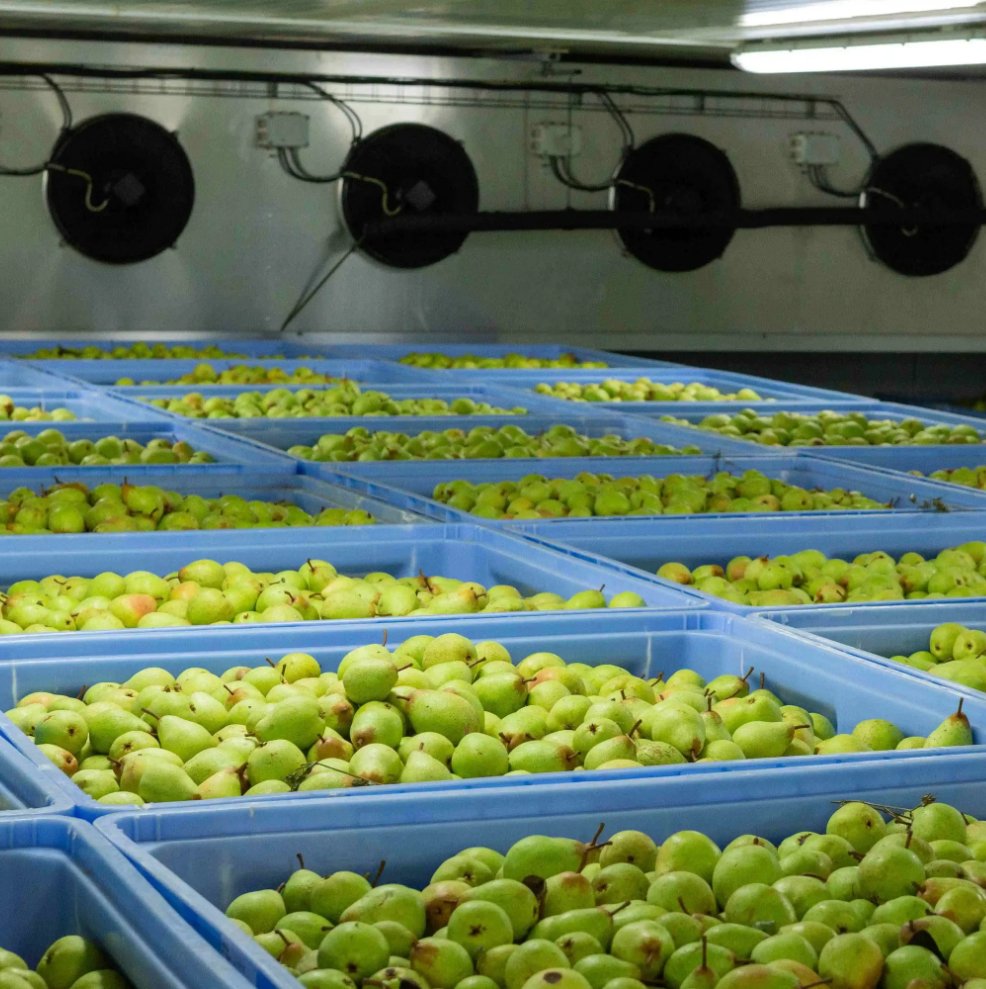
Floors need care too. Insulate them and add a vapour barrier, because heat also rises from the ground. Size the refrigeration system with care. An undersized unit struggles on warm days, while an oversized one cycles on and off and makes the temperature swing.
Plan the layout around the flow of fruit. A pre-cooling area, a holding room, and a dispatch zone keep warm arrivals away from cold stock. Each cold storage room can then run at its own setting, and your energy bills usually drop too.
There is no one right number for fruit. Start with the variety, match the humidity, and make sure the building can hold steady. If you are planning a new cold chain warehouse or upgrading an old one, tell us what fruit you store and what your local climate looks like. We can share panel specs and layout ideas that fit. Feel free to send us a message anytime.
Post time: Oct-15-2026