

Fruit cold rooms protect fresh fruit during storage and transport. Many markets and farms use this solution to keep fruit safe for long periods. A stable environment slows ripening and reduces loss. Most fruit stays in good condition when temperatures stay between 0°C and 10°C. Humidity between 85% and 95% also helps. Modern fruit cold rooms offer tight insulation, strong cooling capacity, and accurate control. These systems serve apples, pears, grapes, berries, and many tropical fruits. The cold room improves freshness by almost 40% compared to open storage.
Main Characters Of Fruit cold rooms
Fruit cold rooms focus on stable temperature, proper humidity, and clean airflow. These three characters support long shelf life. Temperature swings harm fruit quality in less than one hour. Humidity loss also stresses fruit and reduces weight. Many operators set humidity at 90% for daily use. Airflow speed often stays near 1.5 m/s to protect soft fruit.
Different fruits need different conditions. Apples stay fresh at 0°C. Grapes prefer 1°C. Citrus fruit needs 3°C to 7°C. Mangoes require 10°C to avoid chilling injury. This wide range shows why a cold room must offer strong control.
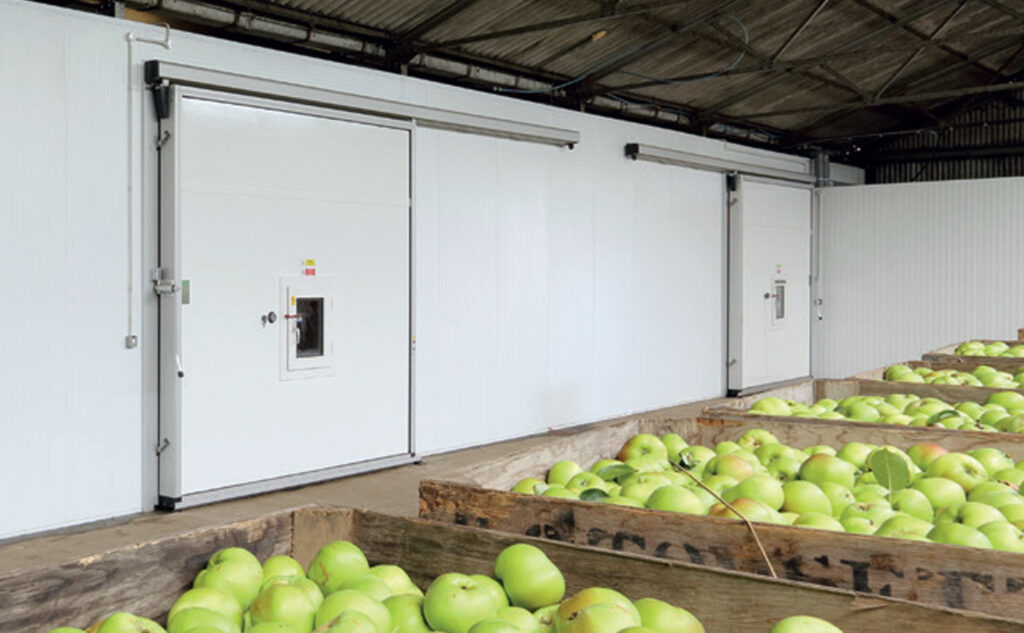
Energy use also forms a key character. A 20 m³ fruit cold room often needs about 1.5 kW of cooling power. A 100 m³ room may need 5 kW. Proper insulation reduces this load. Good doors also keep warm air out. The cold room must resist outside heat from both walls and doors.
Safety matters too. The system includes alarms that warn when temperature rises more than 1°C. Many operators add CO₂ sensors because fruit breathes during storage. This process increases CO₂ levels inside the room. Proper ventilation protects workers and fruit. These characters create a controlled environment that keeps fruit stable during long periods.
Temperature Requirements Of Fruit cold rooms
Temperature control forms the heart of any fruit cold room. Each fruit reacts differently to cold. Operators must know the suitable range before loading. Apples stay safe at 0°C for more than 120 days. Pears hold quality for 90 days at 1°C. Grapes store well at 1°C but need very clean air. Bananas require 13°C to 14°C. Any temperature under 12°C harms banana texture. Berries like strawberries and blueberries need colder air near 0°C to keep firmness.
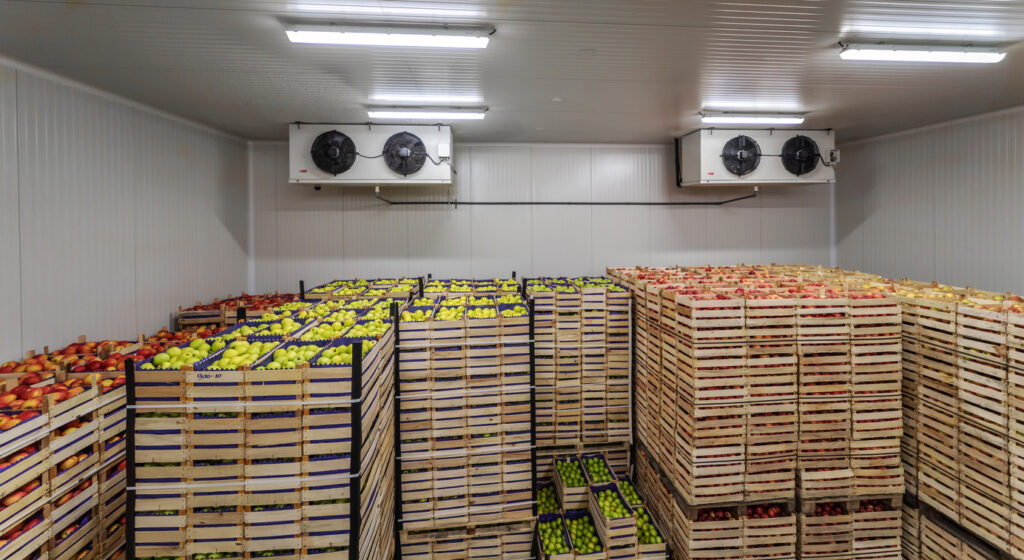
A simple chart helps operators manage daily work. Common fruit groups fall into three zones. The first zone ranges from 0°C to 2°C. Second zone two ranges from 3°C to 7°C. And the third zone ranges from 8°C to 13°C. Many cold rooms handle two zones at the same time. A large farm may use three rooms for different fruit groups.
Temperature sensors check conditions every 30 seconds. Most systems place at least four sensors in a 100 m³ room. These sensors monitor top, bottom, front, and rear positions. This layout ensures stable readings across the room. If the load changes, the system adjusts the compressor speed. This control keeps temperature swings within 1°C.
Fast cooling protects fruit after harvest. Many farms cool fruit from 25°C to 5°C within three hours. This quick drop slows respiration by almost 60%. The process reduces spoilage and keeps strong flavor. Correct temperature also lowers weight loss from water evaporation.
Insulated Panels Of Fruit cold rooms
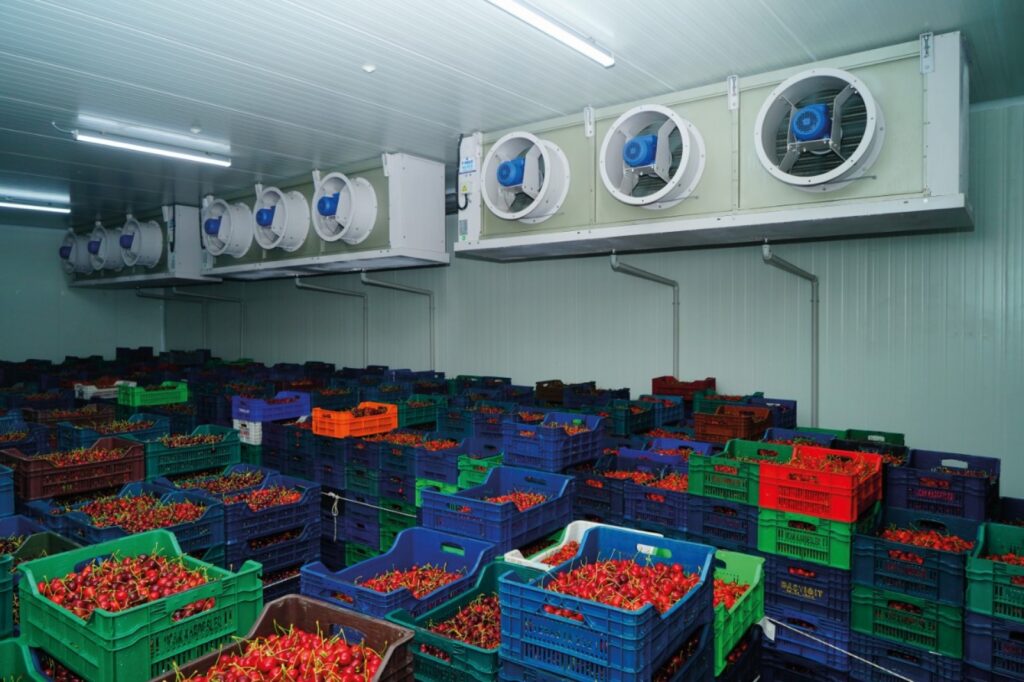
Cold room panels form the main structure. They control heat flow and save energy. Most fruit cold rooms use polyurethane (PU) or polyisocyanurate (PIR) panels. PU panels often reach a thermal conductivity of 0.022 W/m·K. PIR panels perform slightly better at 0.020 W/m·K. A typical panel thickness ranges from 100 mm to 150 mm. A 150 mm PIR panel cuts heat gain by almost 15% compared to a 100 mm PU panel.
The panels connect with cam-lock joints. These joints create tight seams without gaps. Strong seams keep warm air out and cold air inside. This improves energy savings during the day. Many operators choose 0.5 mm steel sheets for the panel surface. Larger projects may use 0.6 mm sheets for stronger impact resistance.
The panels also resist moisture. A PU core absorbs less than 2% water after long exposure. This protects insulation during years of use. Good panels also resist bacteria and mold. A smooth surface allows quick cleaning with simple tools.
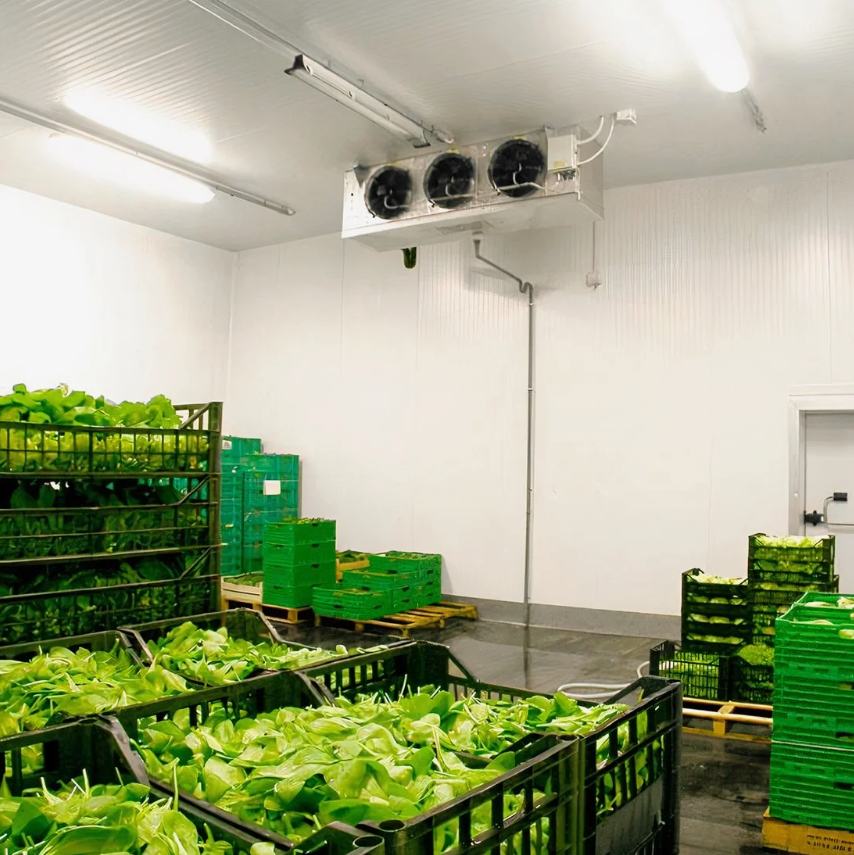
The fruit cold room includes ceiling and floor panels too. The floor panel often uses a slip-resistant surface. Some systems add reinforced steel under the floor for heavy pallets. A small room may use 1,000 kg of total panel mass. A medium room may use more than 3,000 kg. Strong insulation reduces cooling load and protects the stored fruit.
Cooling System
The condensing unit provides the cold air that protects the fruit. It includes a compressor, condenser, fan, and control parts. A 20 m³ fruit cold room may use a 1.5 HP compressor. A 100 m³ room may use a 5 HP compressor. Many systems use R404A or R448A. These refrigerants offer stable performance.
The evaporator unit sits inside the room. It spreads cold air evenly. Larger rooms may install two evaporators for balanced airflow. Most units use fans that move air at 1.5 m/s. This protects soft fruit from strong wind.
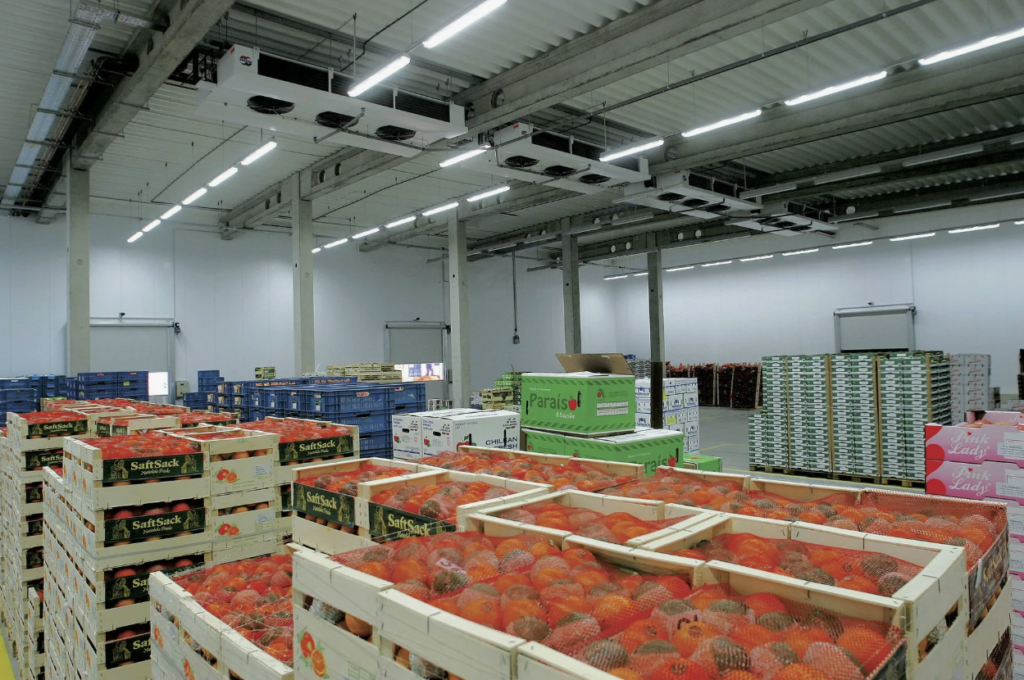
The unit controls defrost cycles. Ice forms on the coils during long operation. Too much ice reduces cooling speed by almost 30%. Most systems start defrost every six hours. This cycle lasts 10 to 15 minutes. Good fans quickly restore airflow after each cycle.
Drain lines remove water from the evaporator. A cold room may drain 2 liters per day in dry seasons. Wet seasons may create up to 6 liters per day. Good insulation around the drain prevents freezing.
The condensing unit also adjusts power. Many modern units use inverter technology. This feature cuts energy use by up to 18%. The system slows down during light loads and speeds up during heavy loads. Clean cooling keeps fruit fresh for long periods.
Fruit cold rooms offer clear benefits for farms, markets, and processing centers. The system controls temperature, humidity, and airflow with high accuracy. Strong insulation reduces energy loss and protects the stored fruit. The cooling system adjusts power to match daily loads. Doors, lights, shelves, and alarms support safe operation. Proper management increases fruit freshness by almost 40% compared to normal storage. Each part plays a role in keeping fruit stable during long periods. A good fruit cold room extends shelf life, reduces waste, and increases product value.
Post time: Dec-09-2025