

In cold storage refrigeration systems, the compressor serves as the core power component. It drives the entire refrigeration cycle and directly affects cooling efficiency, energy consumption, and system stability. Whether the cold room is a small commercial unit or a large industrial warehouse, the selection of a suitable compressor determines long-term operating performance.
Types of Refrigeration Compressors
The primary role of a compressor is to compress low-pressure refrigerant vapor into high-pressure gas. This process raises the refrigerant temperature and enables heat transfer in the condenser. By continuously circulating refrigerant, the compressor maintains the required low temperature inside the cold storage space. Without stable compression, the system cannot sustain cooling capacity or temperature control.
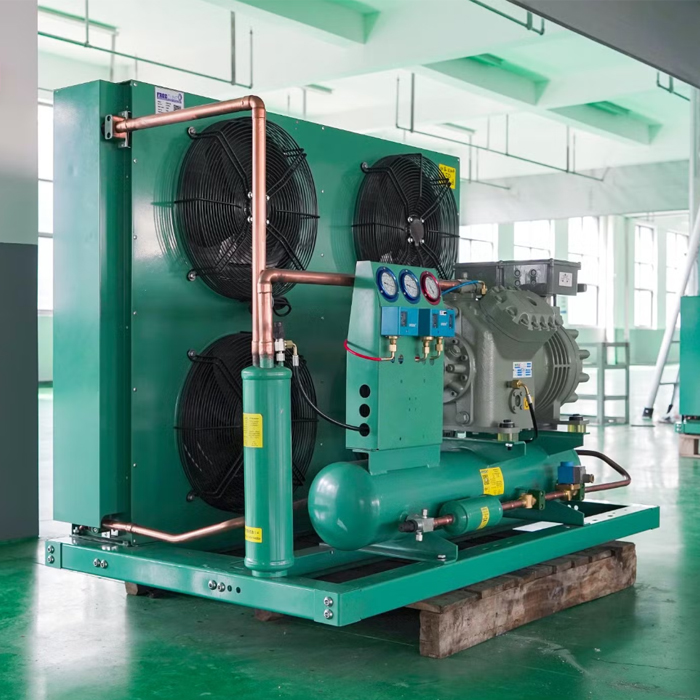
Cold storage scale strongly influences compressor selection. Small cold rooms prioritize compact design, low noise, and cost control. Medium-sized facilities focus on efficiency, load flexibility, and operational stability. Large cold storage projects emphasize energy efficiency, automation compatibility, and long service life. Matching compressor type to project scale prevents energy waste and operational risks.
Several types of compressors are commonly used in cold storage applications. These include reciprocating compressors, scroll compressors, screw compressors, and centrifugal compressors. Each type has distinct structural features, operating characteristics, and application ranges. Engineers select compressors based on cold room size, temperature requirements, load variation, and budget constraints.
Compressors for Small and Medium-sized Cold Storage
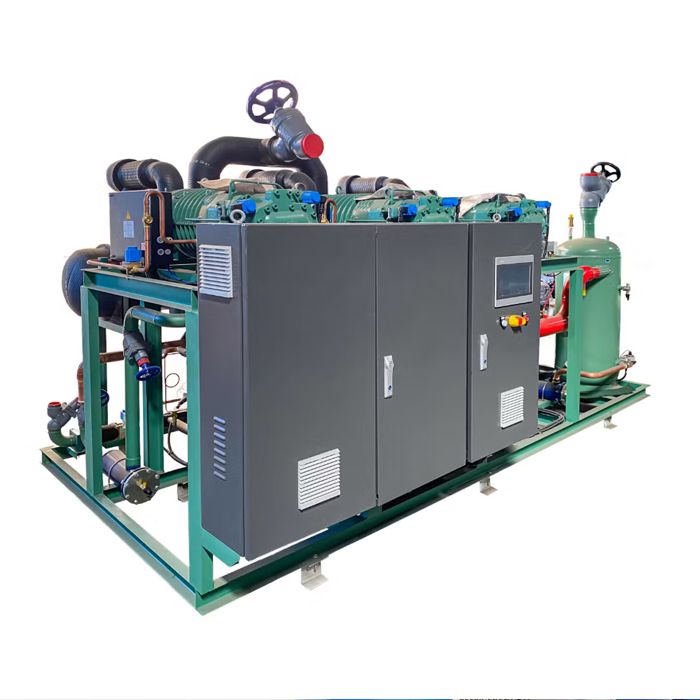
Reciprocating compressors are widely used in small and medium-sized cold storage facilities. They rely on pistons driven by a crankshaft to compress refrigerant gas. This design offers simple structure, mature technology, and relatively low initial cost. Maintenance remains straightforward, and spare parts are easy to obtain. These compressors perform well in small-scale cold storage or cold storage with a cooling capacity of less than 10kW, such as food retail storage, small processing plants, and restaurant cold rooms. However, energy efficiency decreases at partial loads, and vibration levels are higher than other types.
Scroll compressors are increasingly popular in mini cold rooms, pharmaceutical storage, and fresh produce storage facilities. They use two interleaved spiral elements to compress refrigerant smoothly. This structure reduces mechanical friction and noise. Scroll compressors provide stable operation and high efficiency under constant load conditions. Their compact size allows flexible installation. Although the price is slightly higher, scroll compressors have a longer service life and lower maintenance costs.
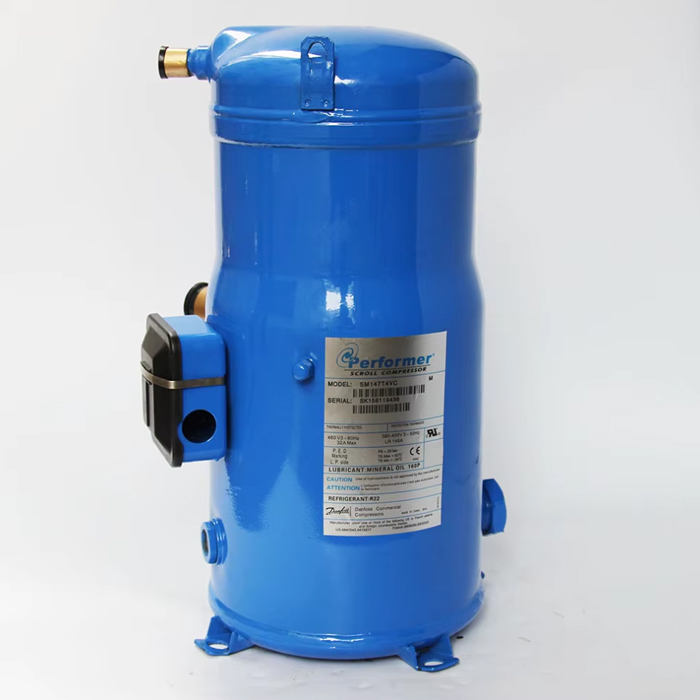
Compressors for Medium and Large Cold Storage
Screw compressors dominate medium and large cold storage projects. They compress refrigerant through meshing male and female rotors. This continuous compression process ensures smooth operation and strong capacity control. Screw compressors handle large refrigeration loads efficiently and adapt well to variable operating conditions. They fit distribution centers, frozen food warehouses, and meat processing cold stores with volumes ranging from several thousand to tens of thousands of cubic meters. Although initial investment is higher, long-term energy savings and reliability often justify the cost.
Centrifugal compressors mainly serve very large industrial cold storage facilities. They are widely used in projects that require high cooling capacity, stable operation, and long service life. Unlike positive displacement compressors, centrifugal compressors increase refrigerant pressure through high-speed rotating impellers. The refrigerant gains kinetic energy and then converts it into pressure energy inside the diffuser.
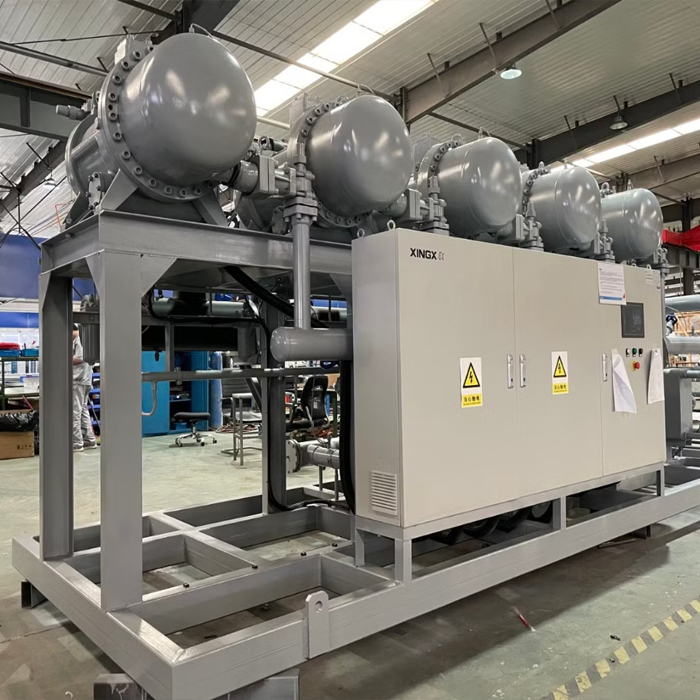
One key advantage of centrifugal compressors is their high efficiency at large loads. They perform best in cold storage facilities with stable and continuous cooling demand. This makes them suitable for large frozen food warehouses, logistics distribution centers, and industrial cold storage plants. Their operation produces low vibration and relatively low noise, which improves overall system comfort and reliability.
Centrifugal compressors also feature a compact structure when compared with multiple parallel screw units of the same capacity. They integrate well with centralized refrigeration systems and advanced automatic control platforms. Operators can achieve precise capacity regulation through inlet guide vanes or variable-speed drives.
However, centrifugal compressors require high technical standards in design, installation, and operation. They are sensitive to load fluctuations and are not ideal for small or frequently changing cold storage applications. For large and stable cold storage projects, centrifugal compressors provide an efficient and durable refrigeration solution.
Post time: Jan-23-2026