

Cold storage warehouses play a decisive role in modern supply chains. They protect food quality, stabilize prices, and support cross-regional trade in temperature-sensitive goods. From fresh produce to pharmaceuticals, cold storage infrastructure enables year-round availability and safety. As consumption patterns evolve and logistics networks expand, demand for efficient cold storage warehouses continues to grow.
Core Functions and Technical Parameters of Cold Storage Warehouses
A cold storage warehouse is designed to maintain controlled temperatures that slow biological and chemical degradation. Typical operating temperature ranges depend on product categories. Chilled storage usually operates between 0°C and +4°C for fresh meat, dairy, and vegetables. Frozen storage commonly maintains −18°C, which aligns with international food safety standards. Deep-freeze warehouses for long-term storage of seafood or meat may operate at −25°C to −30°C.
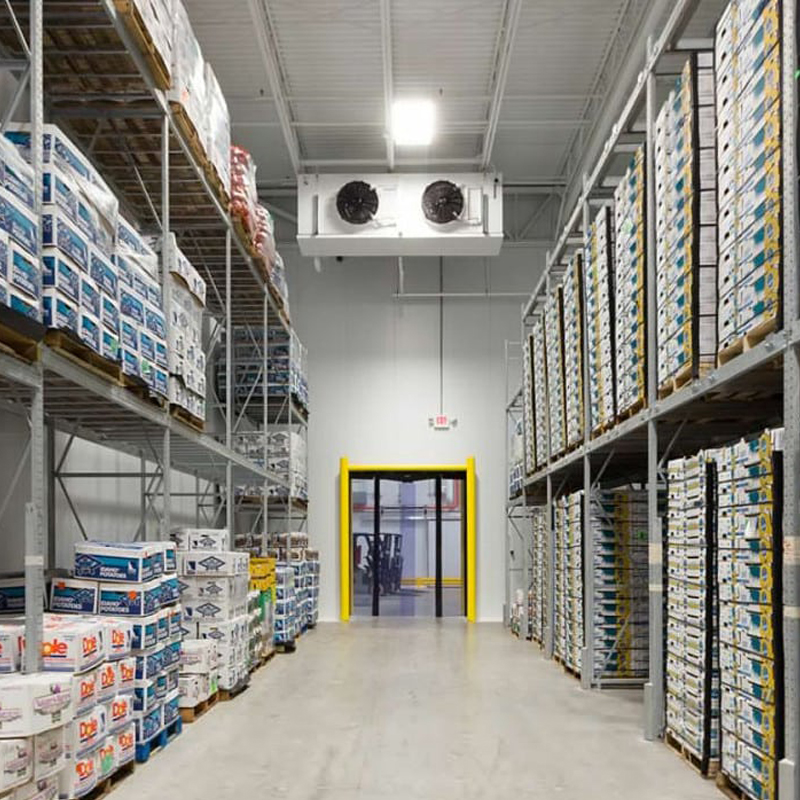
Thermal insulation performance directly affects energy efficiency. Polyurethane sandwich panels with thermal conductivity of approximately 0.022 W/m·K remain the industry standard. For frozen warehouses, insulation thickness typically ranges from 120 mm to 150 mm. These parameters help limit heat gain and reduce compressor runtime. Floors often include insulation layers of 80 mm to 120 mm, combined with vapor barriers to prevent frost heave.
Refrigeration systems account for the largest share of operating costs. Energy consumption usually represents 60% to 70% of total cold storage operating expenses. Modern ammonia or CO₂ refrigeration systems can achieve coefficient of performance values between 3.5 and 5.0 under optimized conditions. Variable-frequency drives on compressors and evaporator fans further reduce electricity use by 15% to 25% compared with fixed-speed systems.
Storage density defines economic efficiency. High-bay cold storage warehouses often reach clear heights of 20 to 35 meters. Automated pallet racking systems allow storage densities above 0.8 pallets per square meter. This vertical utilization reduces land use and lowers construction cost per pallet position. For facilities exceeding 20,000 pallet positions, automation can reduce labor demand by more than 40%.
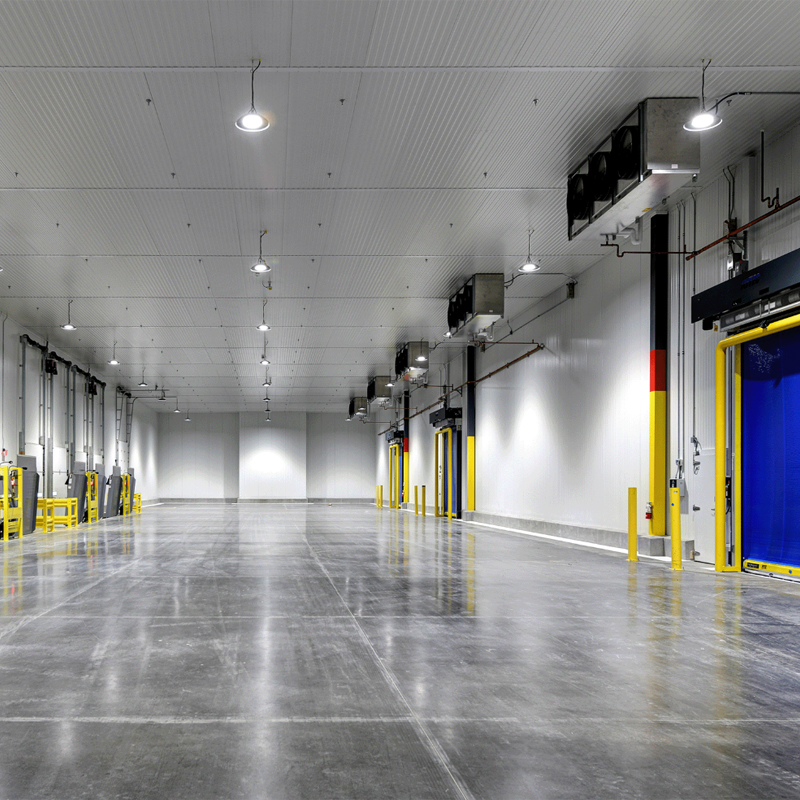
Construction of Cold Storage Warehouse
High-quality cold storage boards determine operational efficiency. Premium polyurethane panels deliver R-values of 28 to 30 with just four-inch thickness. This low thermal conductivity cuts heat infiltration by 50 percent compared to standard materials. Effective insulation reduces compressor workload by 35 percent. Each panel joint requires perfect sealing to eliminate thermal bridging. Moisture barriers prevent condensation that breeds mold and degrades performance. Facilities using top-tier panels report energy costs dropping from $12,000 to $7,500 annually per 1,000 square feet. The panels maintain temperatures from -10°F to 35°F with minimal fluctuation.
Refrigeration equipment quality drives the remaining performance variables. Modern semi-hermetic compressors achieve energy efficiency ratios of 3.4 to 11.7 BTU per watt-hour. The compressor consumes 57 percent of total system power. High-efficiency evaporator fans cut that component’s usage from 10 percent to 7 percent of the total. Variable frequency drives adjust motor speeds, reducing duty cycles from constant 100 percent operation to 70 percent under typical loads. Smart defrost controllers limit heater operation to 4.2 percent of runtime, saving 550 kWh monthly.
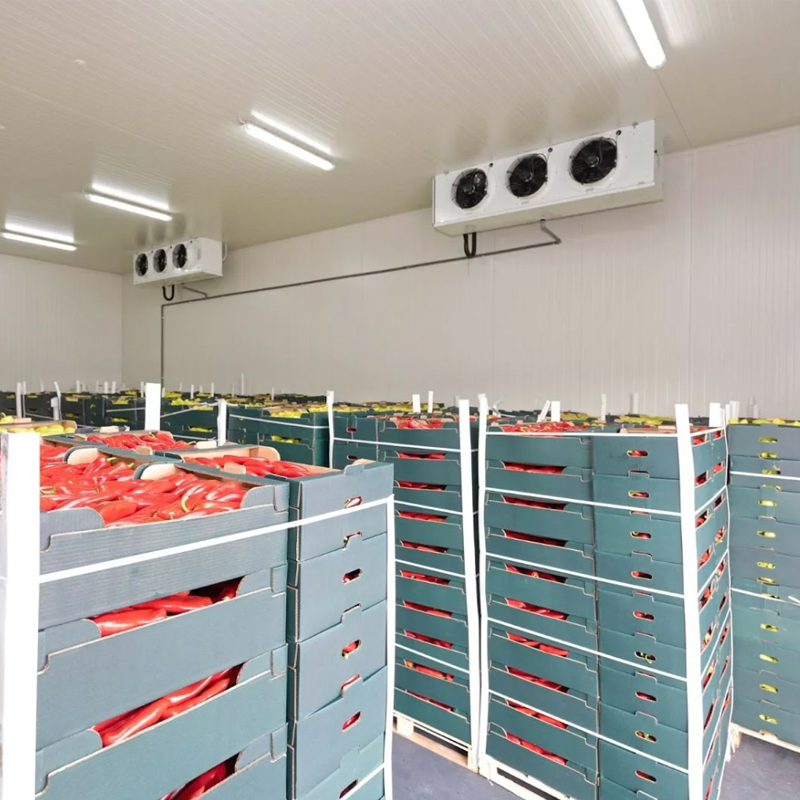
The synergy between superior panels and equipment generates compound benefits. Combined systems maintain consistent temperatures within ±1°F variation. This precision reduces product spoilage by 30 percent. Total facility energy consumption drops from 15,555 kWh to 8,500 kWh annually for a standard 800-square-foot unit. LED lighting designed for cold environments adds 350 kWh yearly but lasts three times longer than conventional fixtures. The integrated approach delivers return on investment within 2.8 years through reduced utility costs and preserved inventory value.
Construction teams must coordinate both elements during installation. Panels require laser-guided placement to ensure airtight seams. Refrigeration piping needs pre-insulation before routing through wall penetrations. Commissioning protocols test the entire system under full load conditions.
Post time: Jan-19-2026