

A cold room sliding door offers temperature protection with strong design and smooth movement. The door also supports long service life. Many companies use these doors in cold rooms from 20 m³ to 500 m³.
Structure
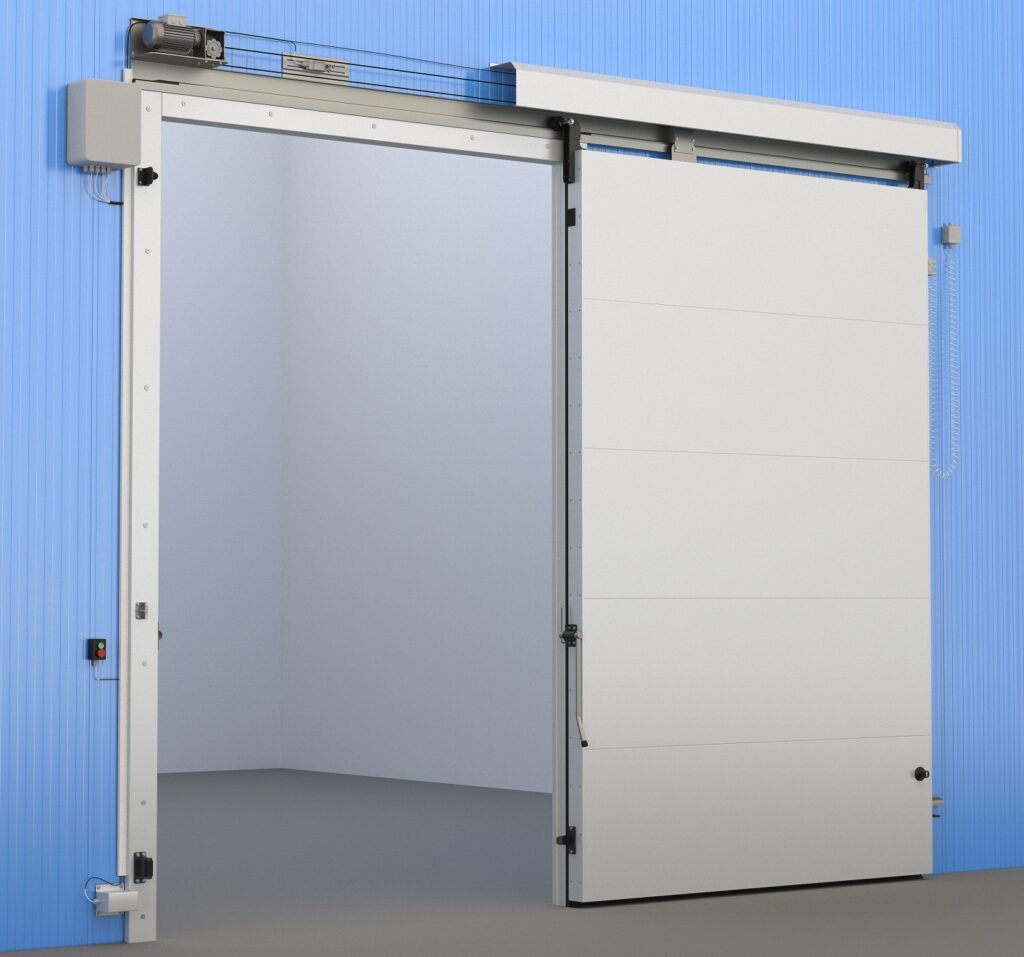
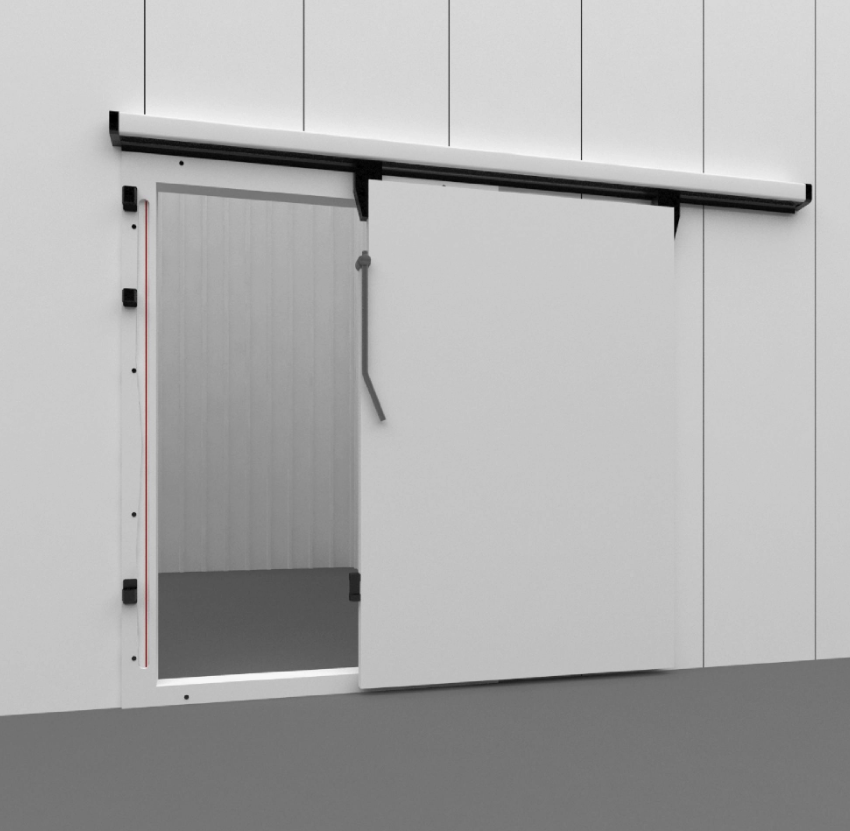
A cold room sliding door uses a simple but efficient structure. The door panel forms the main body. The panel usually reaches 80 mm to 120 mm in thickness. The track system holds and guides the panel. The system includes a rail, two rollers, and a stopper. Many doors use aluminum rails with a length of 2 m to 4 m. The handle system supports manual operation. The seal system blocks outside air.
The door panel includes three layers. The outer layer and inner layer protect the insulation core. The frame keeps the panel stable. A heater wire sits in the frame when the door works in low-temperature rooms. The wire uses 15 W to 25 W of power in most models. This wire stops frost at the bottom frame.
The bottom guide keeps the door straight during movement. The guide also reduces vibration. Many factories use steel guides with a width near 50 mm. The structure allows smooth sliding even after 30,000 cycles of use.
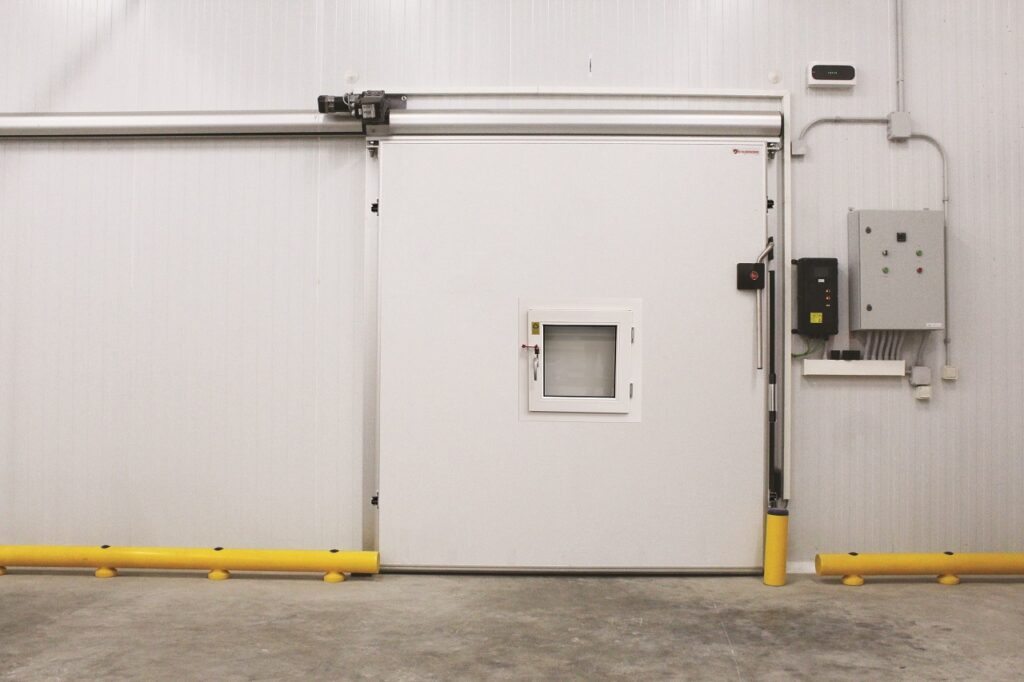
The lock system increases safety. Most locks support simple closing within one second. Some heavy doors add a mechanical clamp for stronger pressure. The structure supports rooms from −25 °C to 10 °C.
Materials
Most manufacturers choose strong materials to ensure stable performance. Many door panels use pre-painted steel sheets. The sheet thickness usually ranges from 0.4 mm to 0.6 mm. Some high-end panels use stainless steel with thickness near 0.5 mm. These sheets resist corrosion and hold color for more than 10 years.
The insulation core uses PU or PIR foam. PU foam reaches a density near 40 kg/m³. PIR foam reaches a density near 42 kg/m³. PIR offers better fire resistance. Both materials offer strong thermal resistance. Many panels reach a heat conductivity rate around 0.020 W/m·K.
The track uses aluminum alloy. Alloy 6063 remains common. This alloy shows light weight and strong corrosion resistance. A 3 m track section usually weighs around 4 kg. The rollers often use nylon or PU material. Nylon rollers support loads near 120 kg. PU rollers reduce noise during movement.
The seal strips use EPDM or PVC material. EPDM seals work well from −40 °C to 120 °C. PVC seals work well from −20 °C to 60 °C. Many doors use double seals for better insulation.
The heater wire uses copper or alloy wire. A standard 20 W heater wire fits most freezer doors under 2 m in width. The handle often uses aluminum alloy with a length near 200 mm. These materials improve durability and comfort.
Advantages
Cold room sliding doors offer strong temperature control. The insulation panel blocks heat flow. Many doors reduce heat loss by 20% compared to normal hinged doors. The sliding design limits air exchange during opening. The door opens along the wall, so the room loses less cold air.
The door creates strong sealing. Double EPDM seals reduce air leakage by up to 30%. This helps keep humidity stable. Many food processors use these doors to protect goods under strict conditions. Fruit storage rooms hold 5% to 10% more moisture when using strong sealing.
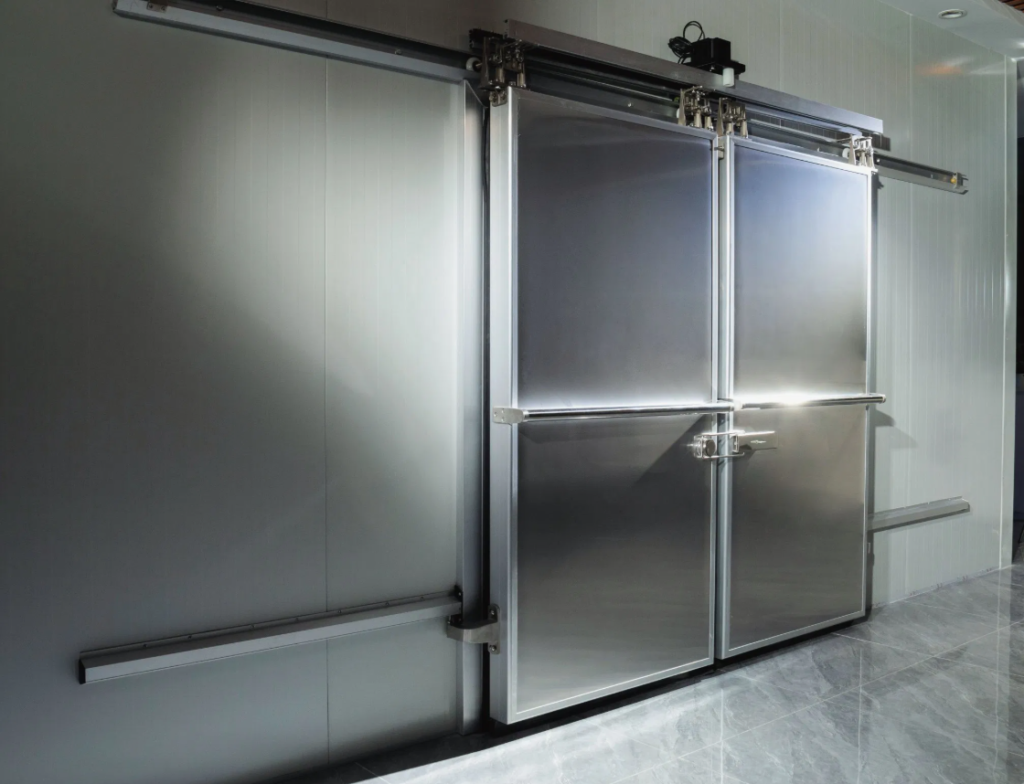
The sliding door saves space. The door uses wall space instead of inner space. This increases storage space by 2% to 5% in rooms smaller than 100 m³. Workers move goods with fewer obstacles. The door also supports large sizes. Many designs reach 2.5 m in width or 3 m in height.
The door reduces noise during operation. Nylon rollers create a sound level under 35 dB. This supports comfortable work in busy facilities. The maintenance cost remains low. Many rollers run more than 40,000 cycles without failure. The aluminum track resists rust and keeps smooth contact.
The door also increases safety. The lock system prevents accidental opening. Many systems allow quick release from inside. This helps protect workers in urgent situations. The heater wire reduces frost at the bottom. This improves operation in rooms under −18 °C. The door keeps stable performance even in heavy use.
Performance Indicators
Cold room sliding doors follow strict performance standards. Heat insulation forms a key indicator. Many doors reach a U-value near 0.25 W/m²·K. This value helps reduce electricity use by 10% to 20%. A door with PIR foam usually shows better results than PU.
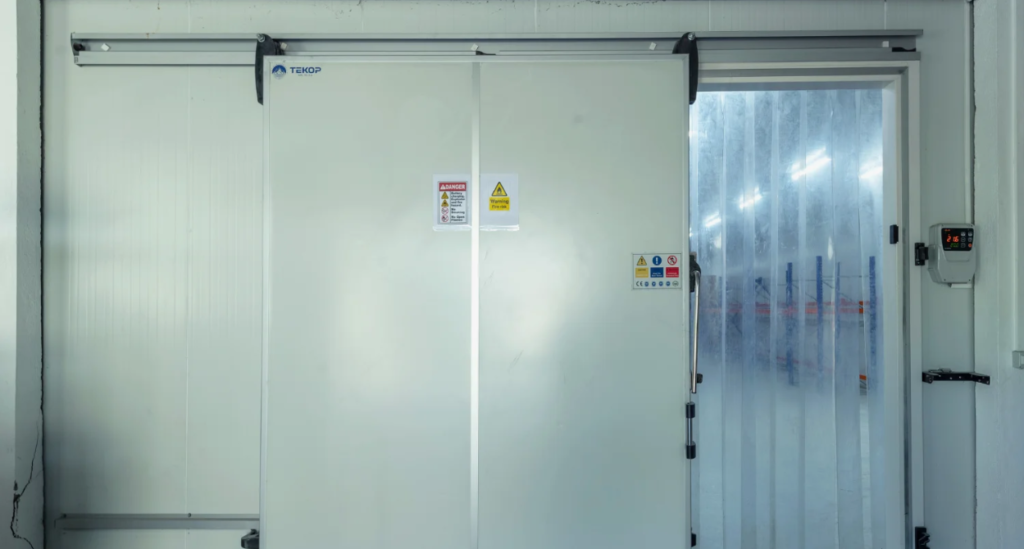
Air tightness forms another key indicator. Many doors show air leakage under 1.5 m³/h·m² at standard pressure. Double seals help reach this level. Air tightness protects goods like fruit, meat, and medicine. Many storage rooms need humidity between 60% and 90%. Strong air tightness helps meet this requirement.
Mechanical strength shows strong performance. The panel often supports impact resistance near 30 J. The surface steel sheet resists bending under daily use. The track system supports door weights near 70 kg to 150 kg. Heavy freezer doors often reach 90 kg.
Durability forms another major indicator. Many doors pass 30,000 to 50,000 open-close cycles during testing. This number equals 8 to 10 years of service in a normal cold room. The rollers use high-strength bearings. Many bearings run smoothly with friction near 0.02.
Safety performance includes fire resistance and anti-frost ability. PIR cores reach fire class B. Many heater wires reduce frost by more than 80% in test rooms at −20 °C. The handle stays strong under 200 N of pulling force. This protects the user in daily operation.
Environmental indicators also matter. The insulation foam uses eco-friendly blowing agents. Many factories reduce emissions by 10% with new production lines. The steel sheet often comes with RoHS-compliant coating. This helps reduce pollution and improve sustainability.
A cold room sliding door improves insulation, space use, and work efficiency. The door uses strong structure, durable materials, and reliable sealing. Many performance indicators show stable results. The door fits cold rooms from small shops to large industrial plants.
Post time: Dec-05-2025