

Chiller warehouse is a kind of cold chain storage facility used for short- and medium-term low-temperature storage. Chiller warehouse is mainly used to store vegetables, fruits, dairy products or fresh meat and other foods. So the working temperature of chiller warehouse is generally around 0-10℃.
With the progress of production technology, chiller warehouse is becoming more and more popular. People can find chiller warehouse in large and medium-sized supermarkets, farms, wholesale centers, and even catering companies. At present, there is a great demand for chiller warehouse in the market, so how should we design cold storage?
Layout of Chiller Warehouse
Different foods have different refrigeration temperatures. Only when it is at a suitable temperature can food be properly stored for a long time. Therefore, a chiller warehouse in a large supermarket or wholesale center must have several small areas with different temperatures.
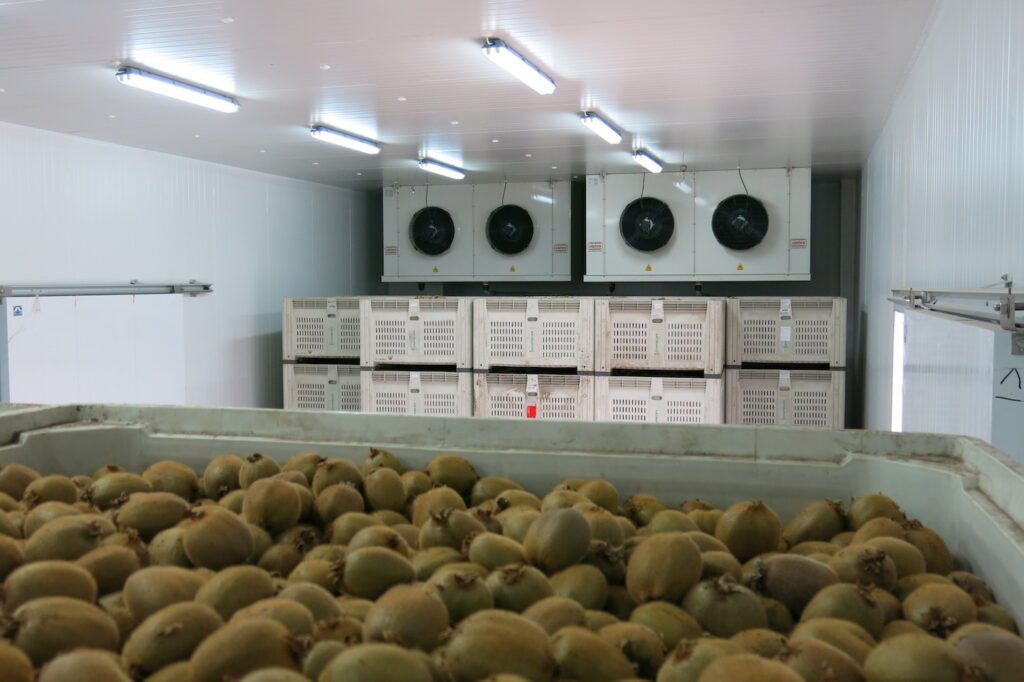
For example, in areas where vegetables or fruits are stored, the cooling temperature should be set to 0-2℃. Moreover, in order to avoid vegetables or fruits from shriveling and affecting sales, humidifiers need to be installed in this area to control the humidity at 90-95%.
When storing fruits such as bananas, mangoes, dragon fruits, etc., we should set the temperature to 10-13℃. We should strictly control the storage temperature of these tropical fruits to prevent them from being harmed by too low a temperature.
The temperature of the storage area for fresh meat and dairy products should be set to 0-4℃. However, humidifiers should not be placed in fresh meat and dairy areas, but the air humidity should be strictly controlled. Because the humidity of the air is too high, the fresh meat will produce too much moisture, breed bacteria, and accelerate spoilage.
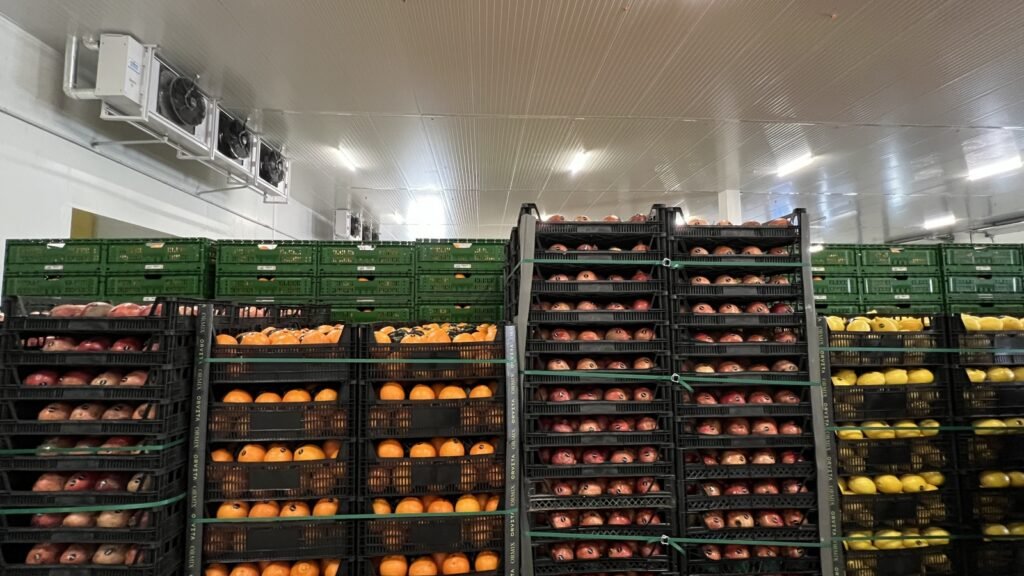
The different storage requirements of various types of food determine that large chiller warewhouse must have multiple different partitions. People should carefully evaluate the layout design and construction cost of cold storage based on actual use needs.
Construction of the Warehouse Body of the Chiller Warehouse
The quality of the cold storage body directly determines the cooling effect and work efficiency of the refrigeration system. A good library body should have both structural strength and thermal insulation properties. On the one hand, good thermal insulation properties can effectively isolate the influence of the outside world on the temperature of stored food. A good cold storage body can improve the cooling efficiency of cold storage and reduce energy consumption. On the other hand, better structural strength allows the warehouse body to better carry refrigeration equipment such as air coolers.
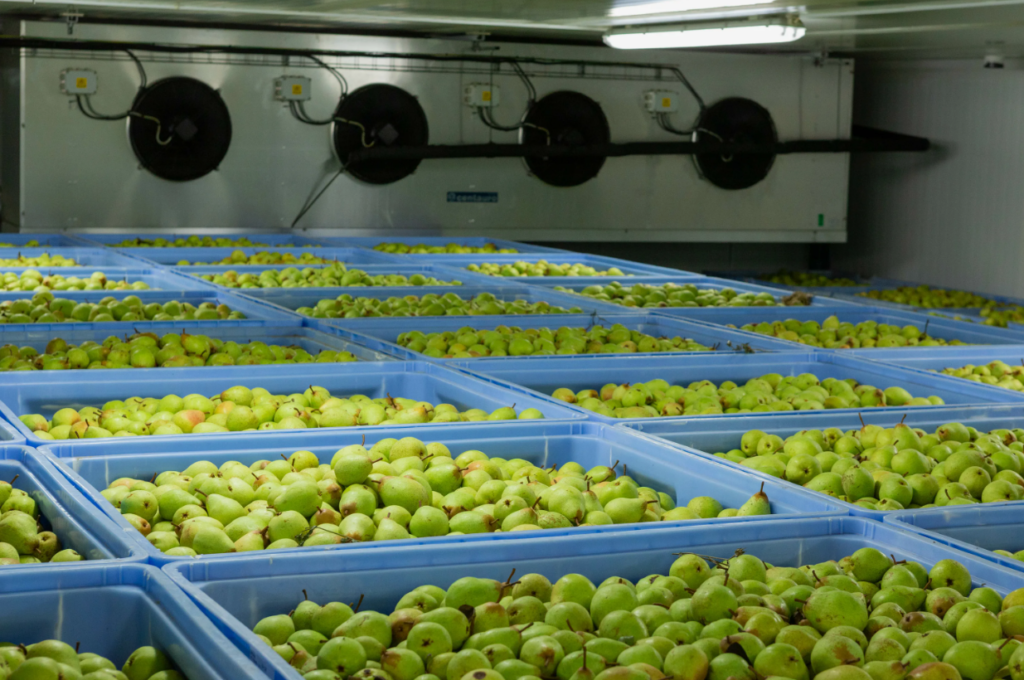
At present, the mainstream cold storage body material on the market is 100-120 mm polyurethane or PIR sandwich panel. The cold storage sandwich panel of this thickness has good thermal insulation properties, and its thermal conductivity is less than 0.023W/(m·K). In addition, different types of cold storage panel have different fire ratings.If the fire rating of the cold storage is required to be B1, PIR’s cold storage sandwich panel should be used. Rock wool cold storage board should be used for the fire rating of A1.
Refrigeration System of Chiller Warehouse
The refrigeration system of the cold storage should be determined according to the overall cooling capacity. The cooling capacity is related to factors such as the size of the cold storage volume, the type of stored items, and the local temperature. When calculating the cooling capacity, factors such as building heat transfer, cargo breathing heat, equipment heating, and personnel activities should be considered. At the same time, in order to ensure the cooling effect, appropriate cooling redundancy should be set aside when configuring refrigeration equipment.
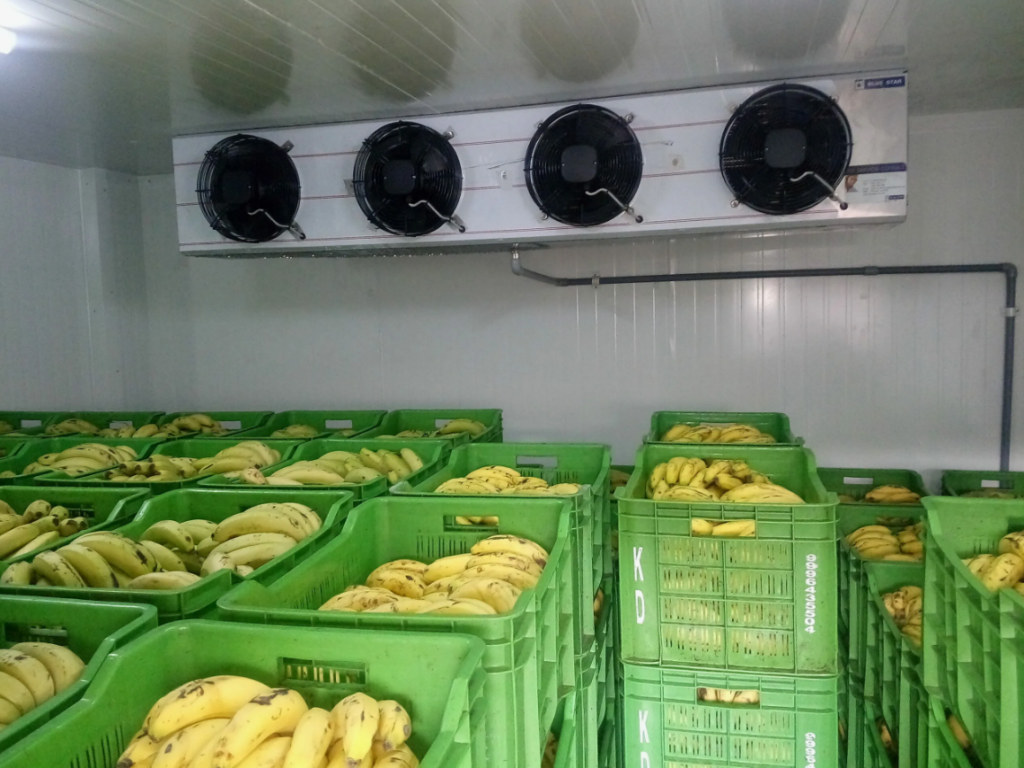
It should be noted that when configuring refrigeration equipment, the wind speed of the cooling fan needs to be controlled. The wind speed inside the cold storage should be controlled at 0.25-0.5m/s. The wind speed is too fast, which can easily cause the moisture on the surface of the food to evaporate quickly. It causes the product to dry out and affect sales. At the same time, direct blowing of products by air coolers should be avoided, causing unnecessary losses to food. The air conditioning can be evenly penetrated through the air Sox of the cloth duct. This can not only effectively avoid dead ends in refrigeration, better control the temperature, but also improve the cargo integrity rate.
Waterproof, moisture-proof and monitoring system
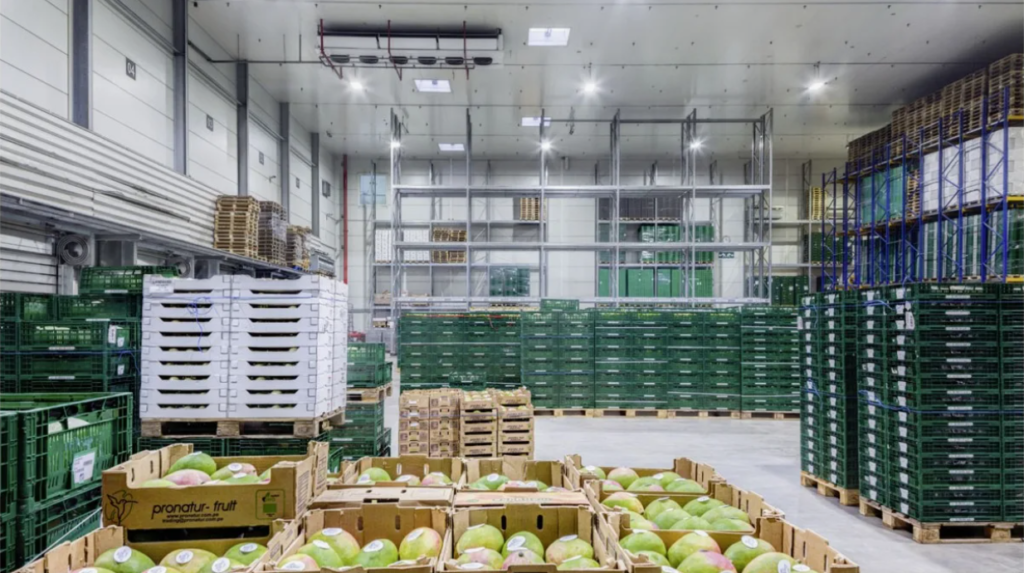
In real life, people inevitably have to go in and out of cold storage frequently. The low temperature in the cold storage room and the warm, humid and hot air from the outside world converge, making it inevitable that the cold storage room will produce a lot of moisture. Excessive moisture not only breeds bacteria and spoilage, but also affects the service life of plates and refrigeration equipment. Therefore, waterproof and moisture-proof are very important for cold storage.
Many chiller warehouses are equipped with waterproof and moisture-proof floors. The ground should have a slope of 1-2% to facilitate drainage. The corners and feet should be wrapped in aluminum alloy material to reduce the growth of dust and mold.
Post time: Dec-22-2025