

Can steel buildings break away from rigid, boxy designs?
This 400-ton curved steel project proves that modern steel buildings can achieve both structural strength and artistic freedom.
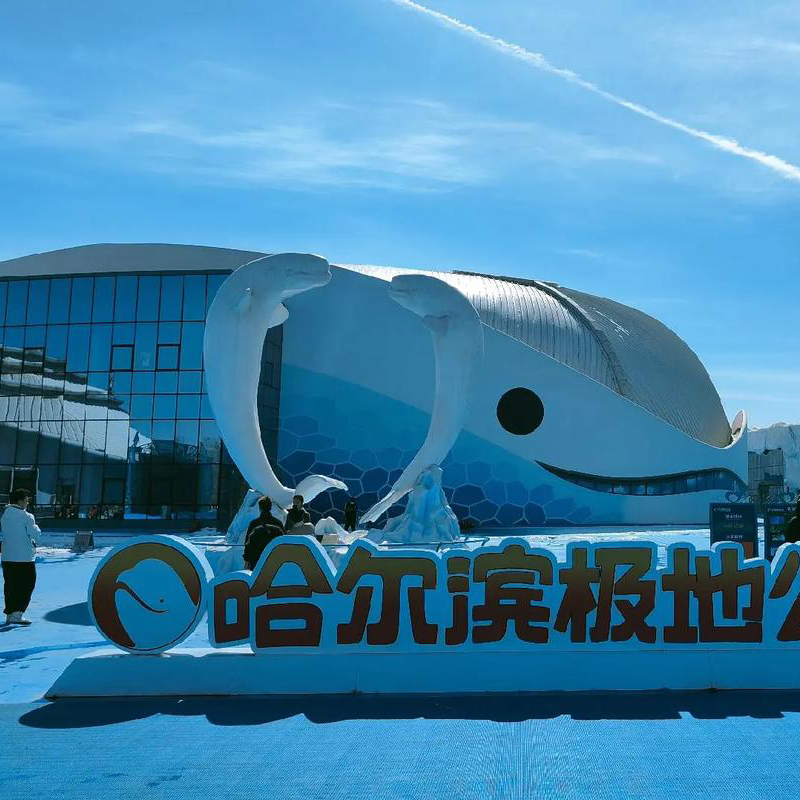
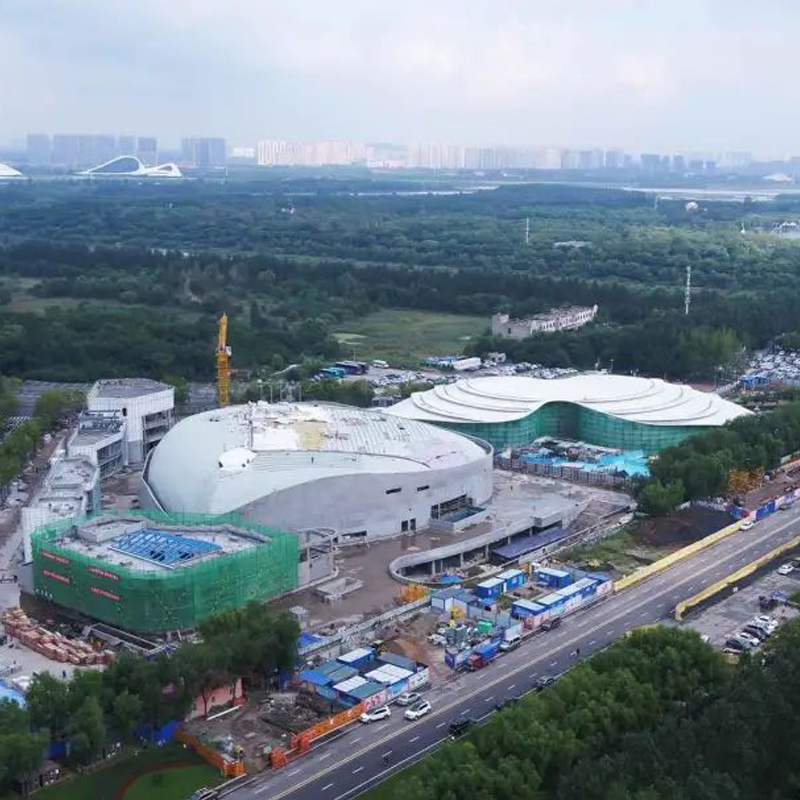
The Harbin Polar Aquarium Phase I and Phase II project stands as a landmark in innovative steel buildings. Inspired by the smooth and organic shape of a beluga whale, the structure blends the “head” and “tail” into a continuous flowing form. This project not only delivers visual impact but also demonstrates how advanced steel buildings can handle complex geometry with precision and efficiency.
Engineering Challenges in Curved Steel Buildings
One of the most challenging aspects of modern steel buildings is handling double-curvature structures. The “Beluga Head” Pavilion features a highly complex curved steel roof that mimics the natural form of marine life.
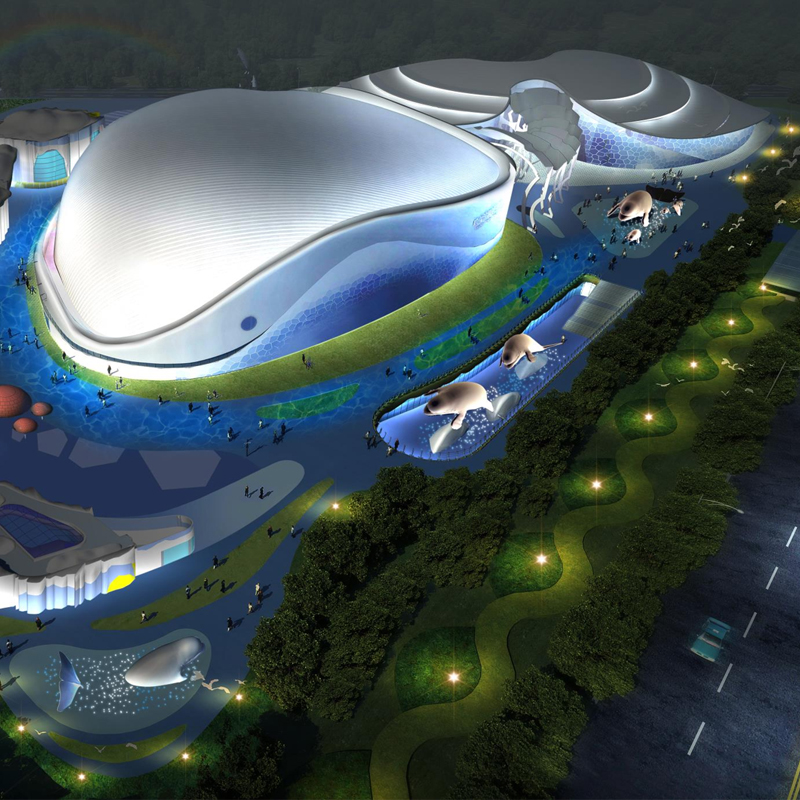
Unlike conventional steel buildings, double-curvature steel structures require precise control in multiple directions. Steel naturally resists bending along two axes, which makes this type of design extremely difficult to execute. To solve this, the project team applied advanced 3D modeling and high-precision spatial positioning technology from the early design stage.
The steel roof covers over 7,000 square meters and uses more than 400 tons of high-grade steel. Despite its complex shape, the structure maintains excellent load-bearing performance. The design ensures that the building can withstand heavy snow loads, which are common in Harbin.
This project highlights how modern steel buildings can balance aesthetics, safety, and structural performance even under demanding environmental conditions.
Precision Steel Fabrication for Complex Steel Buildings
Transforming complex steel buildings from digital models into physical structures requires strict manufacturing control. In this project, almost every steel component used in the curved section was uniquely fabricated.
Instead of relying on standard production methods, all key components were manufactured in a controlled factory environment. This ensured consistent quality and high precision for each structural element. After welding, critical joints underwent non-destructive testing to guarantee safety and long-term durability.
To optimize material usage, the engineering team of manufacturer applied finite element analysis to calculate stress distribution across the entire structure. This allowed the project to reduce unnecessary steel consumption while maintaining full structural integrity.
Compared to traditional steel buildings, this approach significantly improves material efficiency and reduces overall project costs. It also demonstrates how advanced engineering can make complex steel buildings more economically viable.
Efficient Assembly of Large-Scale Steel Buildings
On-site assembly is another critical phase in steel buildings, especially for irregular structures. For this project, each steel component was labeled with a unique digital code. This system simplified logistics and ensured accurate installation sequencing.
When the materials arrived on site, the construction team followed a carefully planned assembly process. Thanks to precise fabrication and tight tolerances, all components fit together seamlessly. The entire structure was assembled like a three-dimensional puzzle.
This method significantly reduced installation time compared to conventional steel buildings. It also minimized errors and improved overall construction efficiency.
What This Project Means for Future Steel Buildings
This project demonstrates that steel buildings are no longer limited to simple industrial forms. With the right engineering approach, steel buildings can achieve complex architectural designs while maintaining cost efficiency and structural reliability.
From curved steel roofs to large-scale custom fabrication, modern steel buildings are evolving to meet the demands of architects and developers worldwide.
If you are planning steel buildings with complex shapes or high technical requirements, the right expertise can turn bold designs into reality.
Have you ever faced challenges with curved or irregular steel buildings? Let’s discuss.
Post time: Mar-19-2026